
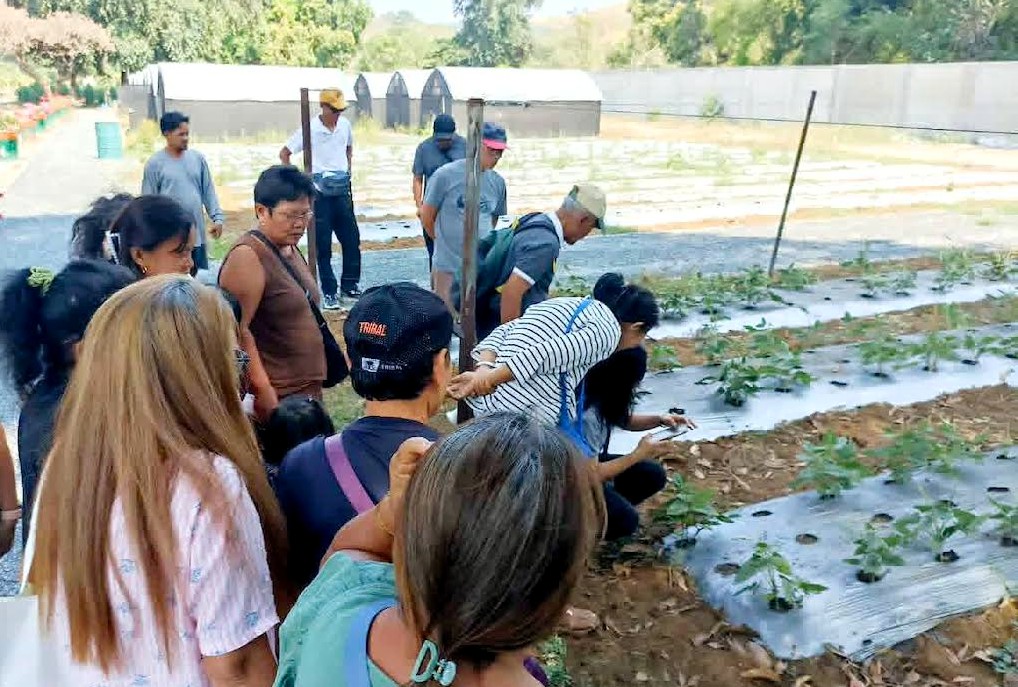
CASTILLEJOS, Zambales — Five agrarian reform beneficiaries’ organizations (ARBOs) in Zambales were introduced by the Department of Agrarian Reform (DAR) to climate-smart, information-driven farming technologies designed to help farmers adapt to changing weather conditions and protect crops from pests and diseases.
The participants included members of the Cawag Sapao Farmers & Fisherfolks Association, Sitio Danao Castillejos Irrigator Farmers Association, Sta. Cruz Mango Growers Multi-Purpose Cooperative, Palauig Mango Producers Cooperative, and Bulawen Integrated Farmers Association.
Among the technologies presented was the Smarter Pest and Disease Identification Technology (Spidtech), a digital application developed under Project SARAI (Smarter Approaches to Reinvigorate Agriculture as an Industry). Using mobile phones, farmers can quickly identify pests and crop diseases, respond faster, and reduce crop damage.
DAR-Zambales Provincial Agrarian Reform Program Officer Neil T. Pedralvez also oriented the ARBO members on the importance of using high-quality seeds through the Pinoy Rice Knowledge Bank (PRKB), an online platform managed by the Philippine Rice Research Institute (PRRI) that provides information related to rice farming and location-specific rice technologies and practices.
Pedralvez explained that high-quality seeds are cleaner, healthier, more uniform in size, and have higher germination rates, resulting in more efficient harvesting and potentially increasing rice yields by up to 10 per cent.
The participating ARBOs were also introduced to AGRi360, a web-based interactive platform developed by the Department of Agriculture’s Agricultural Training Institute to access to crop management information, irrigation planning, plant health monitoring, and other modern farming practices that can improve productivity and farm management.
DAR Secretary Conrado Estrella III said the program supports the national government’s push to strengthen local food production and lessen dependence on imported rice.
He added that the climate-resilient technologies are designed to withstand different environmental stresses, including drought, flooding, pests, and diseases, thus helping farmers maintain stable production despite the effects of climate change. – Richard Gallardo and DAR-Zambales






Leave a Reply