
A former mining community ponders its future with newfound tourism fame
By HENRY EMPEÑO / December 15, 2023
MASINLOC, Zambales — Search the internet for Coto Kidz Pool and you’d get about 146,000 results in .42 second. That’s more than double the “hits” you’d get when you surf the net for Magalawa Island in nearby Palauig town, which is dubbed as the mini-Boracay of Zambales, or, for that matter Isla de Potipot, a smaller yet equally Instagrammable island getaway in Candelaria town.
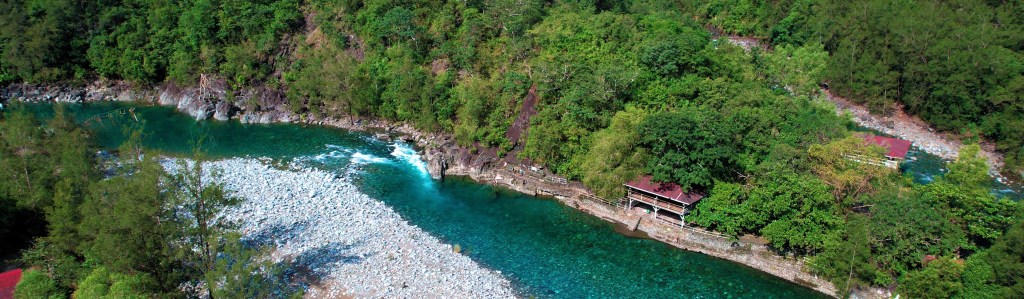
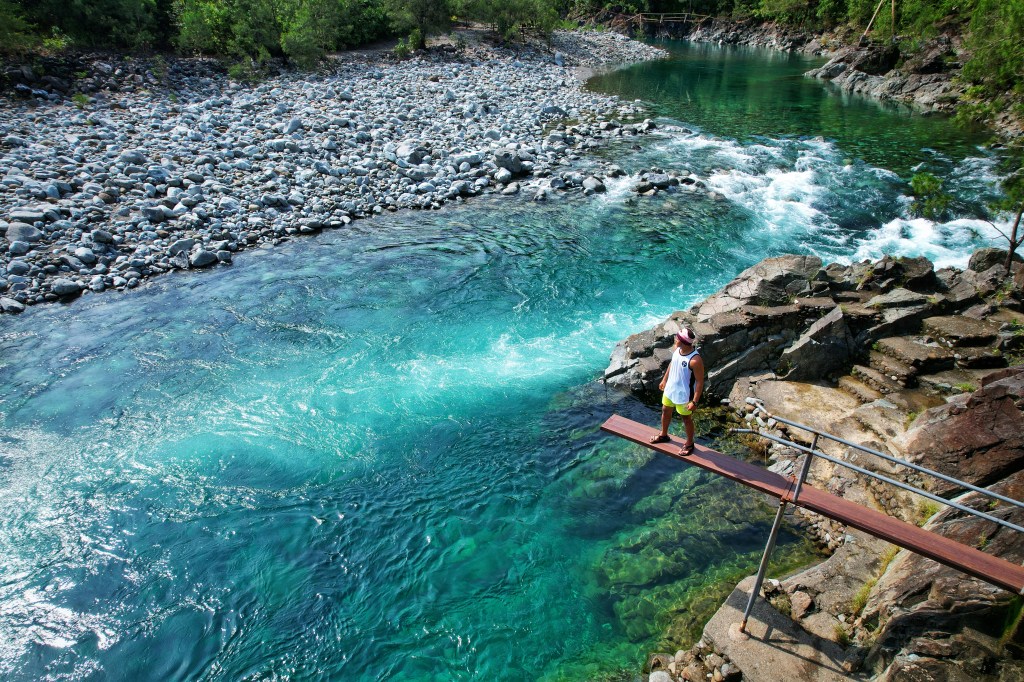
Coto Kidz Pool is now a favorite haunt of bikers and 4×4 off-roaders who don’t mind the bumpy, bone-jarring 27-kilometer drive over a narrow dirt road to be rewarded with the serenity of a pine forest and the crystal-clear water of a mountain river.

“It’s the newest tourism sensation here in Masinloc, the current rave of visitors,” proclaims Gigi Ejanda-Juarez, who heads Masinloc’s tourism office. “This has kept our staff busy lately, and sometimes exhausted, but we can’t complain. It’s a very welcome development for Masinloc, especially when we’re gunning for a revival of local tourism after the pandemic.”
Juarez points out that in the first three quarters of this year alone, about 12,500 visitors have crowded into her office to get a pass to Kidz Pool— the high points being April with 3,341 visitors and September with 3,064.
This November, more visitors arrived in Coto: a total of 6,847, with the bulk (2,644) arriving during the long All Saints Day break from November 1 to 5.
Good Old Days
The vehicle pass visitors should get in going to Kidz Pool is a throwback to the days when Coto was a thriving and security-conscious mining enclave operated by Benguet Corporation.
Coto, which is a sitio of Barangay Taltal, is blessed not only with an ideal resort environment, but also what it considered the biggest chromite deposit in the world. Chromite is used as refractory material because it is stable in high temperature, thus making it ideal for chrome plating and production of corrosion-resistant superalloys, nichrome, and stainless steel.
A report by the United States Geological Service (USGS) in 1989 says the Coto mines that produced refractory-grade chromite products, with lump materials produced in three different sizes or grades, have “at least seven to 10 years-worth of production in the reported reserve category.”
“Since the start of operations in 1937, production has amounted to 15 million metric tons of products, which would indicate mining of at least 30 million metric tons of crude ore,” the USGS report says.
The USGS study adds: “In 1967, Coto reserves were estimated at 9.35 million metric tons. It is estimated that from 1967-1980, about 12 million metric tons of cruder ore would have been extracted, which still leaves reserve as 5.307 million metric tons as of 1980.”
Abundant chromite products also yielded better benefits to residents of the mining community. “We used to have the best of worlds here,” recounts Sofia Siriquit Somintac-Rubio, a Coto native who now works as the local government unit’s tourism officer at Kidz Pool.
“We lived in staff houses, we had a movie house, and children go to school for free. Some even get scholarship to Manila colleges,” Rubio recalls.
Mining Relics
There were about 3,000 employees at Coto then, with almost half of the workers being Coto natives, says Rubio. Benguet had renewed its 25-year agreement with mineral claim owner Consolidated Mines, Inc. (CMI) in 1981, but when this expired in 2006, mining operation s passed on to other companies, including a Chinese firm that managed the concession from 2011 to 2013.
Then when it was found out that Chinese operator had Chinese workers who entered the country illegally, mining in Coto halted and facilities, as well as local livelihood, deteriorated.
Today, the old mining community is just a shadow of its old self: ramshackle staff houses and warehouses painted in the green and maroon colors of Benguet Corporation lay in disrepair. The community market, old movie house, as well as the bleachers where residents used to watch ball games (softball used to be big here, old-timers say) are in a shambles.
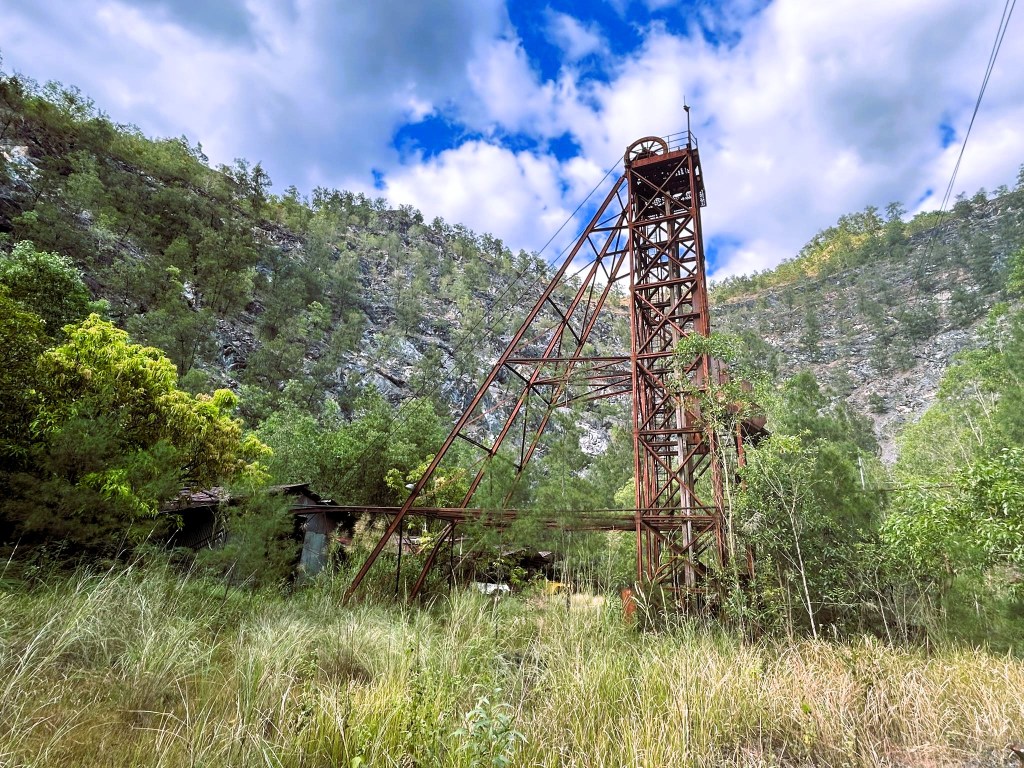
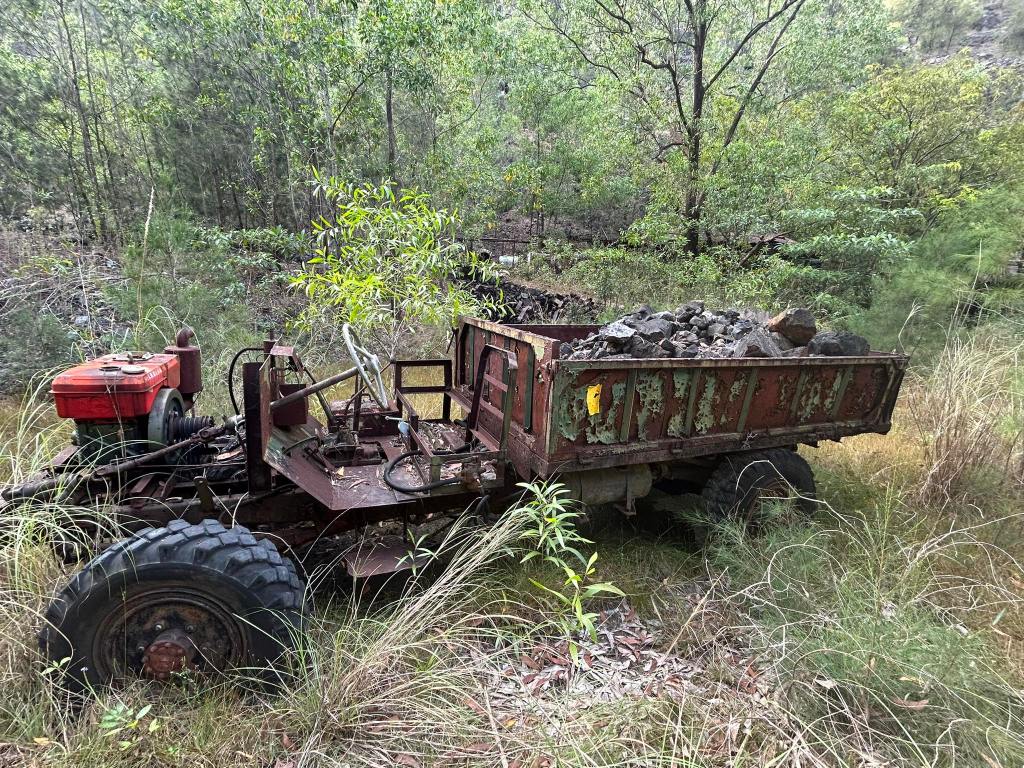
Near the tunnel entrance to Benguet’s underground mine shafts north of the Coto plaza, equipment and machinery are scattered along the way: cement mixer, fuel tanks, trolley cart—all rusted. There is also an abandoned hauler still filled with ores from the mine.
Then at night, a large part of Coto suffers in darkness because electric power service was cut off in 2015 after the Chinese firm became indebted to power firm by some P30 million.
Tourism Star
Coto always had what it takes to be a top-rate tourist attraction with its river and forest and mountain. Even when it was still privately held by Benguet Corporation, Kidz Pool was already a recognized visitors draw among locals.
Rubio, who also managed a store at the resort area during Benguet’s time, says the company developed Kidz Pool as a recreational area and put up the cottages lining the river bank sometime in 1999 or 2000. Back then, Benguet charged locals P50 per person for entrance, Rubio recalls.
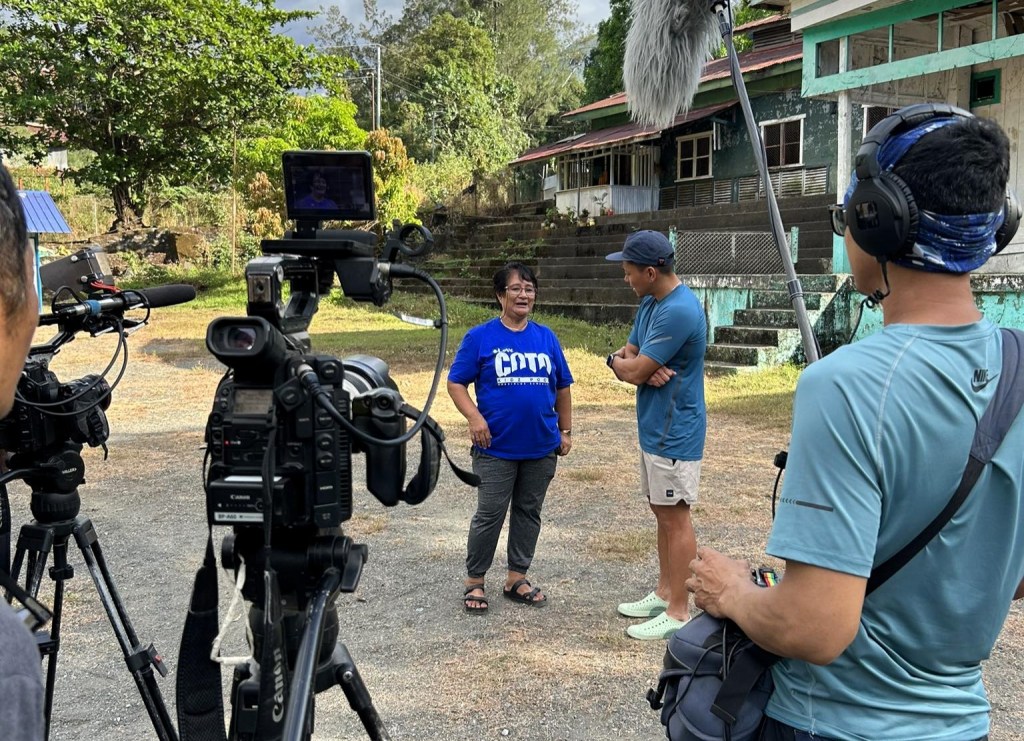
Coto also gained attention following the location-filming here of the Pia Wurtzbach-Gerald Anderson starrer “My Perfect You,” which showcased the Kidz Pool as “Happy Sunshine Camp.”
However, the local tourism industry ended its modest but steady growth with the departure of Benguet Corp. from Coto, Rubio says. And thus, locals were hit with a double whammy—loss of employment income from mining, as well as extra livelihood from goods and services sold to visitors.
“It was then that we asked Mayor Senyang Lim for help, especially when we suffered severe economic loss during the pandemic. And she suggested that we revive tourism,” Rubio remembers.
The bleak situation in Coto soon changed when Kidz Pool became a social media phenomenon early this year.
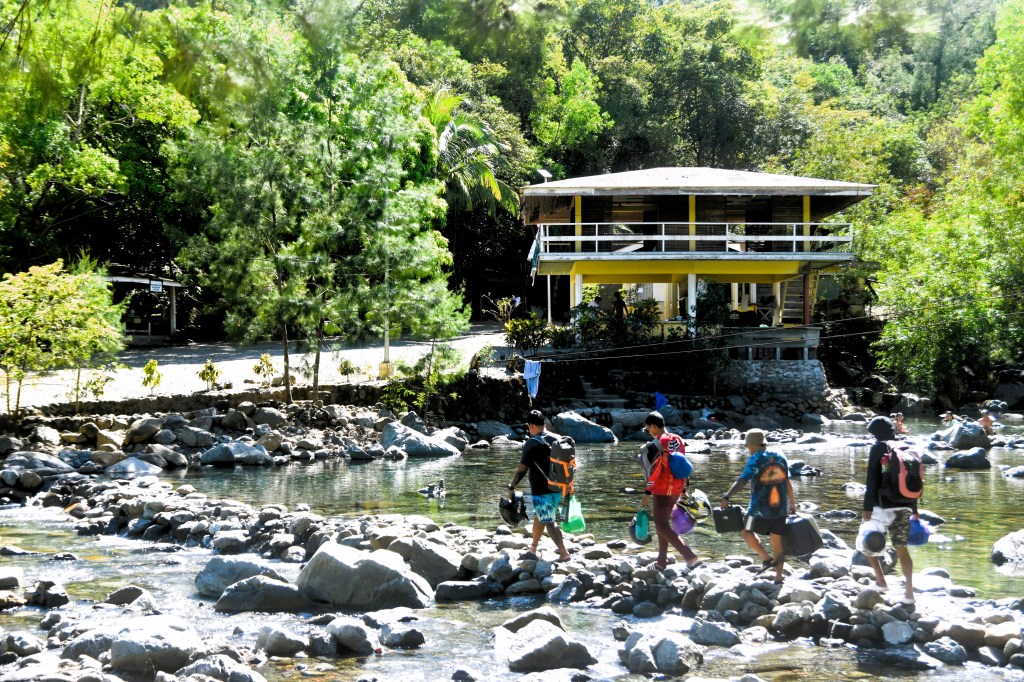
Masinloc Tourism’s Gigi Juarez says the Kids Pool magic all began when travel vloggers thelostboys.ph posted a Tiktok video showing them diving into the clear waters of the Kidz Pool and instructing their audience on how to go to Coto.
This soon earned more than 42,000 views, whetted the appetite of other vloggers and adventure tourism writers, and thus skyrocketed interest in Coto and the town of Masinloc.
The arrival of bikers groups and 4×4 off-roaders further saw more social media posts about the Kidz Pool, bringing in visitors first from Manila, Bataan, Pampanga and Bulacan, then later from other parts of the country like Laguna and Cebu.
Rising from the Rubble
Slowly, hope found its way into Coto with the influx of guests, Rubio says.
The growing arrivals immediately led to the creation of jobs by the local government unit, seeing that the place now needed a tourism officer, several eco aides to keep the place clean, some security staff, and even a lifeguard to be on duty at the deep part of the river where guests use a diving board.

Rubio says that with the planned development of Kidz Pool and the expansion of operations, more staff would be needed to maintain the project.
The LGU also gets additional income from the P160 entrance fee charged from visitors, part of which goes to the fund for environmental upkeep. This also boosts the revenue allotment received by Coto, as it gets 25 percent of the proceeds from the municipal fees, Rubio says.
In the community, the rise of Kidz Pool as tourist attraction brings extra income to the likes of Emma Ratonil, a 54-year old storeowner.
A cousin of the former mine superintendent, Ratonil still longs for the return of the “happy times” when mining was king, but admits that tourism had somehow revived Coto from the doldrums.

Ratonil sells the usual sari-sari items, as well as street food like kikiam and fishballs for the snacks of visitors, mostly riders coming into town. And with her stock of fresh vegetables and meat (she has electricity connection), visitors would sometimes request her to cook meals and this provides extra income.
For a chicken meal, she would charge just P190, which is the basic cost of one kilo of chicken meat plus the necessary condiments, and P320 for pork meal. For her cooking service, she would just charge P50.
Still, Ratonil says that business is even better now because her new rider-clientele pay in cash, whereas the neighborhood customers sometimes get goods on credit.
Plans and Pushback
The longing for the heady days of chromite mining is fueled by recent news that Consolidated Mines Inc. (CMI), which owns the mineral claim since 1930 for the 2,677.22-hectare Zambales Mineral Chromite Reservation, wants top revive chromite mining in Coto.
CMI said in a a filing with the Department of Environment and Natural Resources-Environmental Management Bureau (DENR-EMB) that it will mine 87,900 metric tons (MT) of chromite concentrate and 10,000 of lumpy ore in Coto annually.
For this, the company says it will spend P350 million to repair and restore facilities, purchase equipment, and bankroll the operation.
It also plans to utilize the existing mill plant used by Benguet Corp. and widen the roads to be used by trucks hauling ore to the seaside pier (Benguet used to transport ore via a railway, which had since been dismantled).
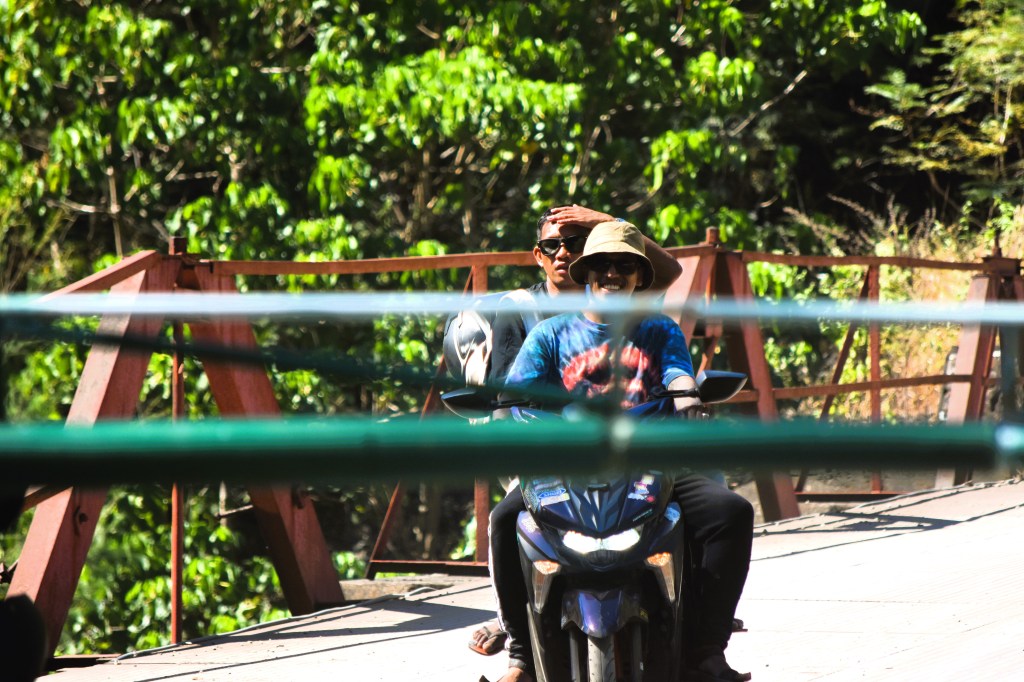
CMI had since applied for a renewal of the Mineral Production Sharing Agreement (MPSA) to cover the Coto project and for an Environmental Compliance Certificate (ECC) required by the Mines and Geosciences Bureau.
The plan, however, meets stiff opposition from Masinloc officials, particularly the Liga ng mga Barangay, which passed a resolution last March 8 to oppose CM’s application to extend its MPSA over Coto.
The barangay chiefs said in the resolution that CMI “appears to be not responsible or not worthy to be an operator of (mines), as this company was found to be irresponsible and incompetent when it negligently allowed the flooding of the underground openings critical to the viable exploitation of the remaining chromite deposits in the Zambales Mineral Chromite Reservation.”
Moreover, they pointed out that in in about 50 years of commercial mining production by CMI, “our respective communities have never experienced significant economic benefits from this mining operation.”
“Allowing it to continue for another 25 years would only cause the depletion of our natural resources and degradation of our environment,” the barangay officials added.
They also stressed that the water used for domestic and agricultural consumption in Masinloc come from the same watershed where the MPSA is located.
“Mining operation in the Coto area is expected to have an adverse effect on the quality and quantity of the water supply,” they pointed out.
The Liga ng mga Barangay likewise said that the host barangay of Taltal, as well as the Sangguniang Bayan of Masinloc, have already expressed opposition to CMI’s application for MPSA.
Governor Hermogenes Edbane Jr. has also “personally expressed to us his vehement opposition’ to the MPSA application during a meeting with barangay officials on March 6,” the Liga resolution also stated.
Prospects
Sitting at one of the deserted bleachers in the basketball court the day BusinessMirror visited Coto was Lerin Inrhe, 45, a native of Pozzorubio, Pangasinan, who had made Coto his home after being employed by the Benguet firm in 1980.
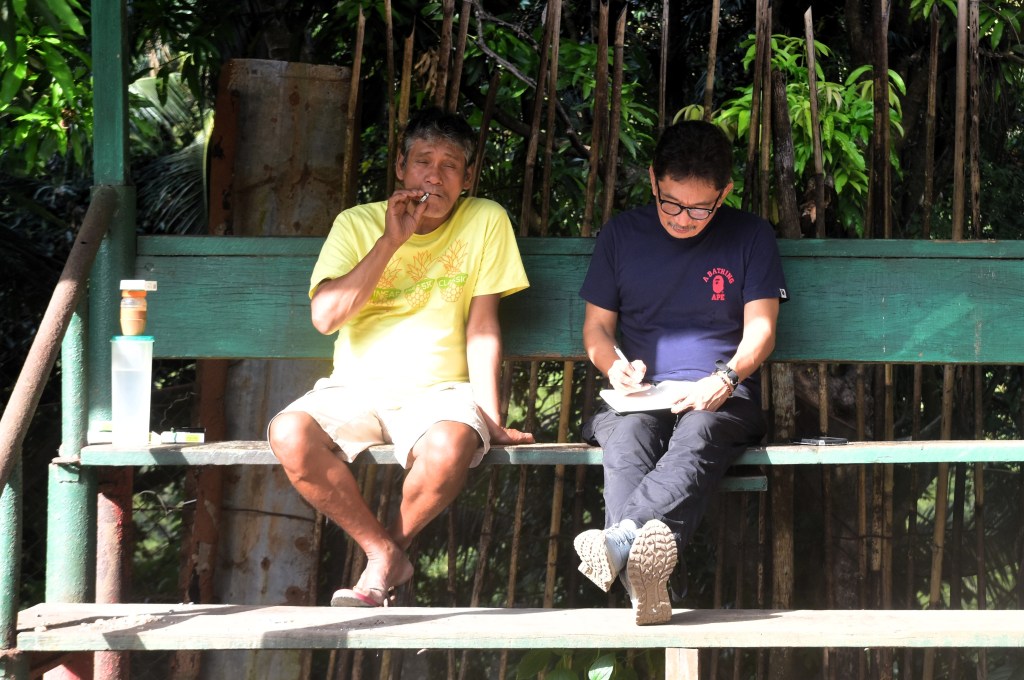
Inrhe used to be an electrician, but he is unemployed now—one of the casualties of the mining pullout. Taking long draws on his menthol cigarette and exhaling smoke as he talked, the former Benguet worker reminisced about the healthy economy under the mining firm.
“It used to be that everyone here was happily employed,” Inrhe says. But he hastily adds that the long queues of motorcycles and SUVs that now arrive on a daily basis are the future of Coto.
“There is no more hope for mining,” he says wistfully, adding that he doesn’t believe that the reported revival of mining operation in Coto would ever push through.
“That Kidz Pool is where we get our living now,” Inrhe says. “Soon the workers here will grow in numbers, and that good will spread out to our community.”
TOP PHOTO: River, forest and mountain all contribute to the stark beauty of the Coto mountain resort (Photo courtesy of Masinloc Tourism Office)



 Headline Zambales
Leave a comment