
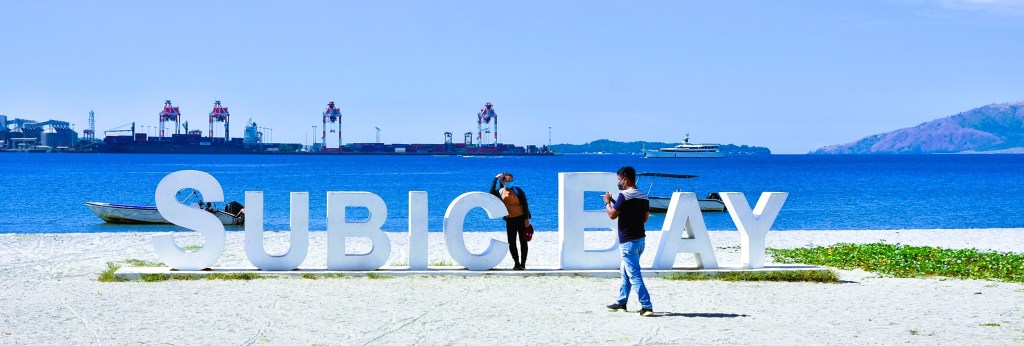
Foresight, flexibility and fortitude help Subic Bay Freeport weather the Covid storm
By HENRY EMPEÑO | February 24, 2022
SUBIC BAY FREEPORT — The al fresco cafés and open-air restaurants that happily thrive here are symbolic of how the Subic Bay Freeport coped with the economic challenges posed by the Covid-19 pandemic. Sidelined for a while when the entire Luzon was placed on lockdown on three instances in March to May 2020, these businesses soon rebounded to gain customers in the most difficult of times, and, in the months to come, become the most telling signs that Subic was successfully winning the war against the virus.
“It’s a struggle, just trying to keep the business alive during the quarantine. Kung maigsi ang pisi mo, talagang bibigay ka (If you have limited resources, you’d easily buckle under),” recalled restauranteur Romy Tagle, who operates Magic Lagoon Resto-bar, an open-air bistro tucked behind a man-made pond along Subic’s main avenue, the Rizal Highway.

Tagle said that even when Subic eased down to less restrictive quarantine levels, restaurant operators still had to abide by IATF guidelines on physical distancing and maximum capacity; install wash and disinfection areas, buy temperature scanners, use contact tracing forms, and observe curfew hours—requirements that took their toll on the business’s bottom line.
But as the pandemic continued its onslaught, crippling most tourism establishments located in closed spaces, owners of open-air diners found the new opportunity of serving clients who shifted preference to places that put premium on their safety.
“We had to improvise—to make customers feel safe. We created an online menu to minimize contact between customers and food servers; we built more huts, so that guests can have their own outdoor places to dine in; and I had all the restaurant staff vaccinated—at a time when the government vaccine rollout was not yet available in Subic,” Tagle said.
FLEXIBILITY
The time of ferment was also a time to be flexible. Rubelh Peralta, chef-operator of Rali’s, another open-air diner here that has become popular for its view of Subic sunset, recalled that the months-long lockdown last year almost crippled their business even when they were allowed to offer takeouts.
“That was a very difficult time for us since our restaurant’s selling point is the total dining experience—not just good food, but nice ambience and great service as well,” Peralta said. But on the positive side, she said the business downturn allowed them to develop new products and gave them room to ease into changes in their operations.
“We saw an opportunity to slow down and rethink our business, reflect on where we are now and where we want to be when the pandemic is over,” Peralta revealed. “We revised our operating hours, changed our menu, and slowly did repairs. All of these paid off when borders opened up and we were finally able to receive guests.”
“For us, flexibility was key in order to survive,” Peralta concluded.

The flexibility formula became hugely popular in the Freeport, with indoor eateries bringing out tables and chairs into the open, and other businesses diversifying into other product lines and services.
In Subic, the Covid years of 2020 and 2021 saw the Korean firm MSK Group Work Inc., which specializes in construction and warehouse operation, dabble in the production of surgical masks. These years also marked the time when two Taiwanese property developers established the country’s first 7-Eleven drive-thru convenience store, and when a park operator set up “Sexy Legs”, the first food-truck business in the Subic Bay Freeport.
FORESIGHT
The adaptations made by Subic Freeport business locators became strategic pivots, solid examples of stakeholders stepping up to the trials of the times, said lawyer Wilma T. Eisma, who, as chairman and administrator of the Subic Bay Metropolitan Authority (SBMA), shouldered the difficult role of guiding the direction of the Subic Bay Freeport during the Covid years.
But for the most part, surviving the pandemic in Subic depended so much on foresight. Eisma said that as early as January 22, 2020, the SBMA Task Force against COVID-19 was created to help protect the community from the virus. And the plans were cascaded down to various stakeholders.
“Like our people during the Pinatubo eruption and when the US Navy pulled out of Subic in 1992, we have to be resilient. So, the first thing we did was to make an educated guess of how this pandemic would play out—and how it would affect Subic stakeholders.”
“We enforced minimum health standards early—when it was not yet in fashion. We consulted experts on policies because there was no blueprint as yet on how to manage this health crisis. We prepared services and facilities that might be needed. We established protocols, and made sure they were strictly implemented.”
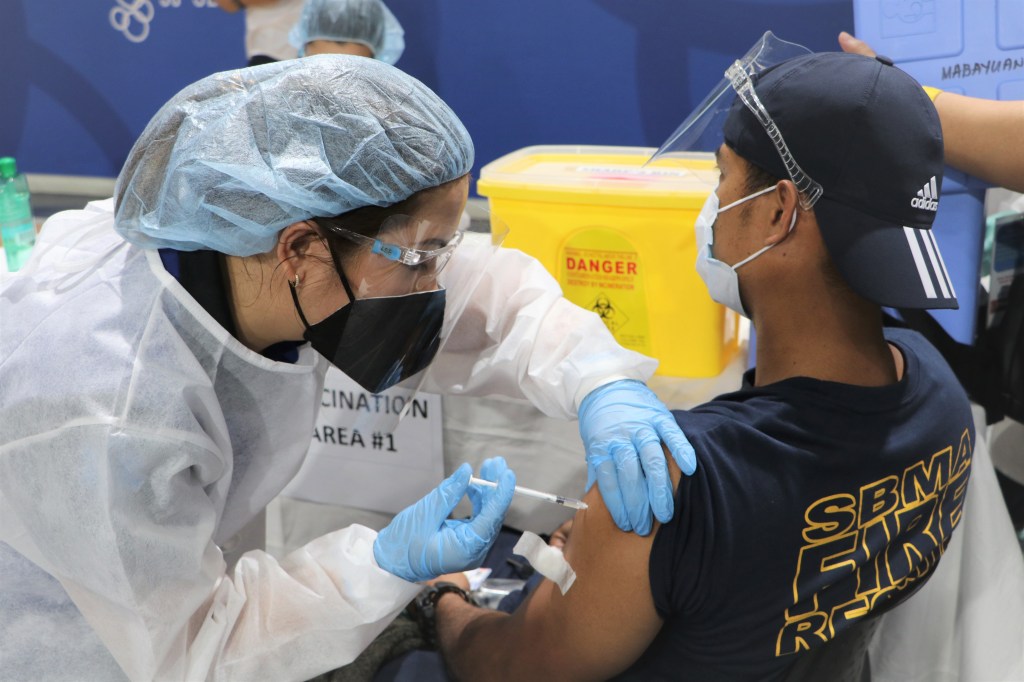
Part of Subic’s roadmap to survival was a series of innovations introduced by the Subic agency in the early days of the pandemic. These included teleconferencing for business meetings, which SBMA first resorted to in February 2020; disinfection protocols that began in March, and mass testing of Freeport workers that started in April of the same year when the SBMA, in partnership with the Philippine Red Cross, began setting up its own swabbing facility.
The livestreaming of masses also began in April 2020 at the SBMA Chapel in face of restrictions on mass gathering. Next came online forms for every transaction imaginable for business locators and other SBMA customers, webinars, as well as online biddings for products and services to be procured by the agency.
All the while, Eisma sought out donors of hospital beds and other medical equipment to establish the Freeport’s own Covid-19 isolation facilities—anticipating the need for such emergency accommodations, as Covid cases spiraled in nearby communities.
In September 2020, the SBMA also staged the first virtual job fair in the Subic Bay Freeport—a three-day event that saw 16 Subic locators, as well as 18 other companies, and two Government agencies rolling out a total of 695 jobs.
The following month, the SBMA Public Health and Safety Group developed the SBMA Click-nika, an online medical and dental consultation platform to provide teleconsultation during the pandemic.
The SBMA Tourism Department, meanwhile, would develop programs to take in sports championship games and company conferences and meetings under a “bubble” concept to boost tourism-related business operations in Subic.
FORTITUDE
In the months to come, the SBMA would display its corporate grit by granting extensions for permits and other requirements, and initiate other relief measures for businesses in the course of the quarantine period, including waiving payments on rentals for certain periods of time.
Since March 2020, when the Covid pandemic started, Eisma and other members of the SBMA Board of Directors would pass 14 resolutions addressing the emergency health crisis and mitigating its effect on Subic businesses.
These included the suspension of penalties for late payment of SBMA billings, and the extension of the period of validity of registrations and permits, both of which were approved in July 2020; amended protocols for Subic hotels to be used as quarantine facilities passed in August 2020; and the extension of the Economic Relief Assistance Payment Scheme (ERA-PS) in February 2021.

Such fortitude would be complemented by continuous groundwork, as the SBMA Business and Investment Group went about participating in various online business fora and conferences to drum up investment in Subic.
SBMA Senior Deputy Administrator for Business Renato W. Lee III said these conferences included the 2021 Taiwan-Philippines Industrial Collaboration Summit on Nov. 3 to explore new opportunities and models for industrial cooperation; the 27th Philippine-Taiwan Joint Economic Conference on Nov. 15-16, 2021 to discuss trade, investment and economic cooperation initiatives consistent with the implementation of the One China Policy; and the Philippines Business Forum on Dec. 15, 2021, wherein the SBMA presented projects in cruise terminal and shore enhancement, and the development of Subic’s Redondo Peninsula, among others.
Lee also said the SBMA “continued negotiations for the takeover of the Hanjin Shipyard, which is projected to create much-needed employment for residents of contiguous communities and stimulate business opportunities in the area.”
BACK IN THE BLACK
Even when the Covid pandemic caused the closure of some businesses in the Subic Bay Freeport, it did not completely erode the solid business foundation, said Chairman Eisma in her State of the Freeport Address last year.
“Our sound policies gave us toughness to weather the storm, while proactive measures to fight Covid-19 gave us the resilience to be able to bounce back after some beatings,” Eisma said.
She added that in the first year of the pandemic, the SBMA made P3.2 billion in revenue; posted P1.3 billion in new committed investments that created 682 new jobs; and shepherded Subic to generate US$1.12 billion in imports and US$1.03 billion in exports.
“Without any playbook to tell us what to do, we have managed the Covid-19 pandemic in the Subic Bay Freeport quite well, and we are better prepared now because of these experiences,” Eisma added in her 2021 report to Subic stakeholders.

In the second year under the Covid health crisis, Eisma had even more glowing achievement to tell. In her 2021 annual report to President Duterte, the SBMA chief said that the Subic agency registered a revenue of P3.47 billion last year, capping 2021 with an 8% growth in income and other major accomplishments in key performance areas.
“While a few indicators remain impacted by the Covid-19 pandemic, the general trend is upward where the SBMA was able to accelerate growth and surpass its performance in the previous year,” Eisma said.
The revenue surge came from leases and port operations, with land and building leases growing by 2% and contributing P1.38 billion, and seaport operations growing by 14% and generating P1.37 billion. Meanwhile, the agency’s regulatory income increased by 11% and provided P408 million in revenue, while airport operations grew by 26% and contributed P79 million.
The SBMA chief likewise provided positive reports in investment and employment generation, tourism, imports and exports.
She said the SBMA recorded a total of 142,177 Subic Bay Freeport workers as of Dec. 31, showing an employment increase of 2.31% from 138,966 workers in 2020. SBFZ business locators, on the other hand, numbered 1,737 SBFZ as of yearend, “continuing a slight upward trend since 2019,” Eisma said.
Meanwhile, new investments, including expansions, totaled P17.29 billion, higher than the 2020 record by P15.74 billion, or 1,011%. The 2021 record even topped the pre-pandemic 2019 level by P8.05 billion, or 87%, with the bulk comprised by a P15-billion commitment from a business locator, which proposed to develop the SBFZ marshalling yard.
Eisma also said that the pandemic-hit tourism industry in Subic “is recovering and has recorded a total of 7.3 million same-day visitors in 2021.” This was also higher than the 2020 record by 2.18 million or 42%, but still lower than the 2019 record by 2.2 million or 23%.
In terms of trade, Eisma said the Subic Bay Freeport “defied the negative impact of the pandemic by recording a total of US$1.58 billion import value in 2021, which was 49.53% higher than the 2020 import value of US$1.12 billion.”
On the other hand, Subic’s export value reached a total of US$1.37 billion, which was 32.42% higher than the 2020 export value of US$1.03 billion. Both import and export values respectively exceeded the 2019 pre-pandemic records by 8.12% and 6.73%, Eisma added.
Eisma assured the President that the SBMA “is doing its best to be more competitive and maintain a business-friendly environment in the Freeport, as we continue to support all the programs of the government to ensure the well-being and safety of everyone in the Subic Bay Freeport.” ~


Leave a comment