
Mayor Jay Khonghun: ‘Dynamic leadership and a united
community will give us progress and growth’
By CARRIE T. ASPA and ALEX GALANG
SUBIC, Zambales —FACING a growing population and rapid urbanization, the local government unit (LGU) of Subic, Zambales is, nevertheless, turning the tide towards sustainable growth by undertaking a multi-pronged campaign to empower citizens and make them able contributors to development efforts.
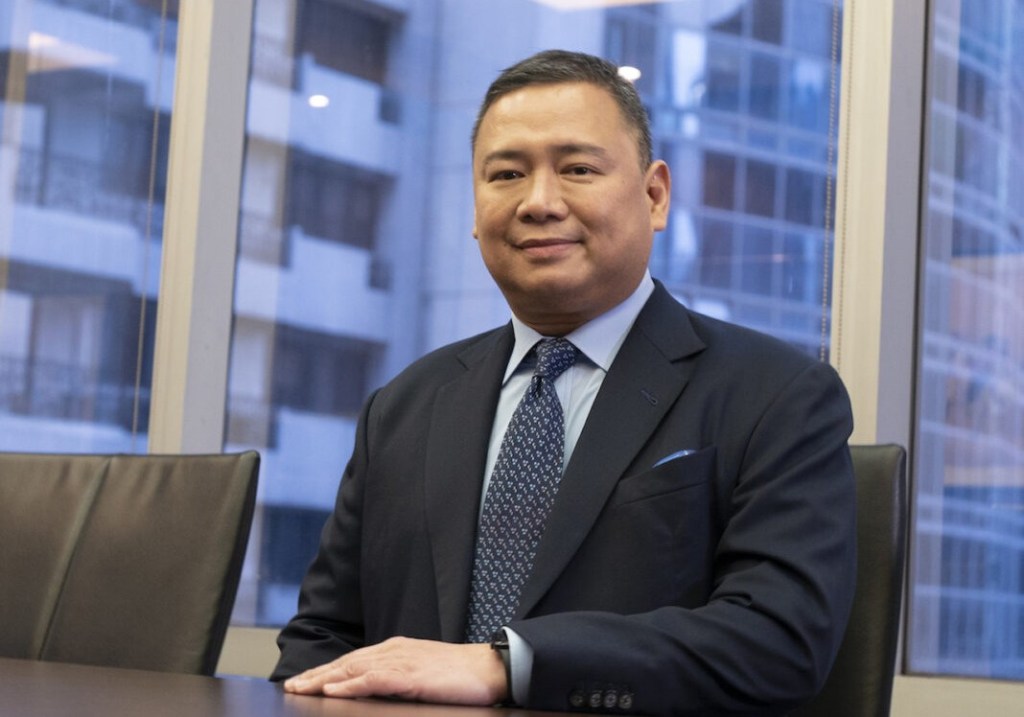
 Under the helm of Mayor Jay Khonghun, the 40-year old chief executive who is among the youngest political leaders in Zambales today, Subic is constantly proving its ability to get ahead despite hurdles along its way.
“We have problems, of course, and that is but natural for any municipality that is rapidly growing, but we have dreams, too—and that is what keeps us going all the time,” said Mayor Khonghun.
“What we dream of is a highly-urbanized Subic that is not only proficient but highly successful in agriculture, industry and eco-tourism, and where the people enjoy better life with peace and stability,” he added. “Dynamic leadership and unity among residents will give us the progress and growth we seek.”
As the most populous town in Zambales with a population of more than 104,700 as of 2015, Subic is a first-class municipality undergoing changes in both economy and social make-up.
Initially a community built by fishermen and farmers, Subic has become, over the years, a center of industry and commerce with the establishment of the United States Naval Base on Subic Bay nearby, and, later, the creation of the Subic Bay Free-port Zone in its stead.
These developments consequently brought communities near the zones in a constant state of flux—something that challenges local governments to find solutions to supply the needs of a growing population and to sustain economic growth.

Khonghun said that in the case of Subic, they resolved to “strengthen the capability and capacity of the LGU in order to provide optimum community services and for the municipality to be competitive in all sectors of development areas.”
“We know that we have to sustain the momentum—to be constantly on the go. That is the only way to move forward,” he said.
Education
Subic’s multi-pronged program for sustainability is anchored on providing free education for all.
Subic now boasts of publicly-funded schools that provide access to basic education. These include 30 day-care centers, 25 kindergarten, 25 elementary, 6 junior high, 6 senior high, 10 integrated, and 1 college/vocational institution.
The Kolehiyo ng Subic, a college established by then Mayor Jeffrey Khonghun in 2002 and since then operated by the Subic LGU, provides basic courses in computer technology, tourism, finance and business, education, as well as social studies and Filipino, and enrolls close to 2,500 students each semester.

The municipality also offers special programs in science, journalism, arts, and a special program for children with special needs; basic education to members of local indigenous tribes; Arabic Language and Islamic Values Education (ALIVE); Alternative Learning System (ALS) for adults; and life-long learning skills for out-of-school youth through the ABOT-ALAM program.
Subic’s comprehensive education package also covers faculty development, student welfare, and facilities development.
Agriculture
Since majority of the residents of Subic still engage in either farming or fishing as their primary means of livelihood, the Subic LGU maintains a broad program for agricultural development.
These include assistance in rice crop management; provision of certified seeds to ensure genetic purity, high germination and vigor, and good quality; and training in nutrient management, and production of rice, corn, cassava, mushroom and other specialty and high-value crops.
The LGU also conducts training on processing of meat, fish, fruits and vegetables, to equip women and out-of-school youth with livelihood skills.

 Local farmers and fishermen also periodically receive assistance in terms of livestock dispersal, deworming, vaccination, vitamin administration, artificial insemination, as well as fishing boats and gears.
Business/Livelihood Development
Starting with career guidance coaching for graduating students, as well as the implementation of Special Program for Employment of Students (SPES), the Subic local government helps local residents gain employment and put up their own businesses.
Along with the Dept. of Trade and Industry, it provides Nego-karts for small vendors, and conducts training in jewelry and rag-making, as well as housekeeping to empower local job-seekers.
 It also conducts job fairs and local recruitment in cooperation with local firms, Subic Bay Freeport investors, and global recruiters, and partners with the Overseas Workers Welfare Administration in training workers for employment abroad.
Records indicate a healthy growth of businesses in the municipality with 1,750 business renewals in 2016 and 1,091 in 2017, along with 207 new business registrations in 2016 and 170 last year. The LGU issued 961 work permits in 2016 and 815 last year.
On March 15, 2018, the Municipal Public Employment Service Office received a certificate of recognition for being the “2017 Top Regional Implementer of PESO Employment Information System (PEIS) in Employers Registration” during the 2017 year-end assessment.
Health and Nutrition
To keep the populace highly capable of doing their jobs and tasks, the Subic LGU also maintains projects in health and nutrition. This starts at the barangay level where day-care workers take charge of the early childhood care and development of close to 2,000 pre-schoolers.
Here the physical, emotional and mental health of children are taken care of by means of learning activities, and supplemental feeding. Last year, feeding of the children in all the 32 day-care centers in Subic cost the LGU some P2.89 million.
The health program includes deworming projects, “Operation Timbang Plus”, “Operation Tuli,” Nutrition Month activities, bednet distribution, and mass blood donation.
The LGU also started the “Zumba sa Subic” project to promote good nutrition and a healthy lifestyle among municipal employees.
Social Welfare
Alongside health and nutrition, the Subic LGU also focuses on the welfare of residents through their enlistment for Member Data Record, a document required in claiming hospitalization benefits under the government health plan.
After registering more than 6,300 members in 2016, Subic health workers continued with mapping and distribution of ID’s for local health beneficiaries.
The LGU also implements the Pantawid Pamilyang Pilipino Program (4Ps) with a total of 2,274 beneficiaries as of 2017. The 4Ps project includes livelihood training, family planning and development, child care, and symposia on disaster preparedness.
Meanwhile, the LGU’s Assistance to Individual in Crisis Situation (AICS) program continues providing much-needed assistance to needy residents facing financial difficulties.
The municipality also organizes mass weddings each year to give indigent couples a chance to validate their union, as well as to legitimize children born out of wedlock.
Likewise, the Subic LGU conducts mobile registration in far-flung barangays to process birth certificates for indigents, including indigenous people, who would need the documents for school enrolment, job application, or claiming of benefits.
Senior Citizens Welfare
The welfare of senior citizens in Subic is another priority of the LGU under Mayor Jay Khonghun. With more than 7,000 registered seniors in the municipality, the LGU provides periodic health check-up for the elderly citizens and gives them free vaccination and eye operation.
Last year, Subic provided free cataract operation to 2,865 seniors and free pneumococcal vaccine to about 1,000 senior citizens. It also gave monthly P500 pensions to 589 pensioners, listed 2,377 of them under the Philhealth plan, and provided needy seniors with assistive devices like wheelchairs, walkers, canes and crutches, as well as nebulizers.
Meanwhile, those strong enough to join travels are brought for “Lakbay-Aral” trips to various destinations like Davao, Bohol, Baguio, Antipolo, Tagaytay, Manaoag, Batangas, Pampanga and the Congress.
Subic seniors were also treated to free movies under the program.
Public Safety
Without a safe, reliable and stable environment, all development efforts would come to naught. Along this line, therefore, the Subic LGU takes public safety and peace and order seriously.
Aside from fighting criminality, illegal gambling and illegal drugs, the Subic police force also maintains a strong presence in town to deter unlawful elements. The Subic fire brigade, meanwhile, is also a reliable presence in preventing and combating fire.
Meanwhile, the Municipal Disaster Risk-Reduction and Management (MDRRM) council had established a permanent headquarters to make the disaster-response unit operational 24 hours a day and 7 days a week.
The council also updated the emergency network database of active responders and created the LGU’s own hazard maps to identify areas vulnerable to earthquake, landslide, flooding, tsunami and volcanic explosion.
It also distributed fire extinguishers to all barangay health centers and municipal offices; conducted safety trainings; posted evacuation center signages and guides; and stockpiled relief goods for calamity situations.
In line with national directives, the MDRRMO also conducts earthquake drills, disaster-preparedness orientations, pre-disaster risk assessments, and issues updates on typhoons.
Public Works
Under Mayor Jay Khonghun, construction of community facilities and other infrastructure goes full-blast. Road infrastructure projects include the asphalt overlay, asphalting, and building of core local roads, road concreting, installation of drainage systems, and construction of pathwalks in various barangays like Manganvaca, San Isidro, Baraca-Camachile, Calapacuan, Ilwas, Calapandayan and Wawandue.
Meanwhile, the following were also undertaken: bridge and footbridge repair at Wawandue and Ilwas, respectively; repair of day care center at Cawag; construction of drainage at Sto. Tomas, and rehabilitation of drainage at Matain; concreting of basketball court in Sitio Tibag; construction of stage at Wawandue and Matain; Senior Citizens buildings at Ilwas and Naugsol; rehabilitation of barangay outpost at Aning-way-Sacatihan; completion of covered court in Sto. Tomas and multi-purpose building in Nagyantok; and the extension and improvement of the Aningway barangay health center.
The Subic LGU also listed under its infrastructure projects the Department of Agriculture building, and the NCDC building in Wawandue.
New Public Market and Fishport
The crowning glory of Subic’s infrastrucure program, of course, is the new public market located at Barangay Baraca-Camachile and near the new fish terminal.

Built at a cost of P64 million, the new market is a modern and environment-friendly structure with its own sewerage system.
The new market and the new fishport nearby boost agricultural and marine production in the locality, as they help provide added value to locally-sourced products.
Mayor Khonghun said these facilities also elevate Subic’s status as the premier municipality in the province of Zambales.



Leave a comment