
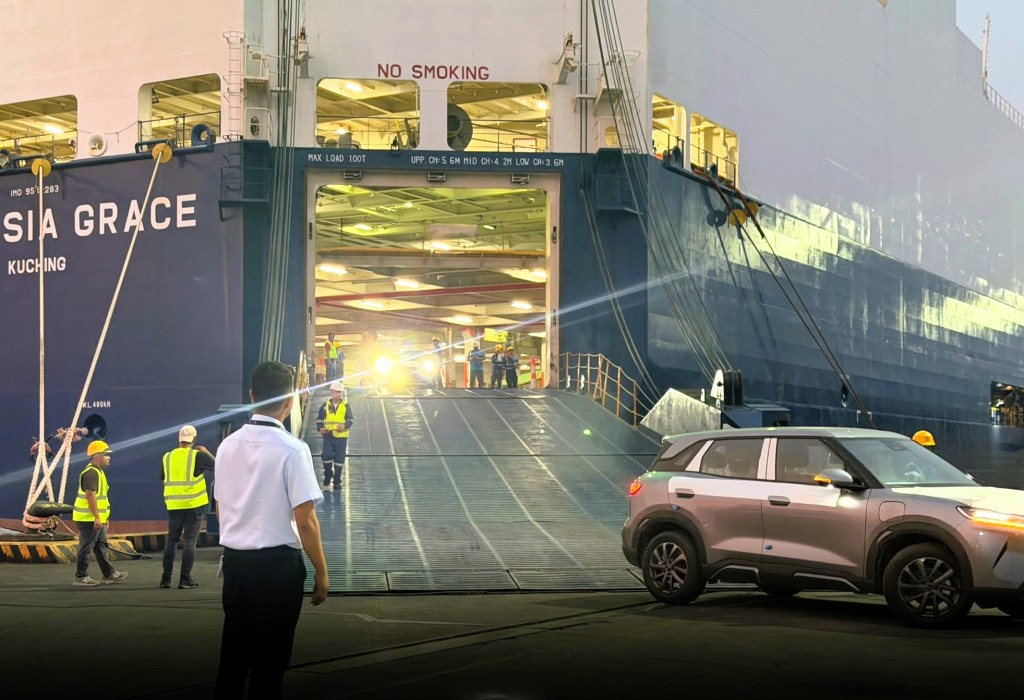
SUBIC BAY FREEPORT — A shipment of 100 units of BYD cars in various models and variants arrived in this free port on Thursday, October 22, marking the first discharge here of commercial BYD passenger vehicles for local consumption.
The shipment consisted of 80 brand-new hybrid vehicles and 20 fully electric vehicles (FEVs).
The delivery was a test run that could pave the way for succeeding BYD vehicle importations through Subic, the Bureau of Customs-Port of Subic said.
“This first discharge of BYD vehicles intended for consumption here is a welcome development for the Port of Subic. We are hopeful that this initial shipment will lead to continuous importation activities and encourage more companies to utilize our port,” said District Collector Geniefelle P. Lagmay.
The Subic Bay Metropolitan Authority (SBMA) said it anticipates a rise in electric vehicle (EV) shipments as Subic Bay solidifies its role in the country’s evolving automotive logistics and supply chain sector.

“With its strategic location, well-established port infrastructure, and Freeport designation, Subic Bay provides significant opportunities for businesses involved in importing, exporting, distributing, and handling electric vehicles and related components,” said SBMA Senior Deputy Administrator for Operations and Logistics Ronnie Yambao.
Yambao said the newly delivered BYD units will be distributed to the consignee’s accredited car dealers within the coming weeks.
The consignee aims to increase shipments to over 500 units per week, exceeding 2,000 per month, with projected monthly revenue of ₱6.8 million, he added.
Yambao also said the Subic Bay Freeport is well-positioned to become a key gateway for shipments of electric passenger cars, commercial electric vehicles, electric motorcycles, and EV components, as it is strategically located in Central Luzon.
For importers and distributors, Subic offers comprehensive cargo-handling capabilities, warehousing, freight forwarding, and customs brokerage services to support the seamless movement of vehicles from overseas manufacturers to Philippine markets, he added.
“Another significant opportunity lies in re-export and regional logistics, by exploring avenues to consolidate and transfer eligible vehicle shipments to other markets,” Yambao said.
The EV industry in the Philippines now experiences rapid growth. According to the Department of Energy, 66,685 EVs were sold during the first eight months of 2026 alone. These included 29,649 units of plug-in hybrid electric vehicles (PHEVs), 20,716 hybrid electric vehicles (HEVs), and 16,320 battery electric vehicles (BEVs).
Currently, five to six major public and private EV charging stations are located across the Subic Bay Freeport Zone as part of the agency’s commitment to achieving carbon neutrality goals. – Taktikom News & Features





Leave a Reply