
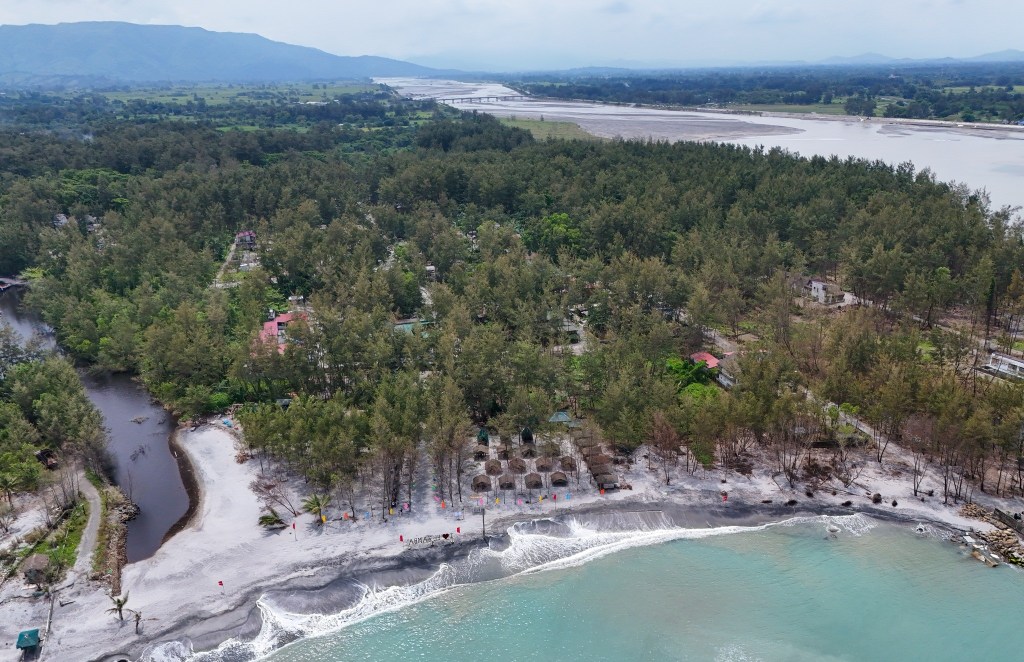
Gov. Ebdane advises against purchase of accreted lands in public domain
By HENRY EMPEÑO
IBA, Zambales — “Caveat emptor.” Let the buyer beware! This foundational contract principle places the burden of due diligence on the purchaser and dates back to the Romans. But Governor Hermogenes Ebdane Jr. says it remains true today in Zambales, as buyers snapped up land classified as part of the public domain.
In a message streamed live on social media on September 25, Gov. Ebdane issued the same warning while clarifying issues on the Zambales River Restoration Program, which aimed to dredge lahar-silted rivers, mitigate flooding, and restore local fishing grounds.
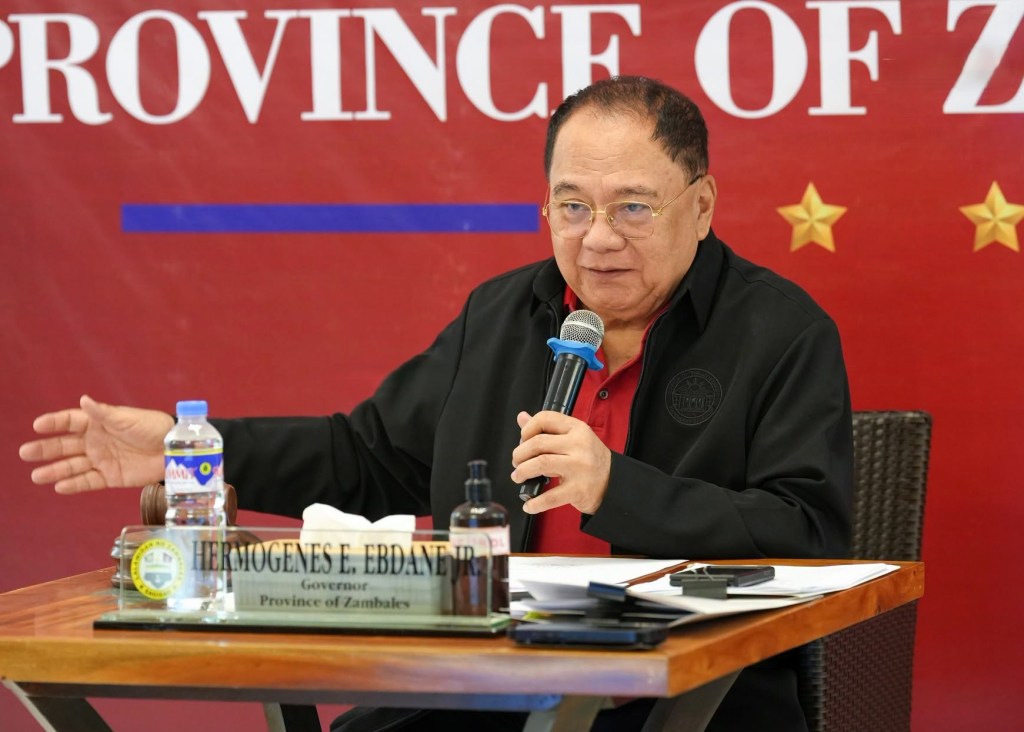
“If someone is selling public domain land as if it were his private property, the buyer may lose money and may face civil, administrative, or criminal liabilities. So, buyers, beware! Do due diligence first before making any purchase,” he advised.
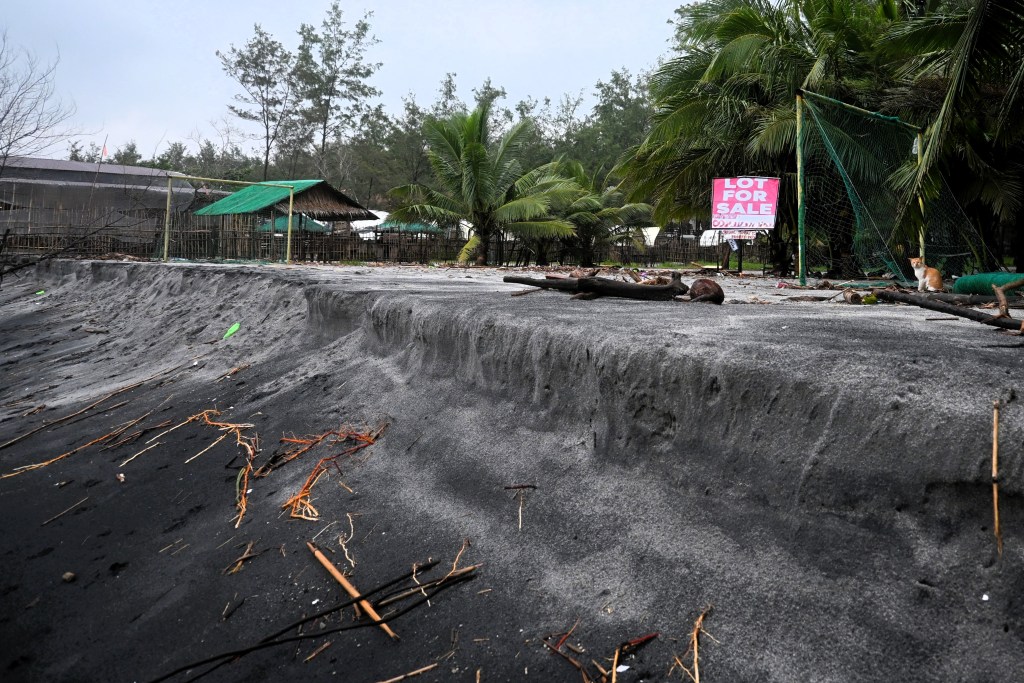
The governor cautioned the public amid allegations that dredging operations, undertaken in collaboration with the Department of Environment and Natural Resources (DENR) and the Department of Public Works and Highways (DPWH), had caused coastal erosion at Sitio Liwliwa in San Felipe.
He stressed that records of the Department of Environment and Natural Resources (DENR) show that a large portion of the land outside the former shoreline of Liwliwa is accretion and used to be part of the sea. As early as 2012, the DENR issued a notice that accreted lands fronting the West Philippine Sea are State-owned and cannot be built upon without a permit from authorities, he added.
TITLE VS. PERMIT
In his message, Gov. Ebdane also clarified the following points:
• “Even if occupants of accreted lands had tax declarations for the properties, these cannot be taken as valid title. Similarly, business permits covering the properties are issued to operate a business and do not prove ownership.
• “The Supreme Court has ruled in at least two cases that accretion on foreshore areas that was built due to the action of the sea is part of the public domain. It cannot be privately owned through simple possession.
• “Regarding the sale of land in the accretion area, buyers should first verify land classification with the DENR, CENRO or PENRO, the Registry of Deeds, the Assessor’s Office, and if necessary, with the MGB (Mines and Geosciences Bureau) and EMB (Environmental Management Bureau) of the DENR, and see if there is a valid title, foreshore lease, special use agreement, permit, or other lawful tenurial instrument. A tax declaration, deed of sale, or simple writing from a seller without a title does not automatically transfer ownership of public land.
DREDGING VS. EROSION
• “Do not connect Liwliwa coastal erosion to the Zambales River Restoration project, which is authorized under DENR Administrative Order No. 2019-13 for dredging the heavily silted river channels of Bucao, Maloma, and Sto. Tomas. Dredging starts at the river mouth or delta and continues upstream inside the designated river dredging zone. They will only dredge in that area and cannot go elsewhere.
“This means the project targets the river, river mouth, and estuary where sediment rises rapidly, not the open beach at Liwliwa. The DENR policy states that the project aims to restore natural water flow in the heavily silted river channels, increase hydraulic capacity, protect dikes and infrastructure, and reduce the risk of flooding.
“The EMB plays a role in the project’s Environmental Impact Assessment and Environmental Compliance, while the MGB, DPWH, DENR, and the Provincial Government are part of the monitoring and oversight framework.
LOCATION VS. SETTING
• “The resort facilities that were previously affected by erosion are estimated to be more or less 660 meters from the center of the Santo Tomas River and more or less 880 meters beyond the cadastral edge of the former titled properties. Images from 2010 to 2024 also show that some areas recently built upon were previously underwater before they were gradually filled with sand.
“Therefore, it is not right to say that river dredging automatically caused Liwliwa’s coastal erosion. The exact location and physical setting are different. A direct causal connection should be proven through a bathymetric survey, shoreline change analysis, wave and sediment transport study, and independent technical data, not just proximity or visual observation.
• “The MGB has pointed out that there has been coastal erosion in some areas even before the dredging project. In the 2025 stakeholders dialogue, the MGB also explained that the accreted areas are not yet stable and may still experience cycles of sand buildup and shoreline retreat due to strong waves, sediment transport, and typhoons.
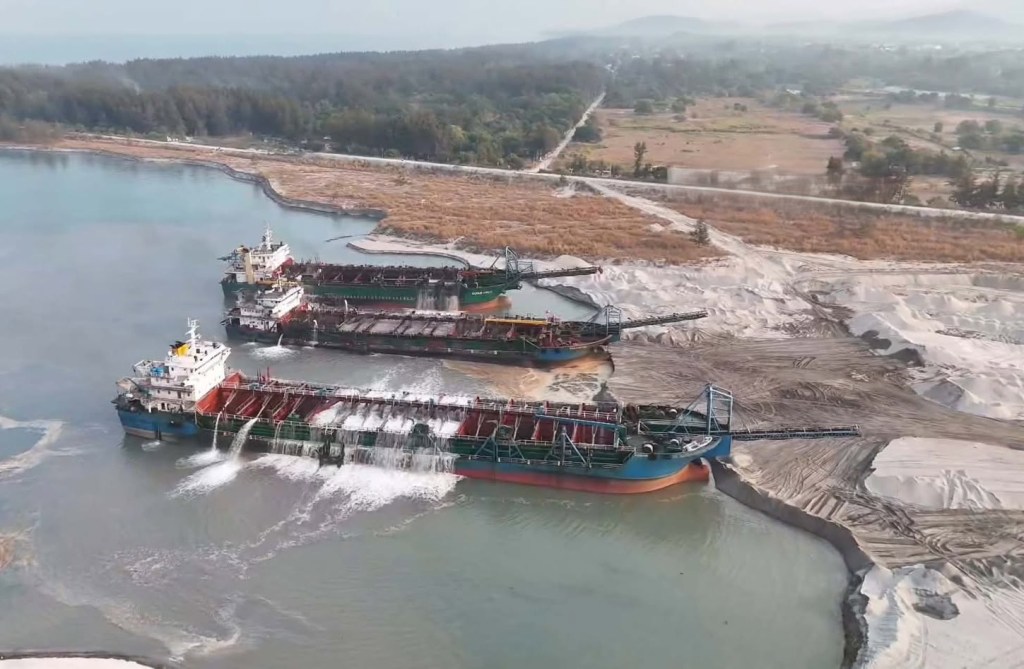
“This does not mean that dredging should no longer be monitored. It should be monitored. Dredging should be done at the approved coordinates and approved depth, under the approved work program, and under environmental monitoring. If it exceeds the permitted parameters in the river dredging zone, it must be investigated.”
RIGHT APPROACH
With these points, Gov. Ebdane said the right approach to the issue must involve an independent coastal erosion and sediment transport study; continuous river cross-section and bathymetric monitoring of Santo Tomas, Maloma, and Bucao rivers; clear publication of dredging zone coordinates and compliance status; DENR inventory of all occupants and structures in the accretion or foreshore areas; strict enforcement of new-build easement and land tenure rules; and due process for each claimant and occupant.
The governor stressed that the provincial government does not favor the dredging company over affected residents, nor does it favor illegal occupation over the law.
“Our duty is to protect life, livelihood, environment, and public property, and ensure that everyone—government, contractor, resort operator, seller, or buyer follows the law. If you have evidence of illegal dredging, submit it and let’s act. If there is evidence of illegal sale, fake documents, or land grabbing, submit it too, and let’s validate it,” Ebdane said.
“The standards are the same—document, location, law, and evidence. We do not need misinformation; we need science, transparency, and a clear solution,” the governor concluded. ▲



Leave a Reply