
By E.H. EDEJER | August 4, 2026
SAN ANTONIO, Zambales — Zambales Governor Hermogenes Ebdane Jr. has advised tourism stakeholders in Central Luzon to integrate development strategies, harness new technology, and preserve local heritage for the regional tourism industry to thrive amid global disruptions and local challenges.
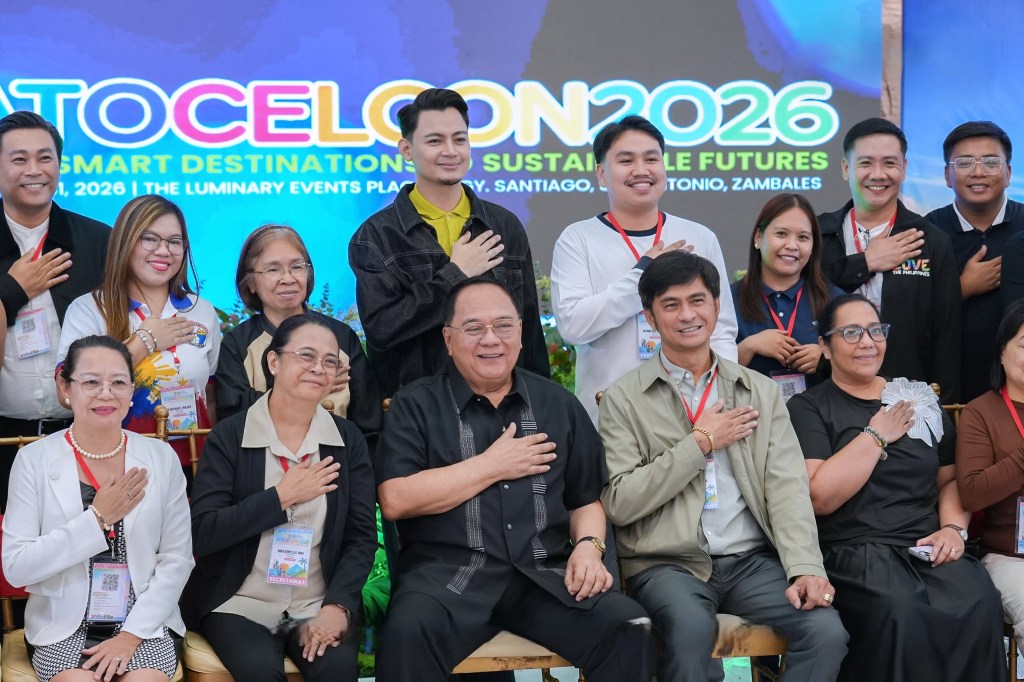
Ebdane, who is also chairman of the Region III Development Council (RDC-3), outlined a three-pronged approach to address both challenges and opportunities faced by the tourism sector during the 2026 convention of the Association of Tourism Officers of Central Luzon (ATOCEL) here on Friday, July 31.
“As we look toward the future, our task is not simply to rebuild tourism to pre-pandemic levels; our duty is to future-proof it,” Ebdane said.

Central Luzon, which is composed of seven provinces that extend from the east to west coasts of Luzon, is popular for beach destinations, leisure hubs in free port zones, and the emerging eco-tourism and farm-tourism circuits.
Yet it is not immune to global problems like geopolitical volatility, fluctuating energy prices, supply chain disruptions, changing international travel behaviors, and the accelerating impacts of climate change, Ebdane pointed out.
“These are not distant problems,” the governor stressed. “They directly affect visitor footfall, operational costs for local enterprises, and the environmental integrity of local destinations.”
Ebdane also observed that local tourism is increasingly threatened by urban pressures like traffic congestion, waste management bottlenecks, and environmental degradation that undermine the region’s competitiveness.
“If left unmitigated, these pressures raise operating costs for businesses, degrade the visitor experience, and divert investment elsewhere,” he added.

Ebdane said there is a need to future-proof the regional tourism industry, and that this requires three firm commitments: institutional synergy, inclusive governance, and environmental stewardship.
“Municipalities cannot operate as isolated silos. Our local tourism plans must seamlessly integrate into provincial and regional development agendas,” he said. “When Zambales, Pampanga, Bulacan, Bataan, Nueva Ecija, Tarlac, and Aurora work in harmony, Central Luzon becomes an unstoppable collective destination.”
Second, he stressed that smart tourism is not about replacing human connections with digital screens, but about using technology to empower local workers, preserve local cultures, and keep economic benefits inside the host communities.
Lastly, Ebdane emphasized that sustainable growth requires balancing commercial success with ecological protection. “Protecting our seas, forests, and agricultural lands is an economic imperative that safeguards our long-term assets,” he added.
Ebdane said that for its part, the Regional Development Council is aggressively driving key regional infrastructure projects in order to build an integrated tourism ecosystem.
“But infrastructure alone is not enough,” he added, citing the need for local tourism officers and policy makers to provide smart destination governance.
“Smart destination governance means using technology to monitor carry-capacities, streamline municipal operations, enforce environmental standards, and protect local heritage,” Ebdane said.
“When local government units combine physical infrastructure with smart, sustainable governance, we protect our environments while enhancing profitability for our communities,” he added.
In the same occasion, Gov. Ebdane inducted into office the newly elected officers of ATOCEL. They are: Darmo A. Escuadro, of San Jose City, Nueva Ecija, president; Ana Risa S. Mendoza (Aurora), vice-president; Emisonia C. Gante (Pantabangan, Nueva Ecija), secretary; Paul L. Alata (Capas, Tarlac), treasurer; Gennessy D. Villar (Botolan, Zambales), auditor; and Danica Lolita C. Tigas (Bataan), ATOP regional representative. ▲
COVER PHOTO: Gov. Hermogenes Ebdane Jr. with ATOCEL officers after their induction at the Luminary Events Place in San Antonio, Zambales. (ZFTP)


 Headline Zambales
Leave a comment