

By HENRY EMPEÑO | August 3, 2026
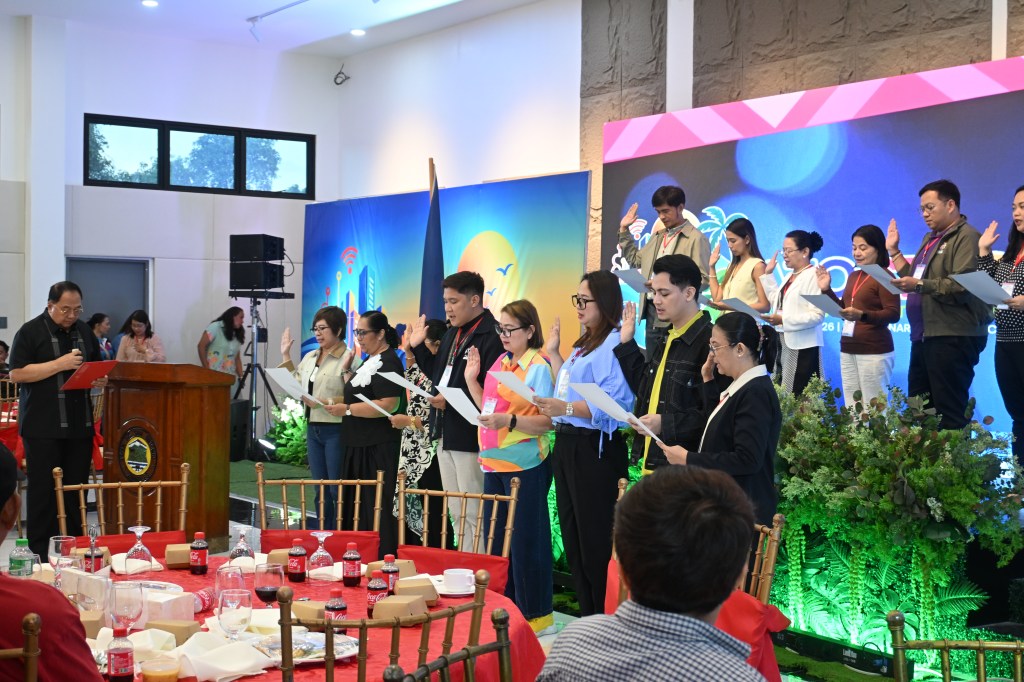
SAN ANTONIO, Zambales — Strategic government infrastructure projects that expand global gateways, revolutionize mass transit, unlock multi-hub corridors, and integrate local destinations will drive Central Luzon into a tourism powerhouse, Gov. Hermogenes Ebdane Jr. told regional tourism officers and stakeholders here on Friday.
Speaking at the 2026 convention of the Association of Tourism Officers of Central Luzon (ATOCEL), Ebdane, who also chairs the Regional Development Council of Central Luzon (RDC-3), said the government is aggressively pursuing key infrastructure projects that will integrate the industry and bring about economic and social transformation.
“Tourism cannot thrive in isolation,” Ebdane pointed out, noting that global geopolitical volatility, fluctuating energy prices, supply chain disruptions, changing international travel behaviors, and the accelerating impacts of climate change threaten the stability of the tourism industry.

“These are not distant problems,” he stressed. “They directly affect visitor footfall, operational costs for our local micro, small, and medium enterprises, and the environmental integrity of our local destinations.”
As building a stable tourism industry requires seamless access, reliable power, clean environments, and safe communities, Ebdane said RDC-3 is aggressively pushing infrastructure projects like airport expansion, railway and road network construction, and multi-hub corridors to build an integrated tourism ecosystem.
He said the ongoing expansion of the Clark International Airport and Airport City positions Region III as the premier international entryway for Central and North Luzon, thus expanding direct reach to global markets.
At the same time, the North-South Commuter Railway (NSCR) and its pipeline extension to New Clark City will dramatically reduce travel times between Metro Manila, Bulacan, Pampanga, and Clark, and create a seamless flow of domestic and international visitors to Central Luzon provinces, Ebdane said.
The proposed Subic-Clark-Manila-Batangas Railway will also establish a high-speed mobility pipeline linking key industrial, economic, and tourism hubs into an interconnected network, he added.
Meanwhile, the government also seeks to open up coastlines and agri-tourism belt with the Luzon Eastern Seaboard Road Network and the recently completed Central Luzon Link Expressway Phase 1. These will unlock coastal tourism destinations along the Pacific side, bolster east-west connectivity, and open up emerging farm and eco-tourism sectors in the heart of the region, Ebdane said.
Meanwhile, here in Zambales, Ebdane cited the ongoing Capas-Botolan Road and the Daang Kalikasan network projects that will cut cross-border travel time between Zambales, Tarlac and Pangasinan and the rest of Region III.
Ebdane said the RDC-3 has aligned its 2023-2028 Regional Development Plan with the overarching objective of achieving comprehensive economic and social transformation.
“We envision Central Luzon as a vibrant agri-industrial heartland, a global gateway, and a premier sustainable tourism destination where our people enjoy a comfortable, secure, and resilient life,” Ebdane said.
“By leveraging strategic infrastructure, adopting smart technologies, and asserting decisive local governance, Region Ill will transform global uncertainties into unbeatable local tourism opportunities,” he added. ▲


 Headline Zambales
Leave a comment