
By HENRY EMPEÑO
BOTOLAN, Zambales — The use of fermented fish waste as organic liquid fertilizer is gaining ground here, with encouragement and technical support from the local government unit and technical support from the Municipal Environment and Natural Resources Office (MENRO) of Botolan.
The raw materials— entrails, gills, and other fish parts that are usually discarded—are collected from the Botolan Public Market and processed into fish amino acid (FAA).
“Fish amino acid is rich in nitrogen, amino acids, and trace minerals that stimulate vigorous plant growth and boost soil quality,” said MENRO head Annadine Manzinares. She said the FAA production project has been going on since 2018.
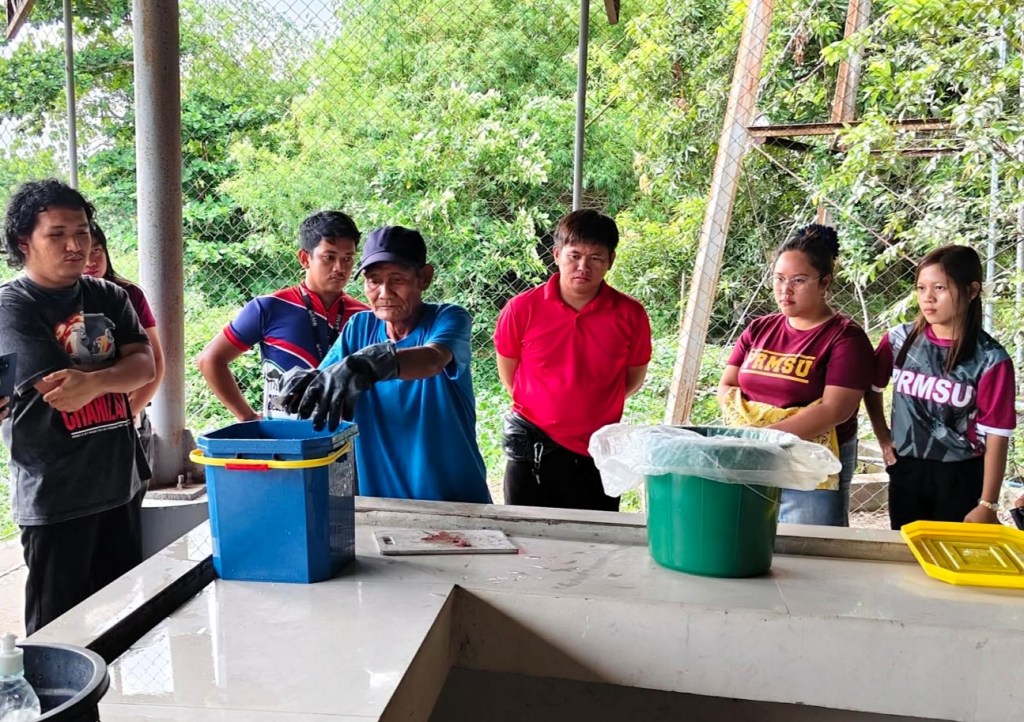
Producing the organic liquid fertilizer is relatively simple. First, the fish wastes are collected and mixed with molasses (a thick, dark brown syrup made as a byproduct of sugar production) on a one-is-to-one ratio.
Next, the mixture is placed in a clay pot, pail, or heavy plastic container, and then covered and fermented for at least two months. After the required fermentation period, the mixture is strained through fine cloth to squeeze out the juice or FAA.
Botolan Mayor Jun Omar Ebdane said the LGU has encouraged farmers to use FAA as cheaper but effective fertilizer for sustainable farming.
The project, he said, also supports the LGU’s program on waste management, resource recovery, and environment-friendly practices. ▲
COVER PHOTO: A MENRO technician demonstrates how fish waste is fermented to produce fertilizer. (Botolan MIO)




Leave a comment