

SUBIC BAY FREEPORT – San Antonio, Zambales is emerging as a potential hub for clean energy development following the discovery of what local officials describe as one of the world’s largest deposits of natural hydrogen gas.
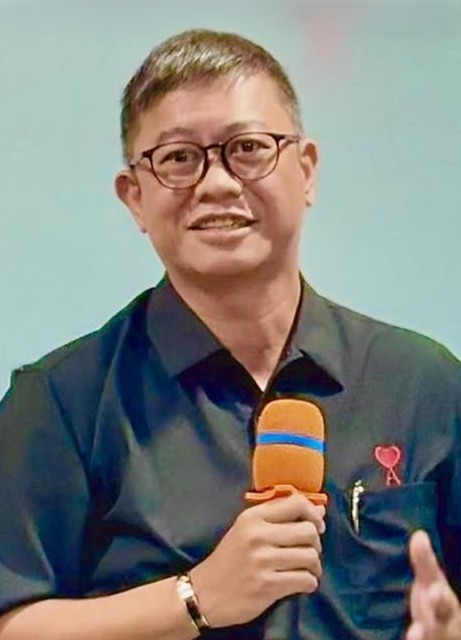
San Antonio Mayor Arvin Antipolo said in a media briefing here on April 29 that developing the local resource could reshape the municipality’s economic future.
He said the local government has taken steps to prepare for the large-scale development of hydrogen found at the Nagsasa Seep, which has the highest recorded gas seepage in the country.
The gas seeps, also known as “outgassing,” have released a record 800 tons of geologic hydrogen, the Department of Science and Technology’s Philippine Nuclear Research Institute (DOST-PNRI) reported last year.
The San Antonio outgassing surpasses the previous record of 200 tons reported in Albania in 2024, and may generate from 12,861 to 15,185 megawatt-hour (MWh) of electricity per year the DOST-PNRI added.
Antipolo said hydrogen, now being explored globally as a clean energy source, has wide-ranging applications—from powering vehicles through fuel cell technology being developed by companies like Honda to serving as an alternative source for electricity generation.
He emphasized that unlike conventional hydrogen production, which requires significant energy input, the deposits found in San Antonio occur naturally, making them more efficient to harness.
The mayor noted that while President Ferdinand “Bongbong” Marcos Jr. has already approved Petroleum Service Contracts (PSCs) covering hydrogen-rich areas in Northern Zambales and Southern Pangasinan, San Antonio is not yet included. However, he expressed optimism that the municipality will soon be part of future exploration and development plans.
To advance this goal, Antipolo revealed that the local government has initiated coordination with the Department of Energy (DOE) and the DOST to validate and study the hydrogen deposits.
Antipolo said the local government has also moved to institutionalize its preparations by creating the San Antonio Green and Renewable Energy Council and the San Antonio Green and Renewable Energy Investment Board. These bodies are expected to facilitate policy direction, attract investors, and ensure that infrastructure developments directly benefit the community.
He added the municipality is also pushing for key hydrogen development infrastructure to be located within the town, to allow the LGU to generate revenues through real property taxes and strengthen its Special Education Fund.
Beyond economic gains, Antipolo underscored the broader impact of the project, particularly in addressing Central Luzon’s fragile power supply. – Gabriel Salvaña with Taktikom research



Leave a comment