
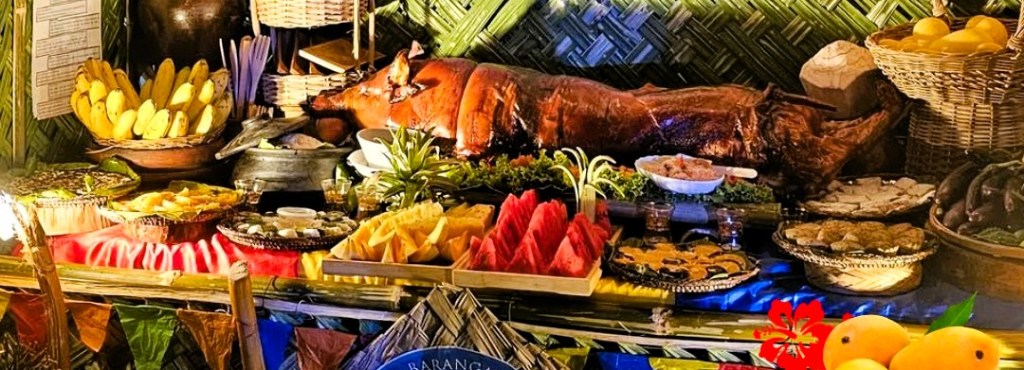
IBA, Zambales — With April officially celebrated as Filipino Food Month in the Philippines to ensure the preservation of local food heritage while supporting local farmers, fishermen, and food producers, the Zambales Provincial Tourism and Investment Promotion Office (PTPO) put out a series of features spotlighting local delicacies that are a must-try for visitors and residents alike. Among these are:
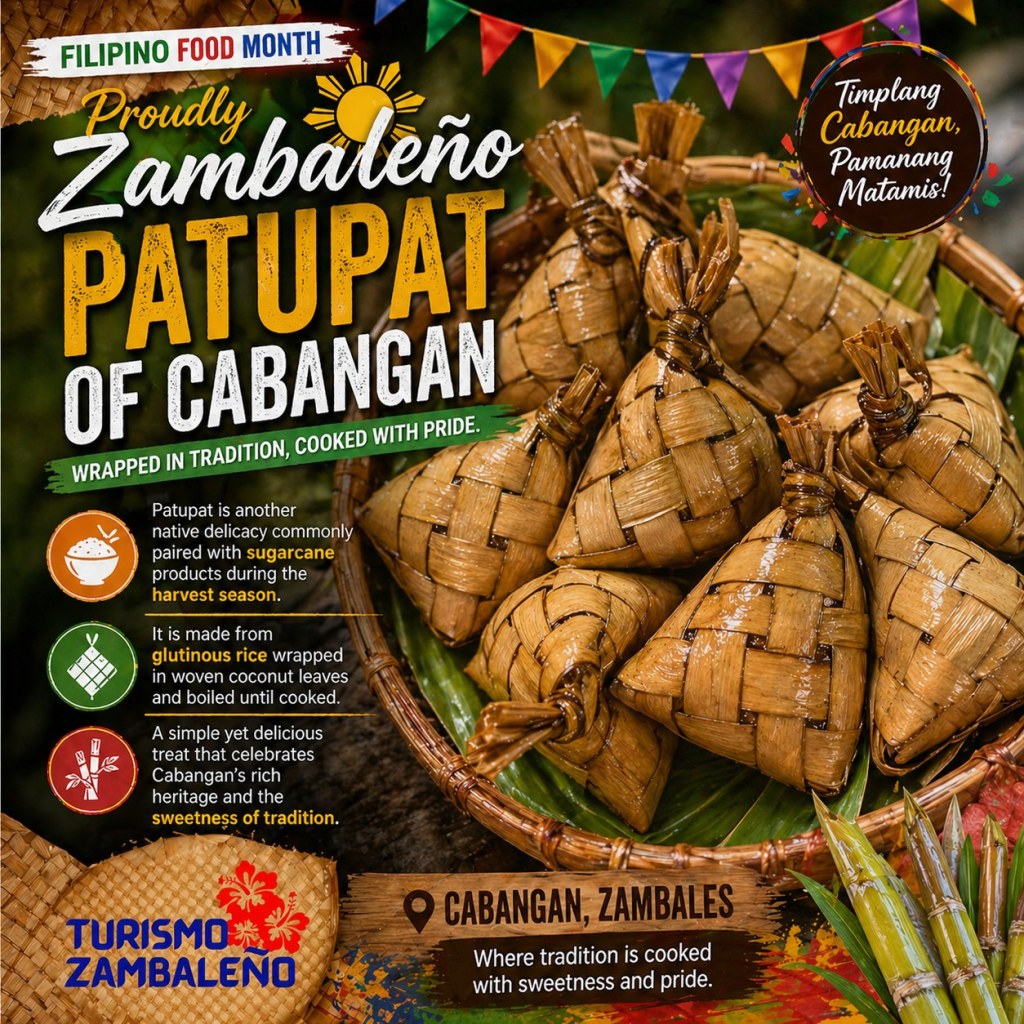
PATUPAT
In Cabangan town where some traditions are best told through taste, Patupat is commonly enjoyed during the sugarcane harvest season.
Made from glutinous rice carefully wrapped in woven coconut leaves, Patupat is slowly boiled until fully cooked, forming its distinct shape and texture. Simple in preparation, yet rich in meaning, each piece reflects the patience, craftsmanship, and traditions passed down through generations.
More than just a delicacy, Patupat is a symbol of harvest, sharing, and community.
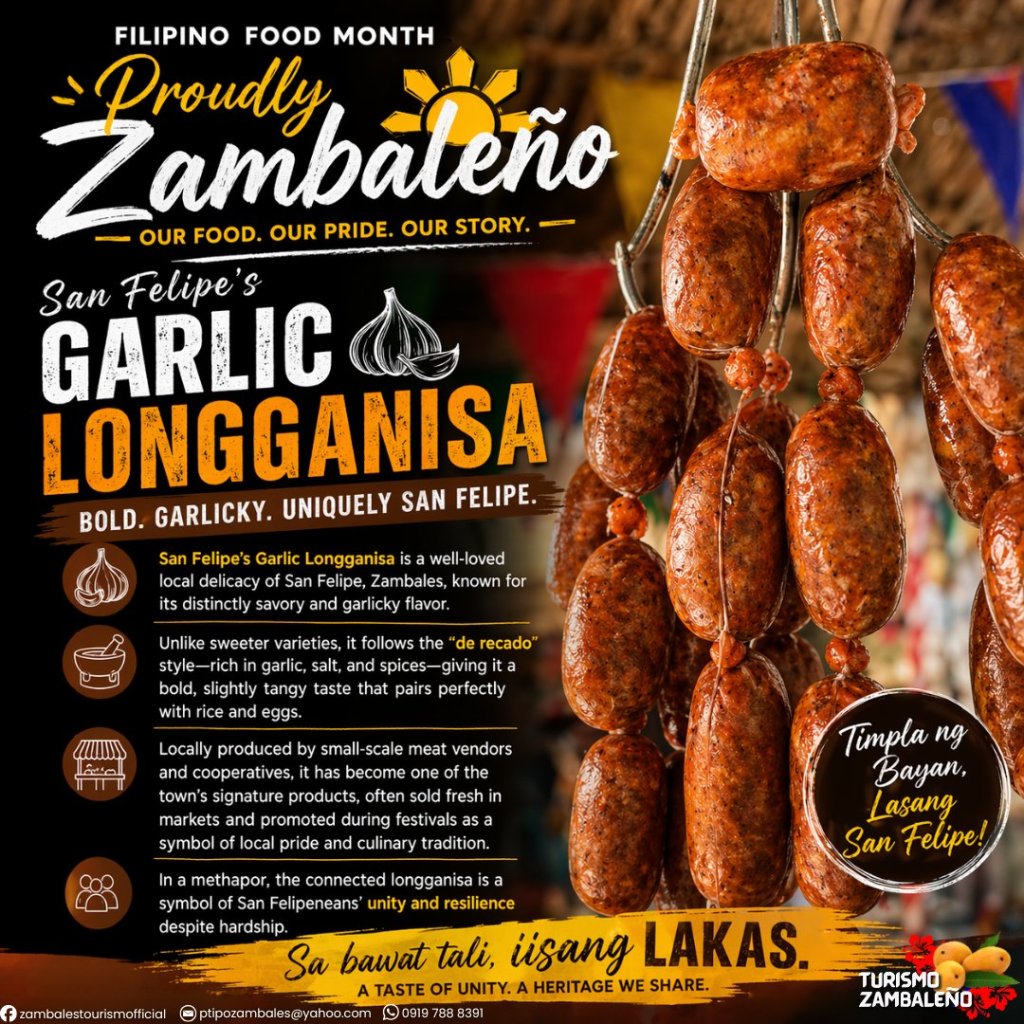
GARLIC LONGGANISA
Known for its distinctly savory and garlicky kick, San Felipe’s longganisa follows the traditional “de recado” style—packed with garlic, salt, and spices, delivering a rich, slightly tangy taste that pairs perfectly with garlic rice and eggs. Simple, hearty, and undeniably satisfying.
Lovingly crafted by local meat vendors and cooperatives, this hometown delicacy has become one of San Felipe’s signature products—freshly sold in local markets and proudly showcased during festivals as a symbol of culinary heritage.
The linked longganisa reflects the spirit of the San Felipeños—connected, resilient, and united, just like every piece tied together.
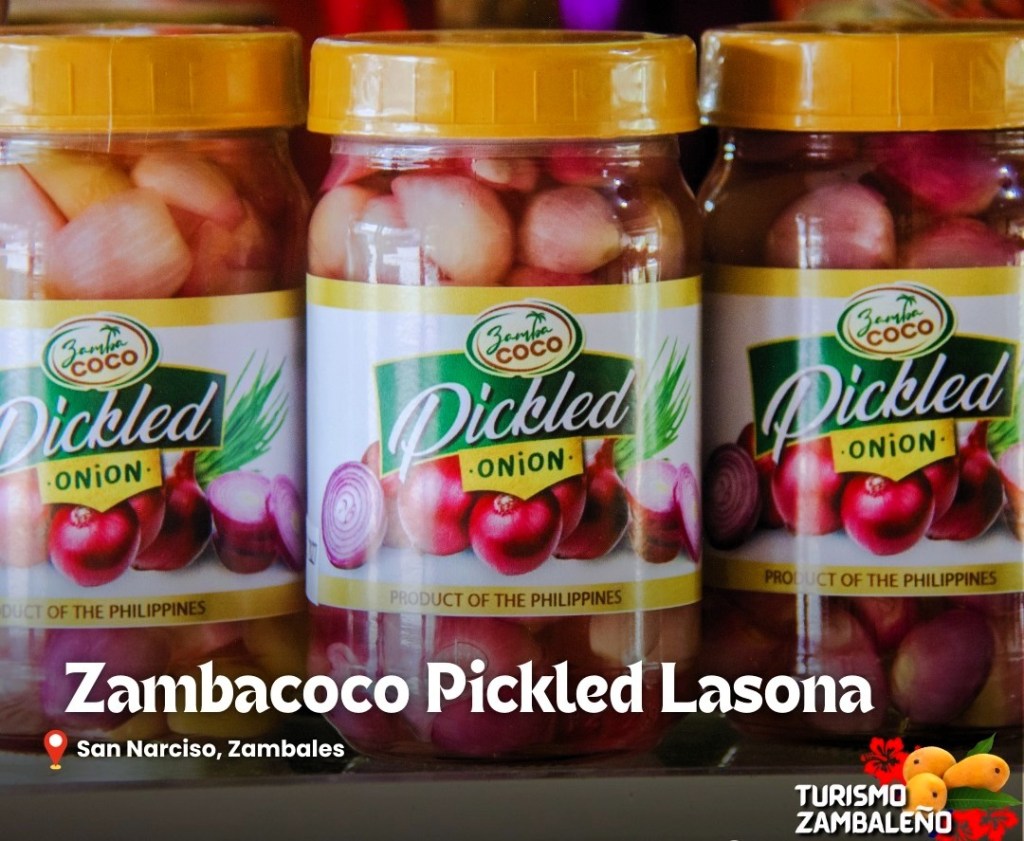
PICKLED LASONA
This specialty delicacy from San Narciso, the Zambacoco Pickled Lasona, is made from locally grown onion variety cultivated in Barangay Beddeng. Known for its fertile soil, the area produces onions with a mild sweetness, crisp texture, and fresh quality—a true taste of Zambaleño farming excellence.
Harvested at its peak from November to March, the lasona is carefully sliced and preserved in a flavorful blend of vinegar and spices. The result? A refreshing balance of “asim at tamis,” paired with a satisfying crunch in every bite—perfect as a side dish, appetizer, or even a pasalubong.
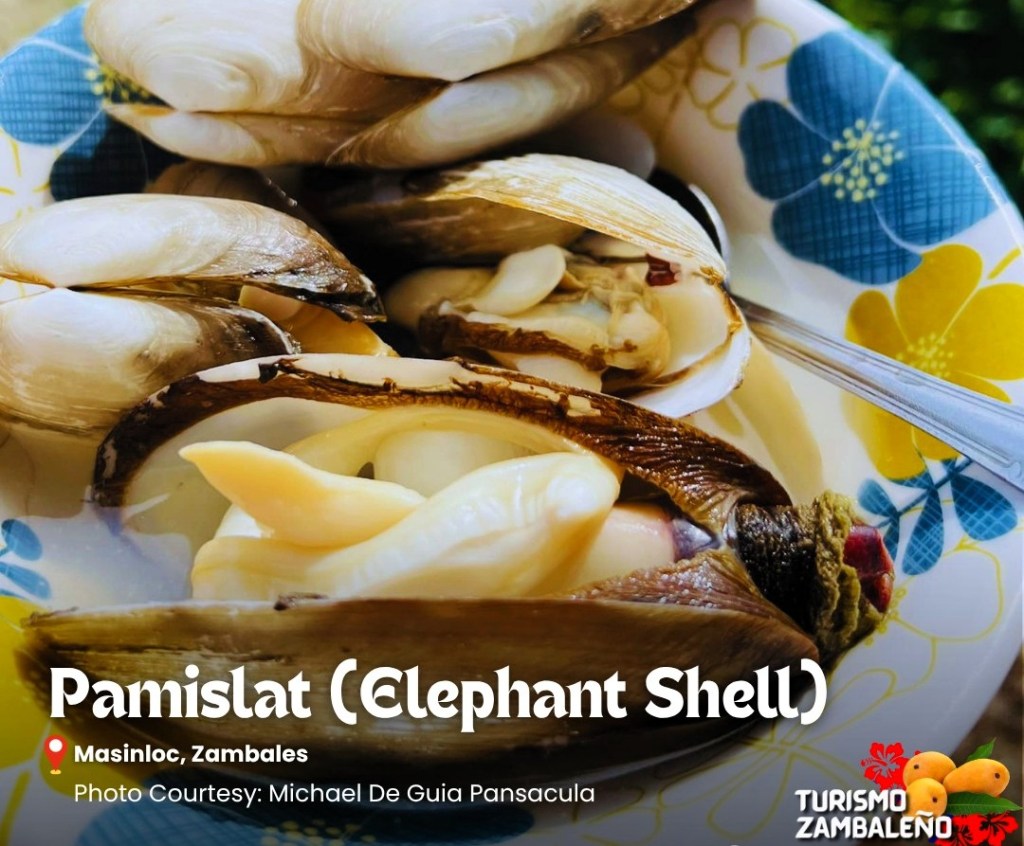
PAMISLAT
This authentic seafood delicacy from Masinloc is an edible mollusk, also referred to as pinsutan, a seafood prized by locals and seafood lovers alike for its fresh, tender meat and rich ocean flavor.
Pamislat is celebrated as a culinary gem and an integral part of the town’s coastal heritage. Its versatility in cooking makes it a favorite ingredient that can be enjoyed in a variety of delicious ways.
Must-try Pamislat dishes include: Steamed Pamislat – simple yet flavorful, allowing the natural sweetness of the shell to shine; Baked Pamislat – a savory treat, often enhanced with herbs and seasonings; and Tinolang Pamislat – a comforting Filipino-style soup that perfectly complements the freshness of the seafood.
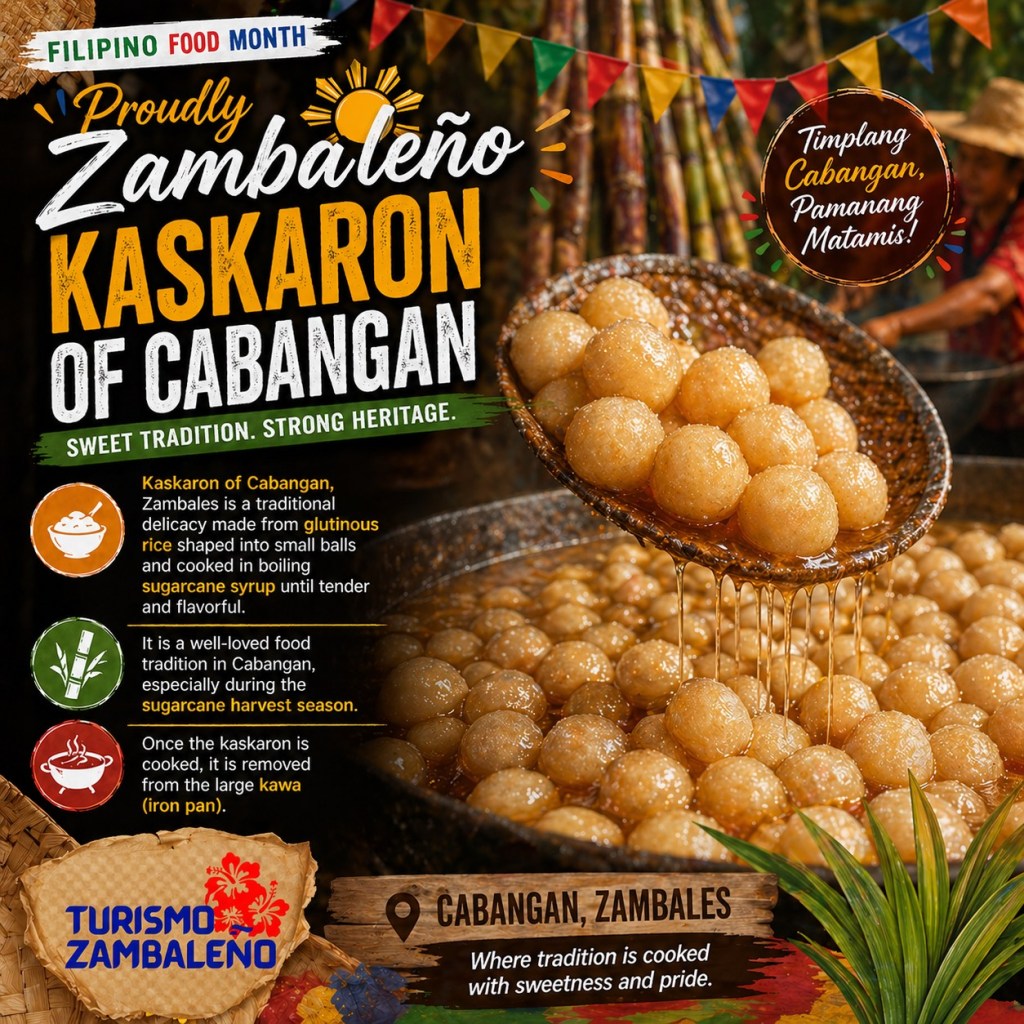
KASKARON
In the quiet rhythm of life in Cabangan, there is a sweetness that goes beyond taste. They call it Kaskaron—a humble delicacy made from glutinous rice, carefully shaped into small balls and slowly cooked in rich, boiling sugarcane syrup. Simple in ingredients, yet deeply rooted in local culture.
Kaskaron is made during the sugarcane harvest season, when communities gather and the air carries the warm, caramel scent of boiling syrup from a large kawa. One by one, the rice balls are dropped in, gently stirred, and left to absorb the sweetness of the season.
When fully cooked, the kaskaron is lifted from the pan—glossy, golden, and soft—each piece holding the warmth of shared labor and tradition, each ball a memory of simple moments made meaningful by the people who share them.
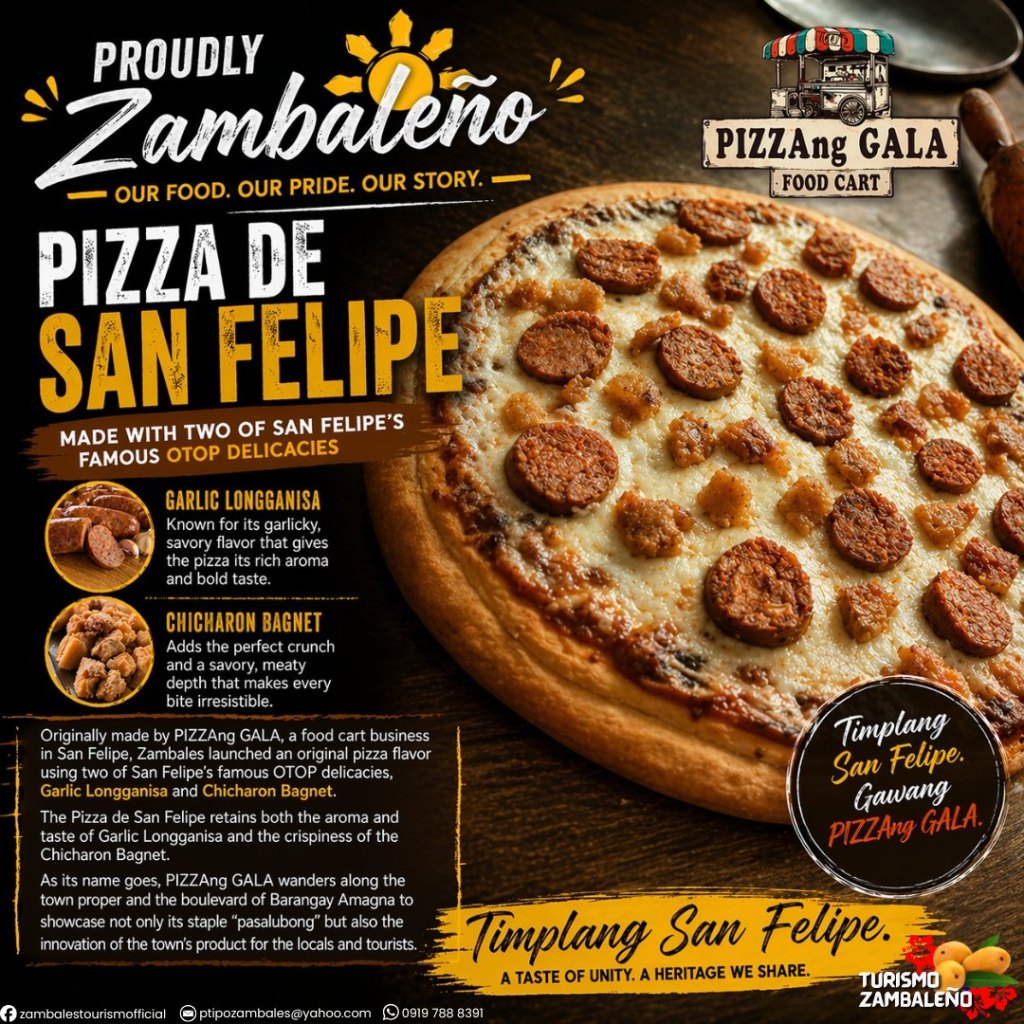
PIZZA DE SAN FELIPE
This bold and creative local favorite from San Felipe, Zambales is one-of-a-kind. Originally crafted by PIZZAng GALA, a homegrown food cart business, this unique pizza brings together two of San Felipe’s well-loved OTOP delicacies—Garlic Longganisa and Chicharon Bagnet—into one unforgettable bite.
Each slice delivers the rich, garlicky aroma of longganisa paired with the irresistible crunch of bagnet, creating a perfect balance of savory flavor and texture. It’s a true showcase of local innovation, transforming familiar flavors into something exciting and new.
PIZZAng GALA takes its flavors on the road—roaming around the town proper and the scenic boulevard of Barangay Amagna—bringing this must-try treat closer to both locals and visitors.
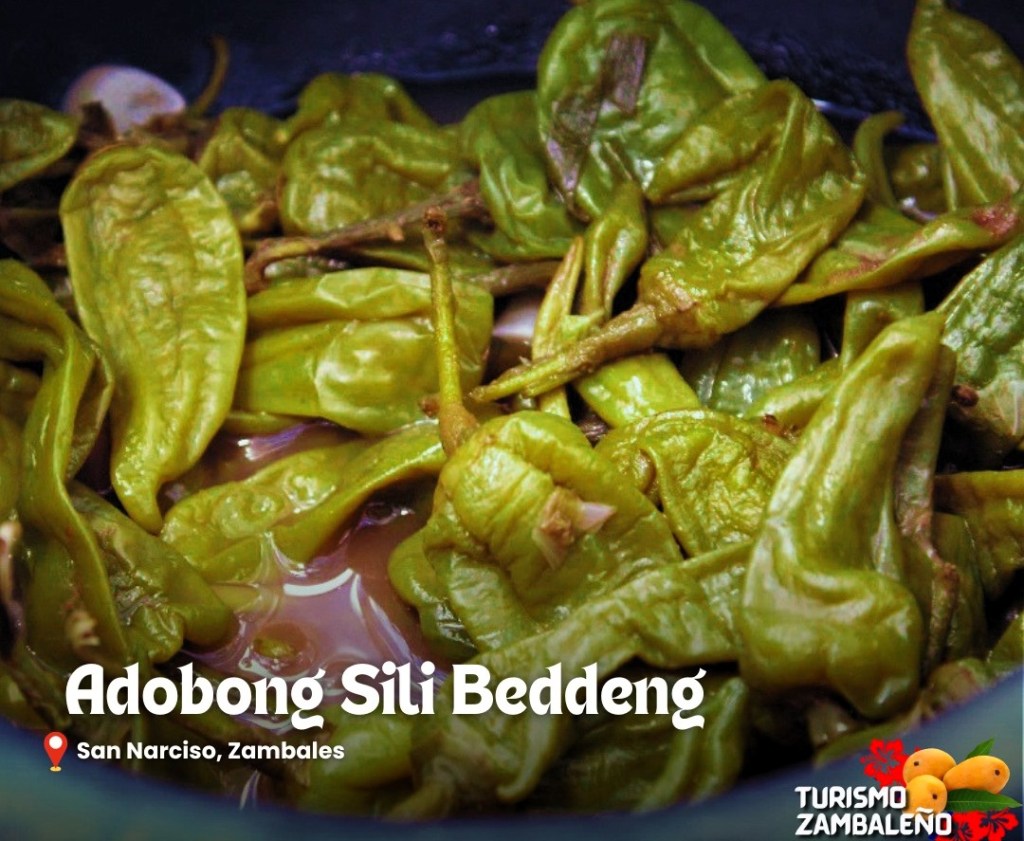
ADOBONG SILI BEDDENG
San Narciso, Zambales has a humble yet beloved local dish—Adobong Sili Beddeng. Through intercropping, farmers produce an abundant supply of sili Beddeng, making it affordable and accessible to many households—truly a reflection of sustainable living and local ingenuity.
What makes this dish special is its simplicity. Unlike the usual adobo that uses soy sauce or bagoong, Adobong Sili Beddeng highlights the natural flavor of fresh chili—small, slightly wrinkled yet firm, and surprisingly mild in taste. When simmered in vinegar and spices, the sili absorbs the rich, tangy adobo flavor while keeping its texture—resulting in a dish that is savory, aromatic, and uniquely Zambaleño.
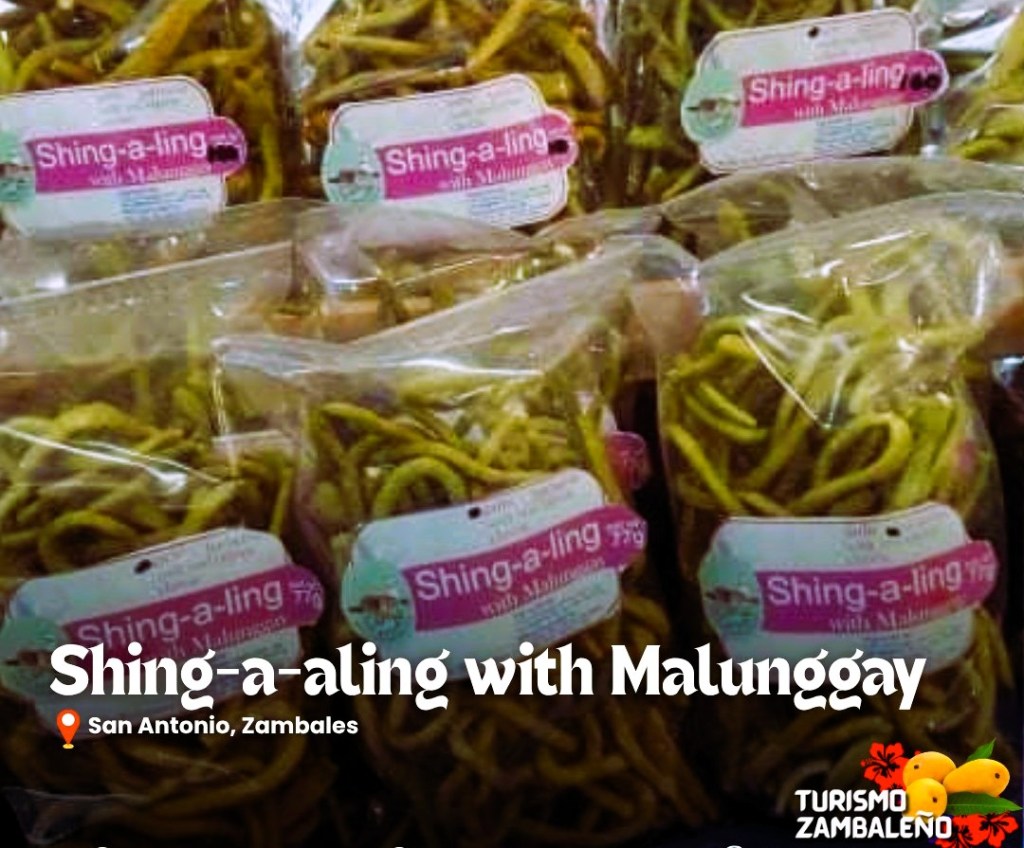
MALUNGGAY SHING-A-LING
San Antonio, Zambales’ version of Shing-a-ling is an improved and healthier take on the classic crunchy snack.
Traditionally made from a simple flour mixture and deep-fried, this local innovation by the San Antonio Moringa Processor Association Inc. (SAMPAI) incorporates finely shredded malunggay (moringa) leaves into the recipe, adding both nutritional value and a subtle earthy flavor.
This upgraded Shing-a-ling not only keeps its signature crispiness, but also offers added health benefits from malunggay, known for its rich vitamins and minerals. It is available in a variety of flavors, including plain, garlic, barbecue, cheese, sour cream, spicy garlic, and spicy barbecue—making it both a tasty and more nutritious snack option.
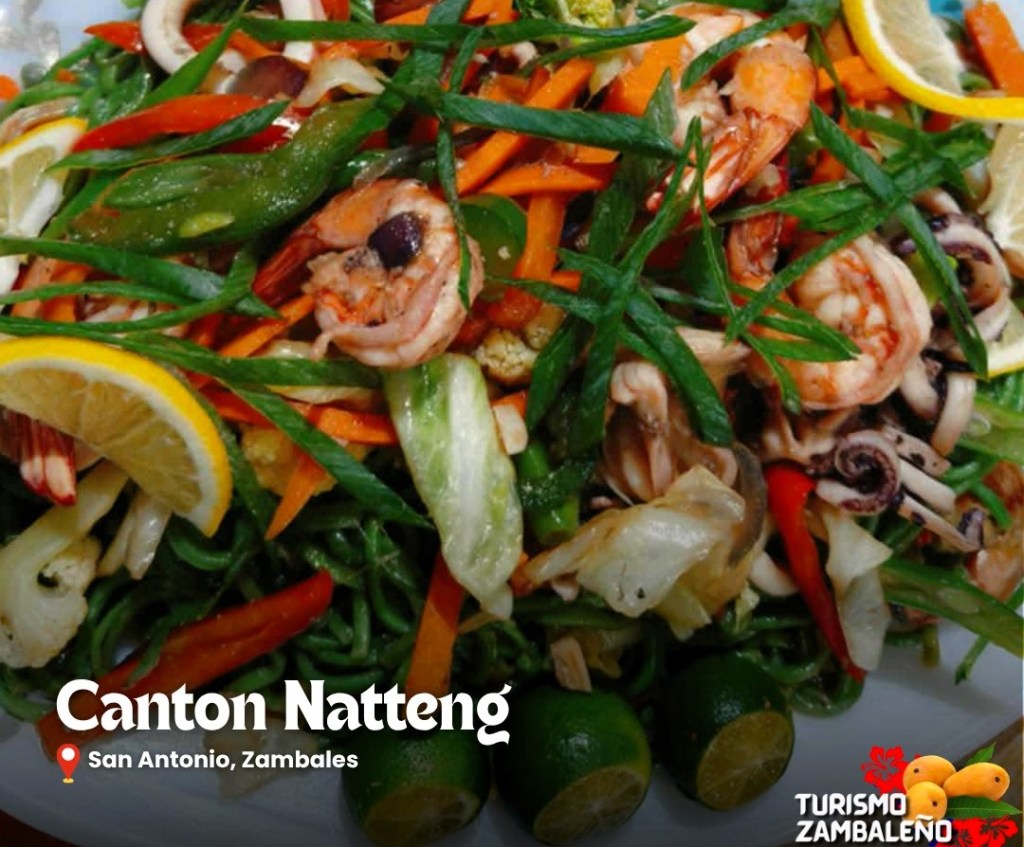
CANTON NATTENG
Canton Natteng is a unique local twist on the classic Filipino pancit canton from San Antonio. What makes it special is the use of malunggay (moringa) noodles produced by the San Antonio Moringa Processor Association Inc. (SAMPAI), the same group known for making Shing-a-ling snacks.
The term “natteng” comes from Ilocano, meaning vegetables, highlighting the nutritious, plant-based noodles. Instead of the usual meat toppings, this dish features fresh seafood—reflecting the coastal abundance of San Antonio—resulting in a flavorful, healthy, and distinctly local noodle dish. – Zambales PTIPO





Leave a comment