
By HENRY EMPEÑO (Business Mirror) | October 9, 2025
SUBIC BAY FREEPORT — From the time Spanish military forces surveyed its shores in 1868, to the point in history when the United States built its Naval Station here in 1905, Subic has always been valued for its deep-water port.
So, when the Americans finally left in 1991 after almost a century of developing Subic as a military resupply center and a bulwark of its military might in the Asia-Pacific region, Subic’s maritime industry became a focal point of development for the Subic Bay Metropolitan Authority (SBMA), the agency tasked to convert the former military base into an economic zone.
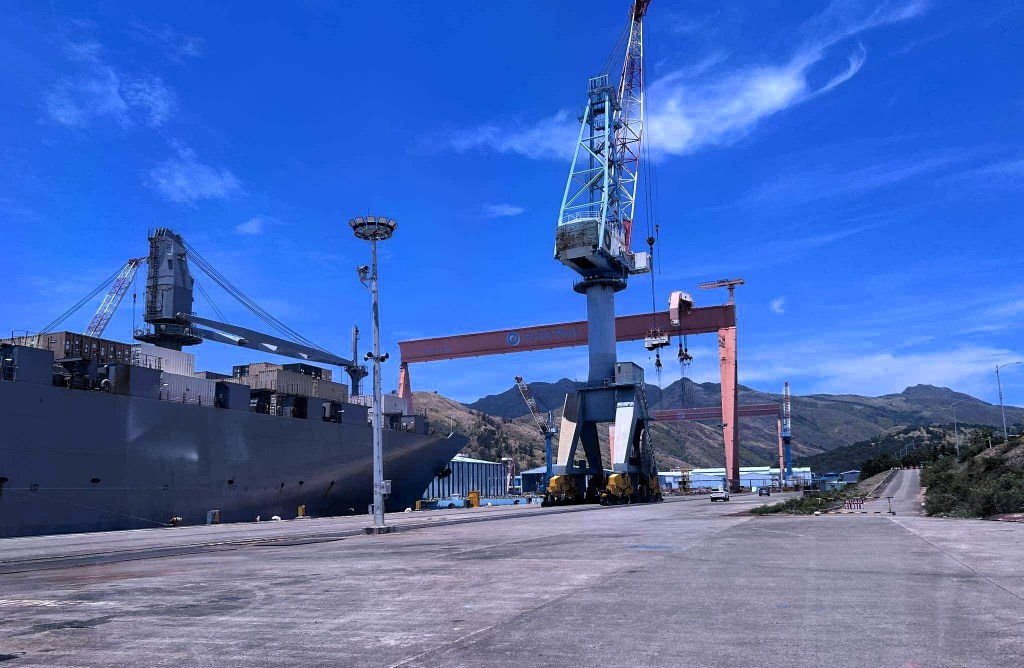
BusinessMirror, which celebrates its 20th founding anniversary this month, was there at the start of Subic’s determined journey to leverage its core advantage as a maritime port, starting with the full-blast construction in 2005 of the New Container Terminal-1, to its efforts to gain more maritime traffic in terms of cargo vessels, cruise ships, and even military ships that visit under the Enhanced Defense Cooperation Agreement.
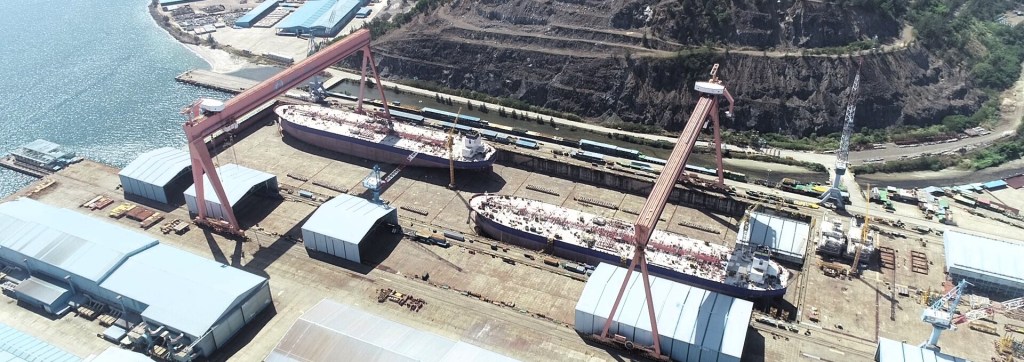
Yet no maritime news from Subic was as compelling as the meteoric rise and fall of the Hanjin shipyard, the $1.7-billion project that made the Philippines at one point the fourth-largest shipbuilding country in the world.
Its story mirrored life’s triumphs and tribulations, and stressed the lesson that man’s undertakings, no matter how well-intentioned, may still fall apart and fail.
HANJIN ARRIVES, AND SUBIC TOO
Hanjin’s arrival in Subic in February 2006 was the biggest local news that year. When the SBMA signed in Hanjin Heavy Industries and Construction Co., Ltd. of South Korea for a US$1 billion shipbuilding project at the Redondo Peninsula, it created not just ripples, but a tsunami of opportunities in the otherwise placid pond that was Subic Bay.
Immediately, the Hanjin contract made Subic the country’s top heavy-hitter in foreign direct investments (FDIs) with P51.4 billion generated that year. This allowed the SBMA to corner 70.8 percent of the P73 billion investment projects approved by all investment promotion agencies (IPAs), and eclipsing the combined first quarter FDI tally of the Philippine Economic Zone Authority (PEZA), the Board of Investments (BOI), and the Clark Development Corporation (CDC).
The Hanjin investment also paved the way in 2006 for the entry of six more Korean firms that pledged a total of $6.5 million for various projects.
The growing job opportunities created by more investments further boosted the Subic economy, allowing the SBMA to rein in a total of P4.5 billion in revenues in 2006.
In June 2007, more good news arrived: Hanjin would top its $1-billion original investment with $684 million due to new orders for vessels to be made in its Subic shipyard.
FROM ARGOLIKOS TO ANTOINE DE SAINT EXUPERY
BusinessMirror also bore witness to the evolution of Hanjin’s shipbuilding projects.
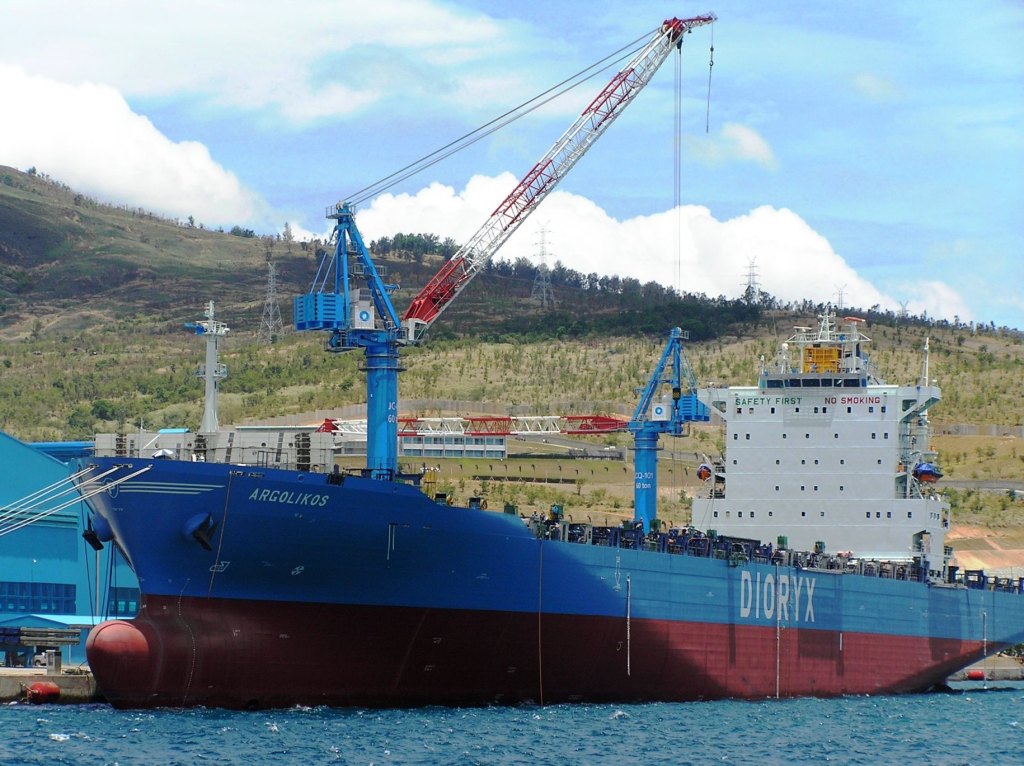
In April 2008, the Korean shipbuilder launched the 4,300-TEU bulk carrier “Argolikos,” the first ship ever to be built in its Subic shipyard. Greek firm Dioryx Maritime Corporation, which ordered Argolikos, has also placed orders for at least six vessels to be built by Hanjin, the SBMA said.
From there, Hanjin went on to build more—and bigger—ships. In September that year, the firm announced that it will construct two very large crude carriers (VLCCs) worth a total of $330 million for Emarat Maritime LLC (EML), a shipping firm headquartered in Dubai.
In January 2010, Hanjin unveiled “Leyla K,” the first oil tanker to be built in Subic, thereafter delivering the 114,000-deadweight ton behemoth to the Kaptanoglu Shipping Lines.
In August that year, HHIC-Phil’s then general manager for external business Taek Kyun Yoo said the company had already booked 56 new shipbuilding projects with projected sales of $4.9 billion, a return more than double the firm’s total investments of $1.9 billion in the past four years.
The new contracts, Yoo also said, would progressively increase the number of shipyard workers from 16,000 in 2008 to 22,000 by the end of 2010, and up to 24,000 in 2011 and 25,000 in 2012.
Hanjin-Subic made history again in September 2015 when it completed the first locally-made liquefied petroleum gas (LPG) carrier at its Redondo Peninsula facility, the “M/V Kaprijke”, which had a capacity of 38,405-cubic meters.
The firm’s contribution to the economy was recognized in December 2016 when the Department of Trade and Industry (DTI) named Hanjin as the country’s top exporter in the machinery and transport equipment sector.
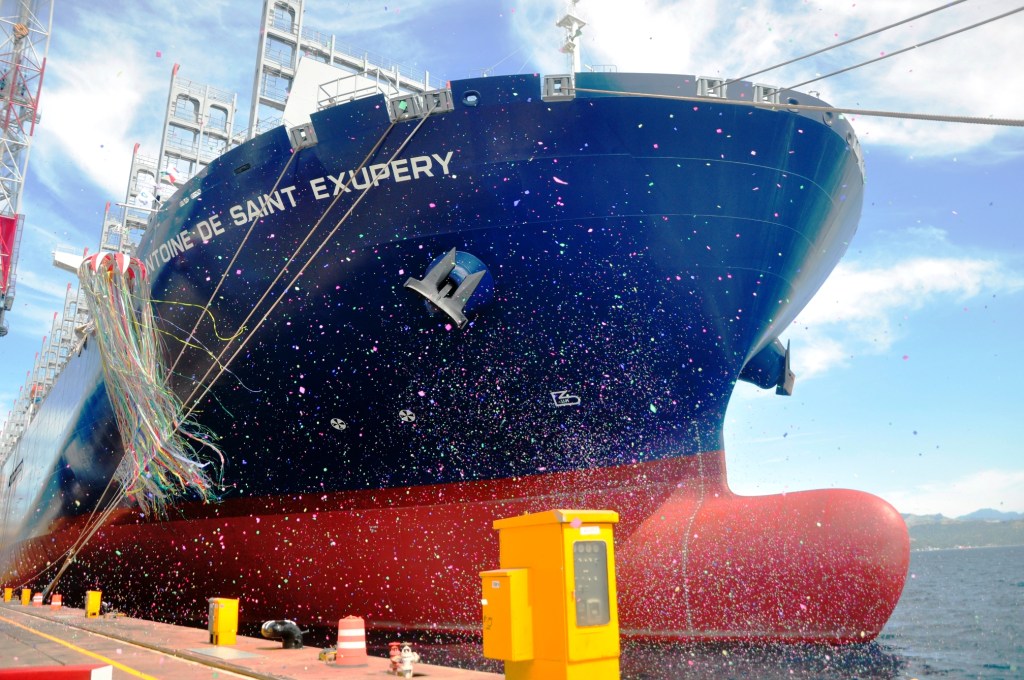
Finally in January 2018, Hanjin marked another milestone as it unveiled the CMA CGM Antoine de Saint Exupery, the first 20,600 TEU container vessel built in Subic and one of the biggest ships ever built in the world.
The mammoth container vessel was built over a period of one and a half years, from Feb. 8, 2016 when the first steel cutting was made, to its launching in Aug. 19, 2017.
FALL FROM GRACE
The Antoine de Saint Exupery was supposed to be the first of three 20,600-TEU container ships that HHIC-Phil has committed to build for CMA CGM, but it turned out to be the last to be completed at the Hanjin shipyard.
On January 10, 2019, BusinessMirror broke out the story that the giant shipbuilder, which had delivered 123 vessels since rolling out the “Argolikos” in July 2008, had gone to court to initiate voluntary rehabilitation under Republic Act 10142, otherwise known as “An Act Providing for the Rehabilitation or Liquidation of Financially Distressed Enterprises and Individuals”.
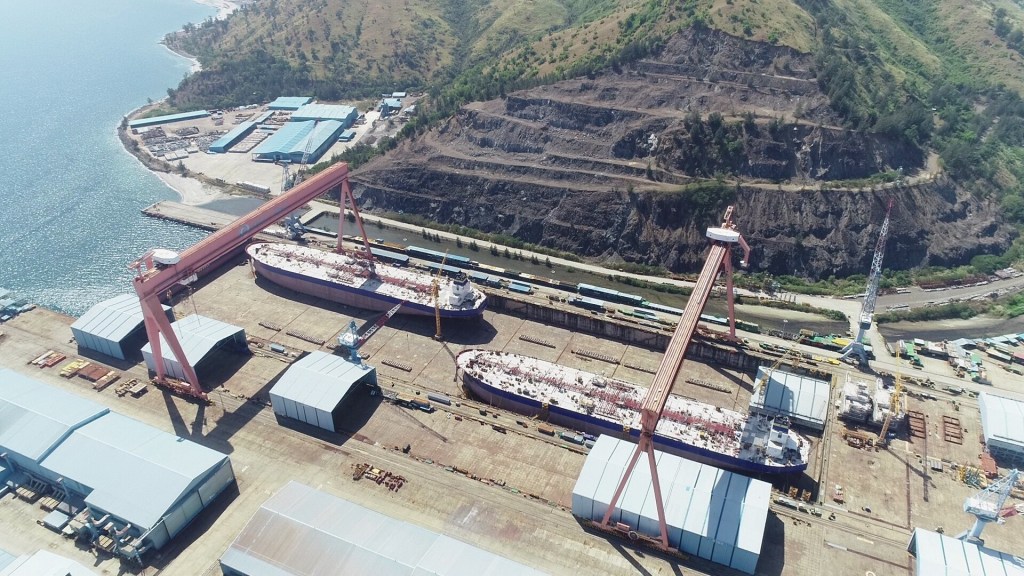
As it turned out, the Subic shipbuilder has incurred at least $100 million losses that it attributed to stiff global competition, low prices of ships, and low production at the local shipyard.
Pyong Jong Yu, then HHIC-Phil’s executive director for administration, would also confirm in a meeting with SBMA officials later on that Hanjin has agreed to heavy-tail payments, whereby buyers made larger payment late in the building process, thus resulting to heavy borrowings by the shipbuilder.
As it would eventually come out, Hanjin owed some $400 million in outstanding loans from Philippine banks on top of another $900 million in debts with lenders in South Korea.
WHITE KNIGHT
BusinessMirror would also cover the search for a white knight to save the shipyard from totally going under. But the no one was immediately forthcoming, leading to the closure of the Hanjin facility after the shipyard was placed on receivership.
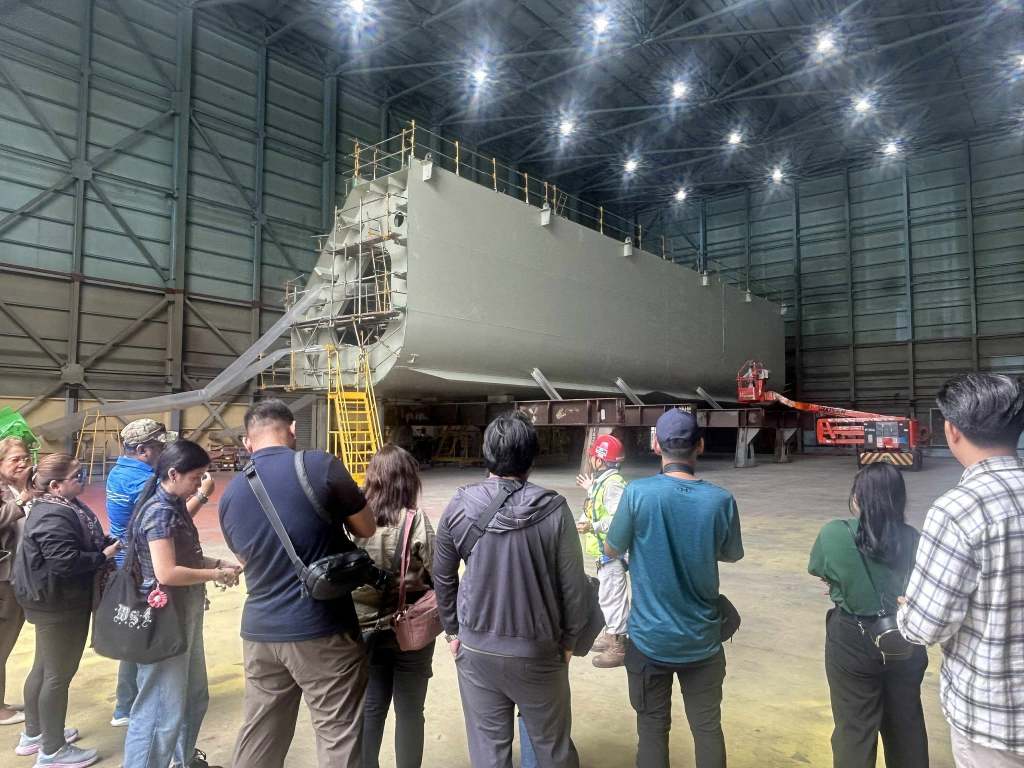
It was only in March 2022 that Cerberus Capital Management acquired the Subic shipyard for $300 million, renaming it Agila Subic Shipyard and starting its redevelopment as a multi-use hub for industrial, naval and logistics operations.
Last August, six long years after Hanjin left the shipbuilding facility, Aguila Subic announced that four major tenants have signed in to kickstart the revival of the Subic shipyard. These include Hyundai Heavy Industries, one of the biggest shipbuilders in the world today.
The following month, HD Hyundai Heavy Industries Philippines (HHIP) conducted a steel-cutting ceremony at the Redondo Peninsula shipyard, marking the start of construction of its first shipbuilding project.


Leave a comment