
By HENRY EMPEÑO | September 2, 2025
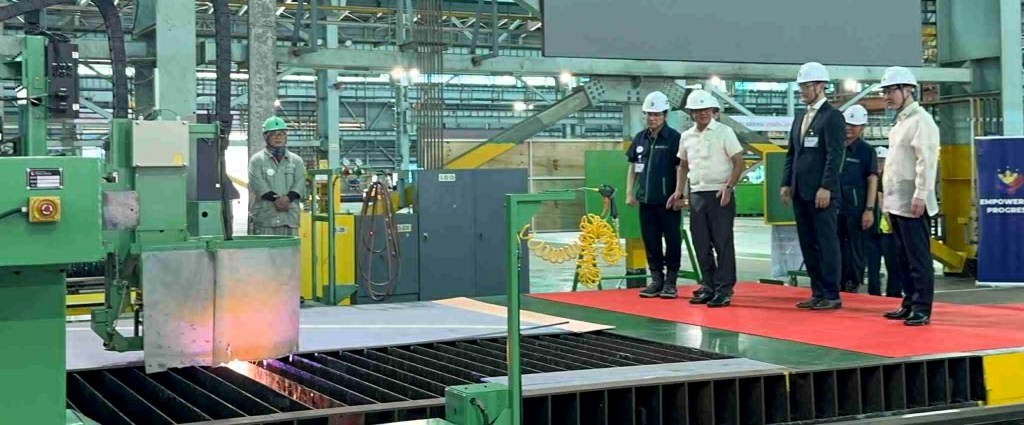
SUBIC, Zambales — Korean shipbuilder HD Hyundai Heavy Industries Philippines (HHIP) conducted on Tuesday a steel-cutting ceremony at its Redondo Peninsula shipyard here, signaling the start of vessel production since taking over the former Hanjin facility three years ago.
President Marcos, who pressed the ceremonial button to start the steel cutting machine, said the event also starts the country’s reclaiming of its “rightful place among the world’s great shipbuilding nations.”
The President was joined in the ceremony by Korean Ambassador to the Philippines Lee Sang-hwa, HD Korea Shipbuilding & Offshore Engineering Ind. CEO Kim Sung-joon, HD Hyundai Heavy Industries Philippines president Oh Sekwang, and newly-appointed Public Works Secretary Vince Dizon.
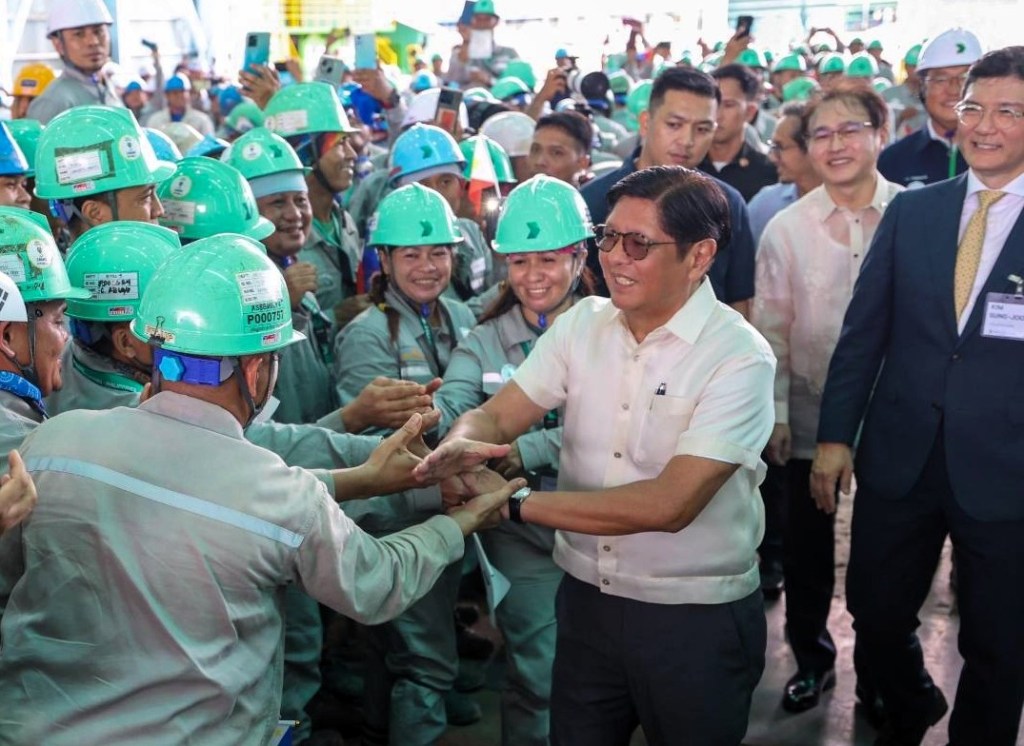
HD Hyundai, which has taken over the facilities vacated by Hanjin Heavy Industries in 2019, is reportedly investing some US$550 million over the course of its 10-year lease to construct about 10 vessels each year.
The Korean firm will initially focus on the construction of product tankers measuring up to 250 meters long, Baird Maritime reported last month.
In his message, Pres. Marcos hailed Hyundai’s entry in Subic and its partnership to revive shipbuilding in the country.
“Together with our partners, we are reviving the shipbuilding in the country to strengthen industries, promote livelihood, and build a better, stronger future for the Philippines,” Marcos said.
He noted that Philippine shipyards were producing 1.2 to 2 million gross tons of ships annually from 2014 to 2018, until the output fell in 2019, the year that Hanjin ceased operations in Subic.
“Today, we raise the sails once more,” he added.
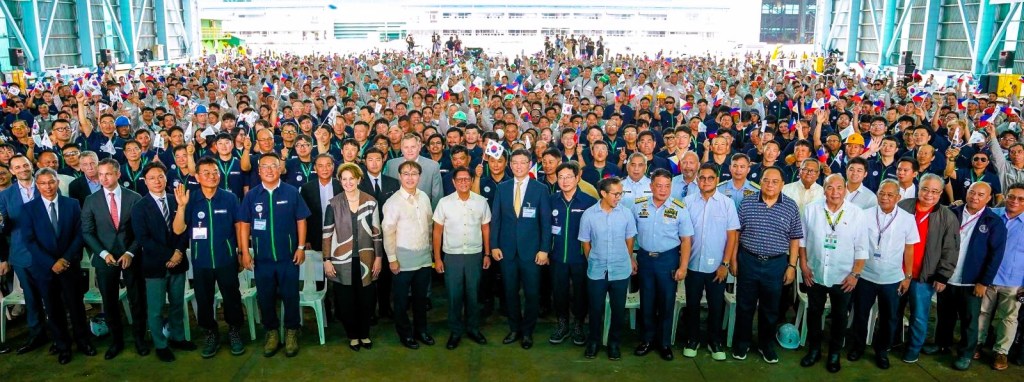
Marcos said that with HD Hyundai operating in Subic, Philippine shipyard capacity will significantly increase from 1.3 million to 2.5 million deadweight tons, or from four to five massive oil tankers to about eight such vessels today.
“By 2030, we look forward to this yard employing 4,300 Filipinos. That equates to thousands of families with food on the table, thousands of workers with dignity in their craft, thousands of Filipinos who see shipbuilding as a source of livelihood,” he added.
Marcos added that for its part, the Philippine government, through the Technical Education and Skills Development Authority (TESDA), is working to match Hyundai’s investment by training a skilled shipbuilding workforce.
He said 24 trainees have thus far competed the Flux-Cored Arc Welding NC I program and are now part of Hyundai’s workforce.
TESDA has further awarded 25 more scholarship slots for Shielded Metal Arc Welding NC I and 100 slots for enterprise-based training in Flux-Cored Arc Welding NC I, Pres. Marcos said.
Last month, Hyundai officials said in a media briefing that the firm now employs 1,300 workers at the Subic facility and expects its workforce to reach 2,000 by the yearend.
Ralph David Magno, Hyundai-Subic human resource manager, said the firm is now recruiting welders, fitters, painters, production engineers, and heavy equipment operators who have the skills and experience in shipbuilding for the firm’s Subic operations.
COVER PHOTO: President Marcos witnesses the steel-cutting ceremony at HD Hyundai’s Subic facility on Tuesday, Sept. 2, which marked the start of Hyundai’s vessel production since taking over the former Hanjin shipyard three years ago.
 Headline Zambales
Leave a comment