
By HENRY EMPEÑO | August 31, 2025
[Second of Two Parts]
IBA, Zambales — With mechanization and use of certified seeds becoming the norm in Philippine agriculture, poor soil fertility, pest and disease problems, and water shortages remain the leading causes of low agricultural productivity—all of which require substantial costs to manage and control.
Philippine Statistics Authority (PSA) data indicate that in 2023, average palay production cost in the country stood at P13.38 per kilogram (kg). Among the 18 regions, Central Visayas posted the highest production expense at P18.70/kg, while the least outlay was recorded in Central Luzon at P11.60/kg.
Production costs further increased last year to P14.52/kg, the PSA says, leaving small farmers at twice the disadvantage of high production cost that inhibits further growth.
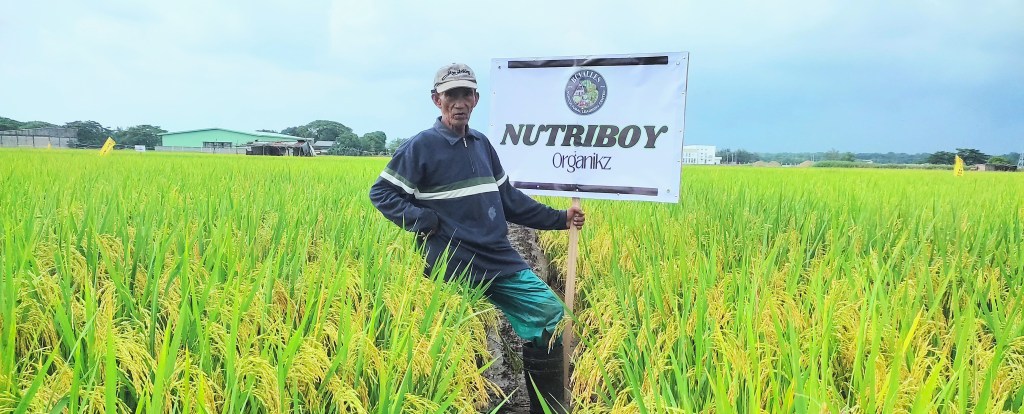
Here in Iba town, however, the homegrown Palay Partnership Program (PPP) is providing cheaper and readily-accessible alternative farm inputs that allow growers to break this vicious cycle.
CRH and ‘Liquid Smoke’
At BCV Farms in the remote Sitio Olpoy of Barangay Amungan, Jomar Angulo, a graduate of agriculture from the President Ramon Magsaysay State University in Botolan, Zambales, and other farm technicians produce natural soil enhancers and spray-on foliar fertilizers from farm wastes and kitchen scraps.
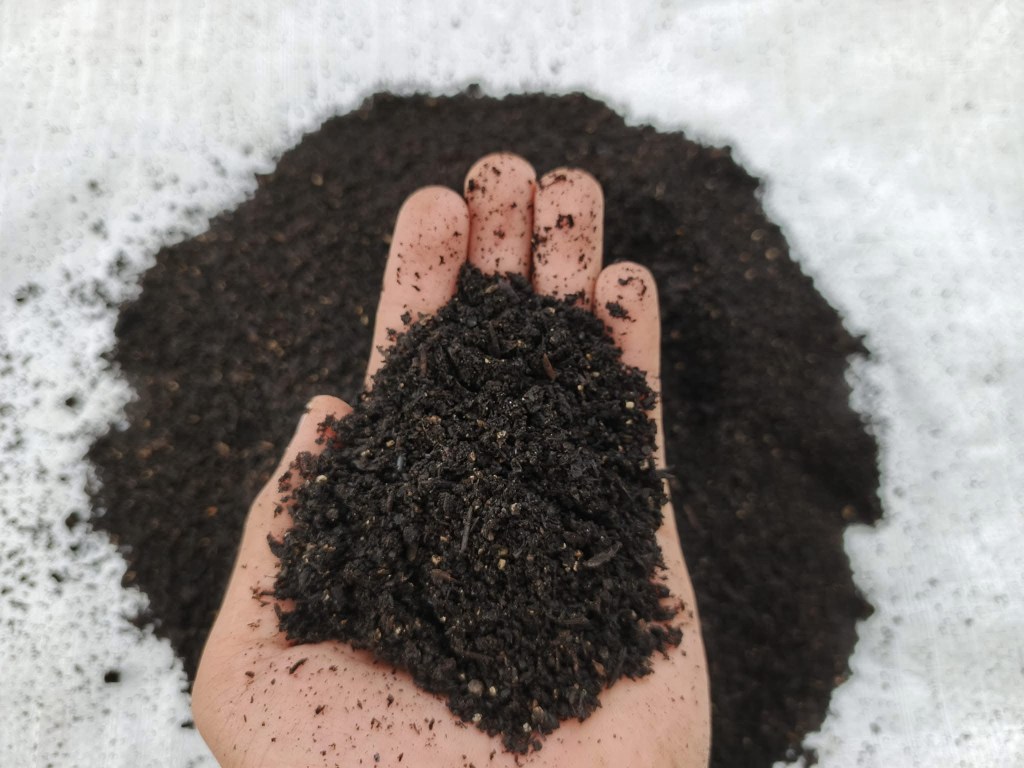
BCV’s “Nutriboy” compost, which enriches the soil, is made from rice hull, a waste product of rice milling, and chicken manure, an ordinary farm by-product. These are mixed on a one-is-to-one ratio and turned into carbon in 24 hours through a process similar to making charcoal.
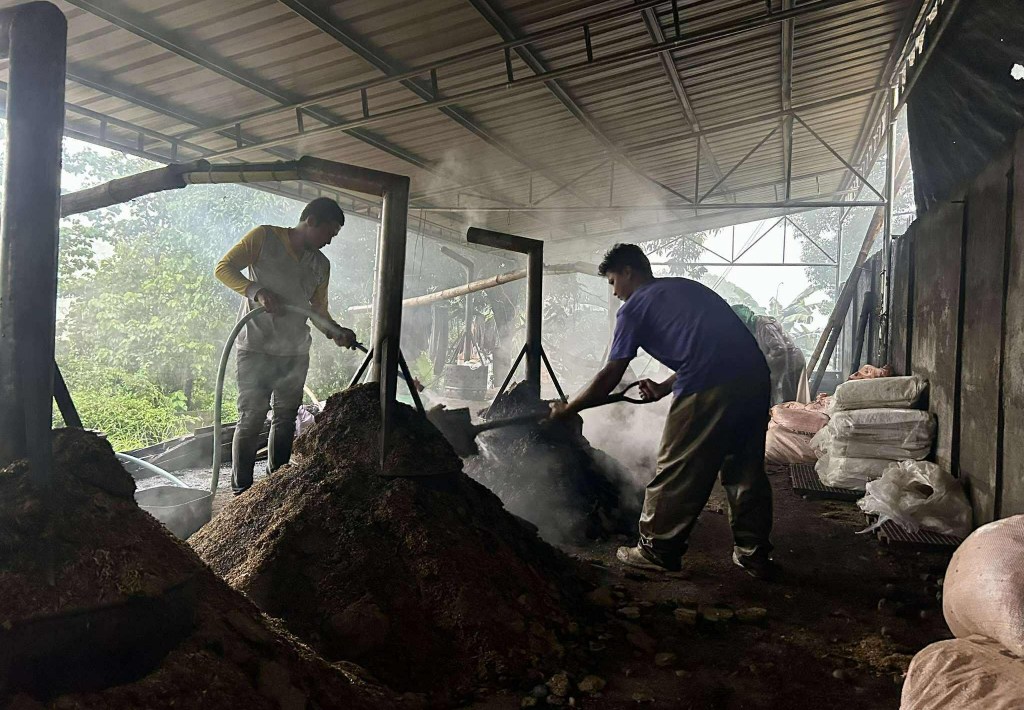
Angulo says the carbonized rice hull (CRH) loosens compact soil, helps in water retention, and builds beneficial microorganisms that enhance soil quality. Nitrogen-rich chicken manure, which also contains traces of phosphorus and potassium, meanwhile, makes palay plants greener and more robust.
In carbonizing rice hull, BCV Farms creates another natural product called “liquid smoke” when trapped smoke cools down and condenses to a liquid state. “This is a natural pesticide or insect repellant, which is also environment-friendly,” explains Angulo.
Mixed with water at 10 milliliters for 1 liter of water, “liquid smoke” is used either in fertigation—the application of water-soluble products via an irrigation system—to improve soil quality, or sprayed onto leaves and stems to help repel insects.
Foliar Fertilizers
Angulo and his technical crew also ferment vegetable and fruit extracts to produce three kinds of foliar fertilizers that BCV Farms packages as farm inputs along with compost for the Palay Partnership Program.
The first foliar is named FPJ, short for fermented plant juice. It is made from plant parts like banana and bamboo shoots, or kangkong and camote tops, that naturally exhibit growth spurts. As FPJ contains plant hormones that promote faster growth, it is sprayed on palay during the early growing stage.
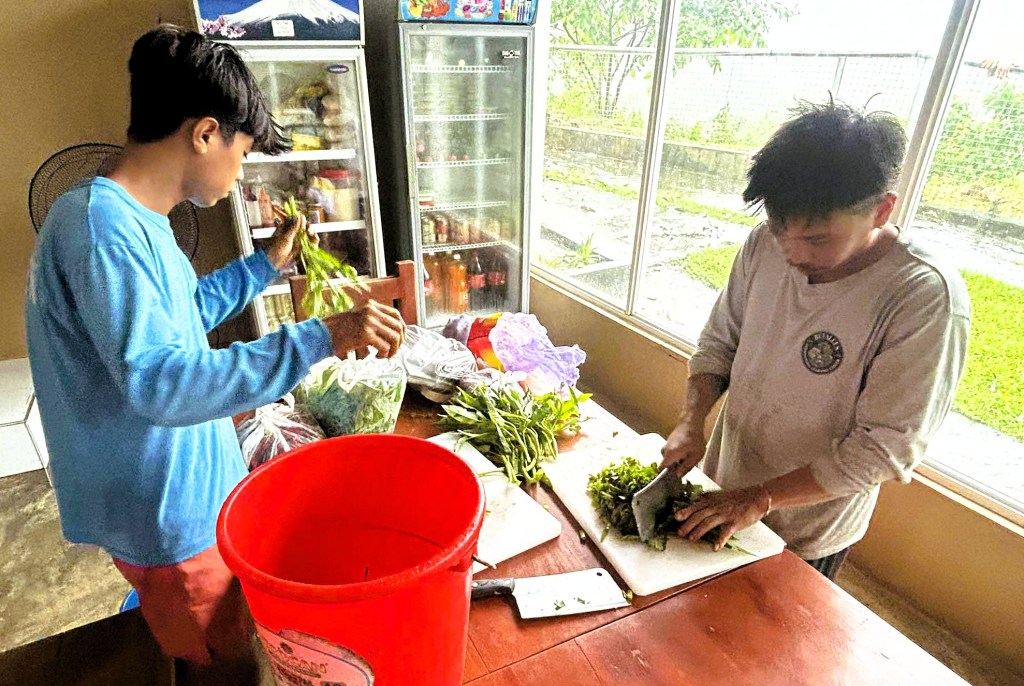
The second is called FFJ, or fermented fruit juice extracted from fruits like papaya, mango, and banana. High in potassium content, the FFJ is used during the reproductive stage to produce bigger palay grains.
The third foliar is OHN—oriental herbal nutrients, which is a mix of onion, ginger, garlic, and chili. Consumed by humans for their known antioxidant, antimicrobial and anti-inflammatory properties, these herbs are also natural insecticides, Angulo points out.
The natural ingredients are mixed with molasses and left to ferment for seven days. Strained and cleaned of solids thereafter, the juices are mixed with water—10 milliliters to each liter of water—and they are ready for use as foliar fertilizers.
DIY Technology
Farmers enrolled in the PPP confirm that the natural soil enhancers and foliar supplements provide an inexpensive yet effective regimen of production inputs that are ideal for sustainable farming.
The upside also include accessibility of technology, says BCV Farms owner Boboy Valles, a successful chicken and hog farmer who has made it his personal mission to promote natural farming.
“Our farmers can easily learn best practices in producing compost and foliars, study them first-hand in seminar and trainings we hold periodically at BCV Farms, and then DIY them later on,” Valles says.
He says BCV also gives out pamphlets on natural farming to farmers, students and teachers, and other farm visitors. “We don’t keep production formulas secret; in fact, we’re giving them away so that more people would benefit from them,” adds Valles.
Cost-Benefit
Aside from conducting trainings on natural farming, BCV Farms establishes model farms among its PPP participants to demonstrate the use of product innovations and farm management systems. Here, farmer-participants attest to the efficacy of natural farming methods and their cost-effectiveness.
PPP records indicate that production cost depend heavily on the quality of soil—whether or not the fields need more enhancers and, consequently, more boosters for plant growth and maintenance.
In the past three cropping seasons, PPP participants ordinarily spent about P9,702 for soil enhancers, and P1,370 for foliar sprays. Including labor and other farm inputs, their average expenses reached just P31,894 per hectare. This is 42.85% lower than the national average production cost per hectare of P55,814 in 2023, according to PSA data.
The savings are generated mainly because BCV farm products are farmer-friendly, too. Valles says “Nutriboy” compost costs just P150 per 25-kg bag. In contrast, the Fertilizer and Pesticide Authority reports that as of June 2025, the average retail price of urea fertilizer (46-0-0) in Zambales was at P1,466 per 50-kg bag, while complete fertilizer (14-14-14) fetched P1,585 per 50-kg bag.
Meanwhile, BCV’s foliar supplements go for just P70 per liter, and “liquid smoke” fetches P20 per liter.
The recommended dosage per hectare, Valles adds, is 64 “Nutriboy” bags and about 30 liters of foliars, thus entailing a total cost of only P11,700 per hectare. With PPP’s top producers harvesting palay ranging from 5 to 7 metric tons per hectare, the average cost of inputs translates from just P2.34 to a low P1.67 for each kilo of palay produced.
Farmer-Friendly Partnership
More than the low-priced farm inputs, the homegrown PPP system has a farmer-friendly produce buyout scheme that is integrated into the program, says Rodrigo Gabriel, a farmer who serves as PPP community coordinator.
“The partnership begins with validating the existence of the farm, assessing its soil quality and requirements, and confirming the willingness of the farmer to join the program,” explains Gabriel.
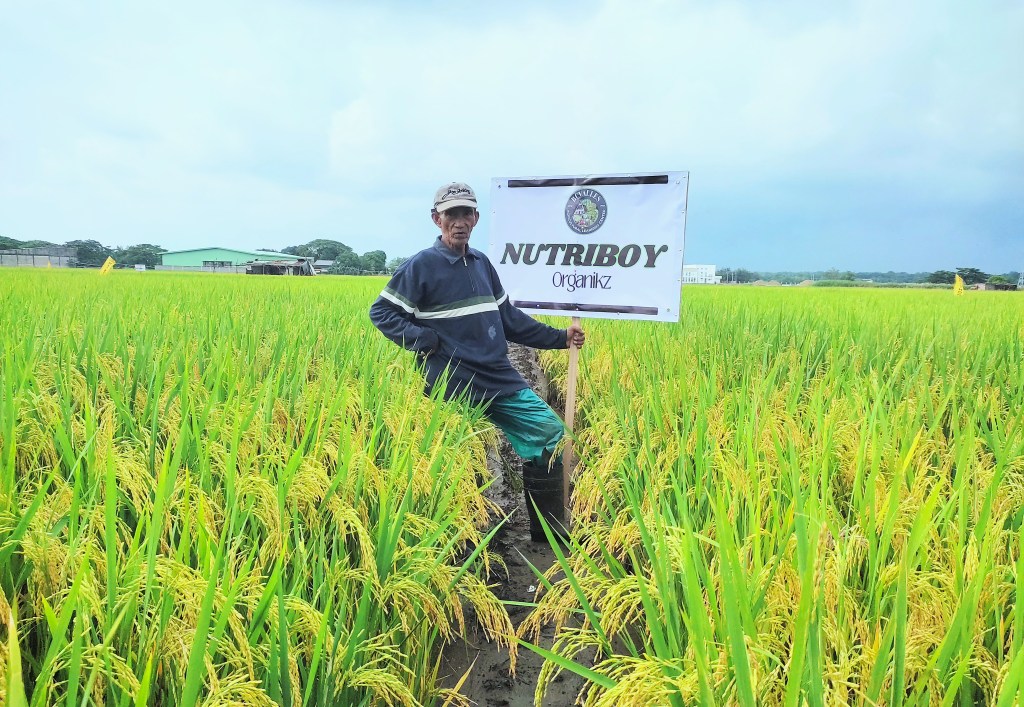
From there, Gabriel says BCV hands out cash loans for field preparation, labor, natural fertilizer and foliars, with a loan ceiling of from P30,000 to P35,000 per hectare. Upon harvest, farmers pay the loan back with the fresh palay they just harvested.
According to PSA data, average farmgate prices of dry palay in Zambales was P25.18 per kilo in 2024, but this fell to just P15.91 per kilo in July 2025. The price fluctuations hardly affect PPP participants, stresses Gabriel, because under the PPP, BCV buys fresh palay at an assured price of P20 per kilo.
Moreover, after the loaned amount is paid back with fresh play, farmers have the option to sell any excess to BCV or to any other preferred buyer, Gabriel points out.
Valles asserts that BCV’s partnership with local farmers has proven that going back to basics with current best practices in chemical-free farming could, in fact, revolutionize the industry and improve the lives of ordinary farmers.
“With the PPP, we intend to win the war for natural farming one hectare at a time, one farmer at a time,” concludes Valles.
 Headline Zambales
Leave a comment