
By HENRY EMPEÑO | August 30, 2025
[First of Two Parts]
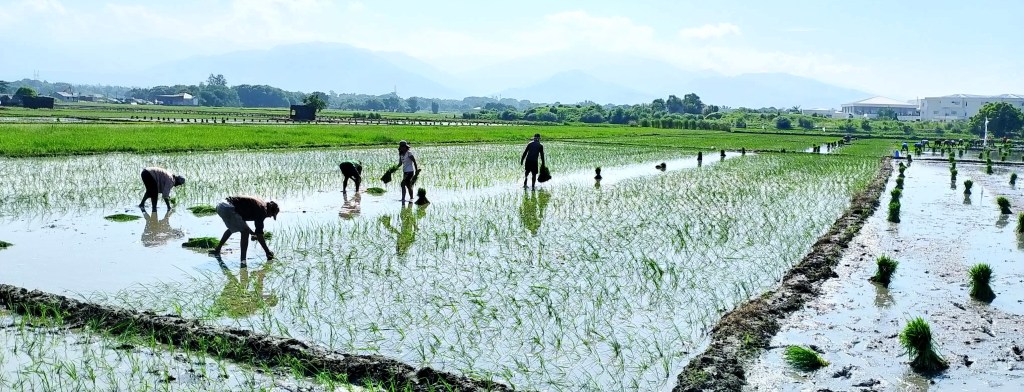
IBA, Zambales — A growing number of rice farmers in this capital town of Zambales are switching back to farming methods without chemical use following the introduction here last year of the Palay Partnership Program (PPP) by BCV Farms.
The program, which focuses on soil enrichment and foliar application, makes use of organic materials like farm wastes and kitchen scraps to produce viable alternatives to synthetic fertilizers and chemical sprays.
Boboy Valles, owner of the BCV Farms which grows chicken, catfish, and fruits and vegetables, says the program grew out of their advocacy to promote sustainable farm production among local growers.
“There is a lot of available farming technology out there, mostly from the Department of Agriculture and the Department of Science and Technology,” notes Valles. “What we are doing is adopt these technologies, and show farmers that they’re replicable and effective.”
Success Stories
By all accounts, the PPP provides cheaper yet more effective natural soil enhancers and organic plant boosters that bring about higher yield and allow more cropping seasons.
Junie Balangon, who has been farming for 30 years now at Barangay Palanginan here, reveals he harvested a hefty 140 cavans, or 7 metric tons (mt), of palay from his one-hectare farm in last year’s second crop season after using BCV’s soil enhancer and foliar sprays.
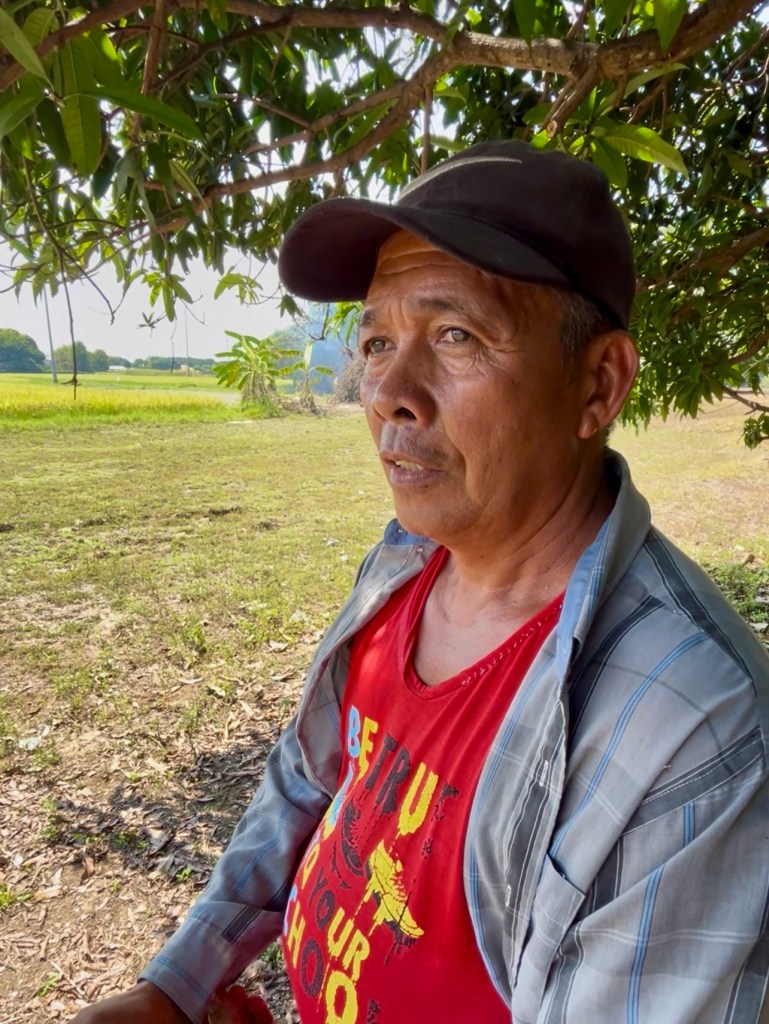
“Before it was just 80 (4 mt), sometimes 90 cavans (4.5 mt),” he recalls. “Now I can easily expect more than 100 cavans (5 mt) per season.”
Soil quality has always been problematic for Balangon for years because the soil in his farm was coarse. With BCV’s “Nutriboy” compost—a mix of carbonized rice hull and chicken manure, the soil has become finer and richer, he says.
Rodrigo Gabriel, a farmer-participant who also doubles as BCV’s PPP community coordinator, says that under the program, it is mandatory for farmers to use about 64 bags of “Nutriboy” soil conditioner for each hectare. He explains that the 64-bags rule was arrived at by estimating the nutrient requirements for the traditional field measure of “luwang” (625 sqm) at four bags of compost each.
With the recommended dosage covering 156.25 square meters, Gabriel says a one-hectare rice field (10,000 sqm) would need a total of 64 bags of “Nutriboy” soil enhancer.
Higher yield, lower cost
Ramon Baesa, a 47-year-old farmer at Barangay Santa Barbara, claims similar good results at the 2.2-hectare farm he inherited from his parents, after enrolling with PPP during the wet season in 2024.
The soil in his farm was acidic, he says, and decades of using synthetic fertilizer made matters worse, thus limiting rice production to just two cropping seasons.
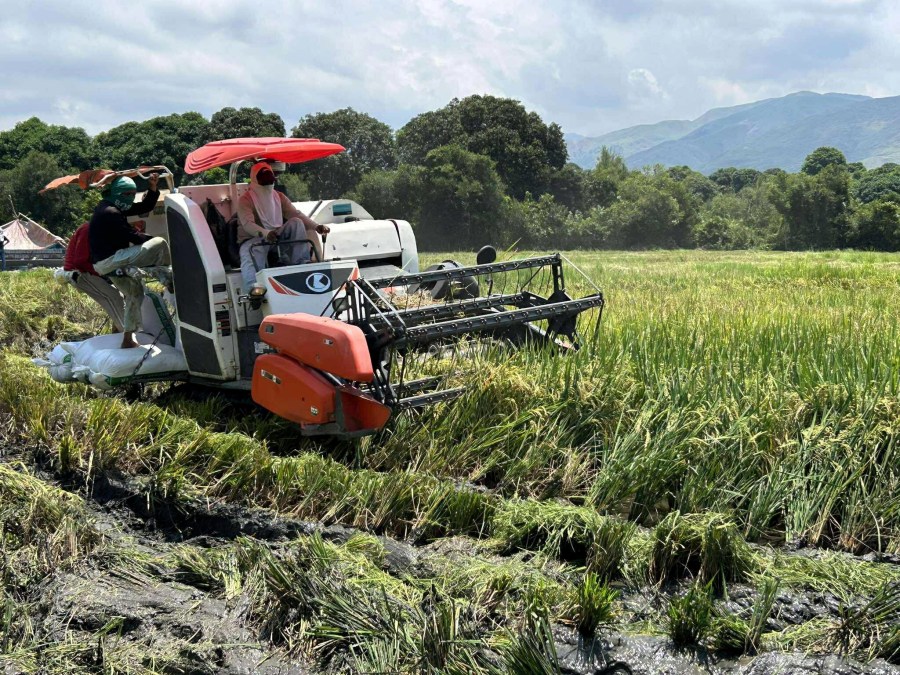
“Nutriboy” changed that, Baesa says. “Dati, madaling bumaba ang tubig, kaya kapag tag-ani ay bitak na ang lupa. Ngayon, third crop na ay maputik pa (Before, water in the paddies drop rapidly, that’s why the soil is already cracked during harvest. Now, it’s still muddy even when we are already harvesting the third crop).”
Baesa harvested 117 cavans (5.85 mt) from one hectare last season—just slightly higher than his previous harvests, he admits. But he is now optimistic that yield would further increase in the long run as the field recovers.
“Hindi naman kaagad-agad gaganda ‘yan; pero ang impact ay mas menos gastos ngayon (Soil recovery is not a quick process; but the impact now is in less cost),” he adds.
Baesa says BCV’s natural farming program has reduced his production expenses. When it used to be about P70,000 per hectare for fertilizer, pesticides, and farm labor, costs now average just P22,000 each hectare per cropping season. This accounts for P9,600 for 64 bags of “Nutriboy” and P2,100 for 70 liters of three kinds of foliar application.
Baesa’s expenses are about half the cost of the average palay production in Zambales, which in 2022 stood at P44,556 per hectare, according to the Philippine Statistics Authority (PSA).
More cropping seasons
Over at Barangay Dirita-Baloguen, 56-year-old farmer Richard de Guia says he is very much satisfied with the PPP’s natural farming method, as it allows him to maximize production for his rain-fed palay farm.
De Guia has been tilling the farm for years, but it was productive only during the wet months.
“Mabuhangin ang lupa, kaya kahit sinuyod mo na, talagang matigas pa. Nang gumamit ako ng organic compost, lumambot ang lupa, madaling taniman (The soil was sandy, and despite harrowing, it stayed compact. When I used organic compost, it became softer, more pliant for planting),” De Guia recounts.
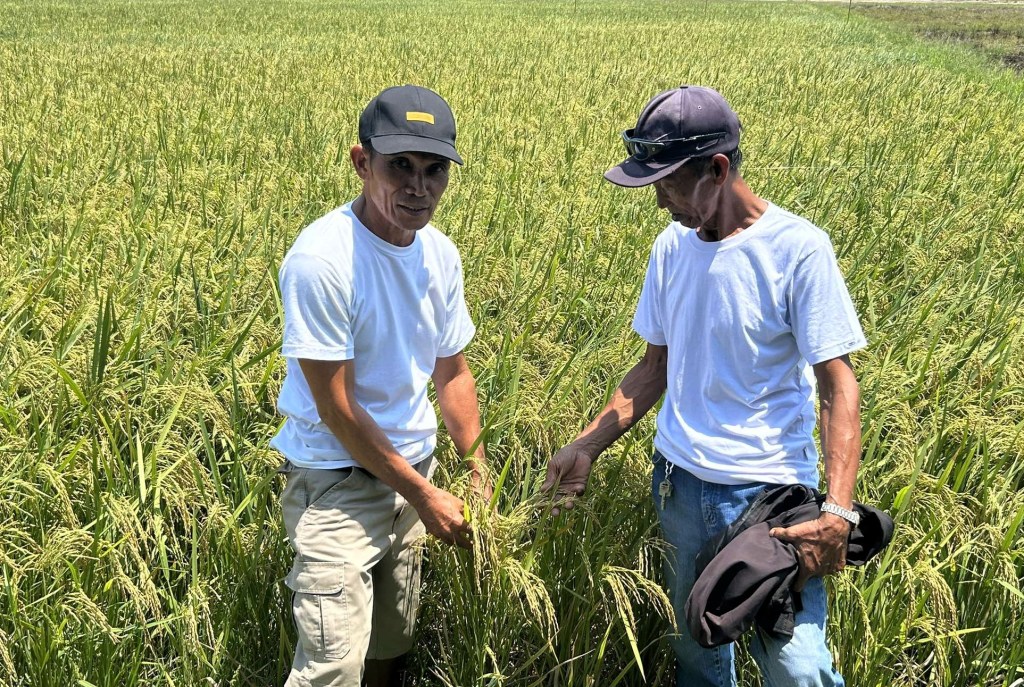
He also points out that the natural soil enhancer and foliar boosters produce healthier palay and fuller rice panicles.
“Punong-puno ang mga butil, at wala kang makikitang nangingitim. Kahit hinog na, berde pa ang mga dahon at hindi pa natutumba ang puno (The grains are fuller, and there’s no blackening. Even when the grains are already ripe, the leaves are still green and the stalks don’t collapse),” he points out.
De Guia says this means that the leaves continue to supply food to the grains fully. Better soil quality makes for more cropping, he proudly adds.
Since signing up with PPP last year, De Guia has been planting three crops a year, and harvested 85 cavans (4.2 mt) from the half-hectare he planted in the last cropping season. His previous harvests before turning to natural farming? Just about 38 cavans (1.9 mt).
Expansion Target
From five pioneer PPP farmers in 2024, each with just one hectare of rice field to till, BCV’s homegrown program now enrolls 98 farmers and covers 114 hectares of rice farms spread over six barangays here in Iba, the capital town of Zambales.
With total rice production of 8,316 metric tons in 2024, Iba accounts for just 6.1% of annual palay production in Zambales, according to PSA data. Yet it was No. 2 last year in annual average yield at 4.12 metric tons per hectare (mt/ha), slightly lower than the provincial average of 4.52 mt/ha.
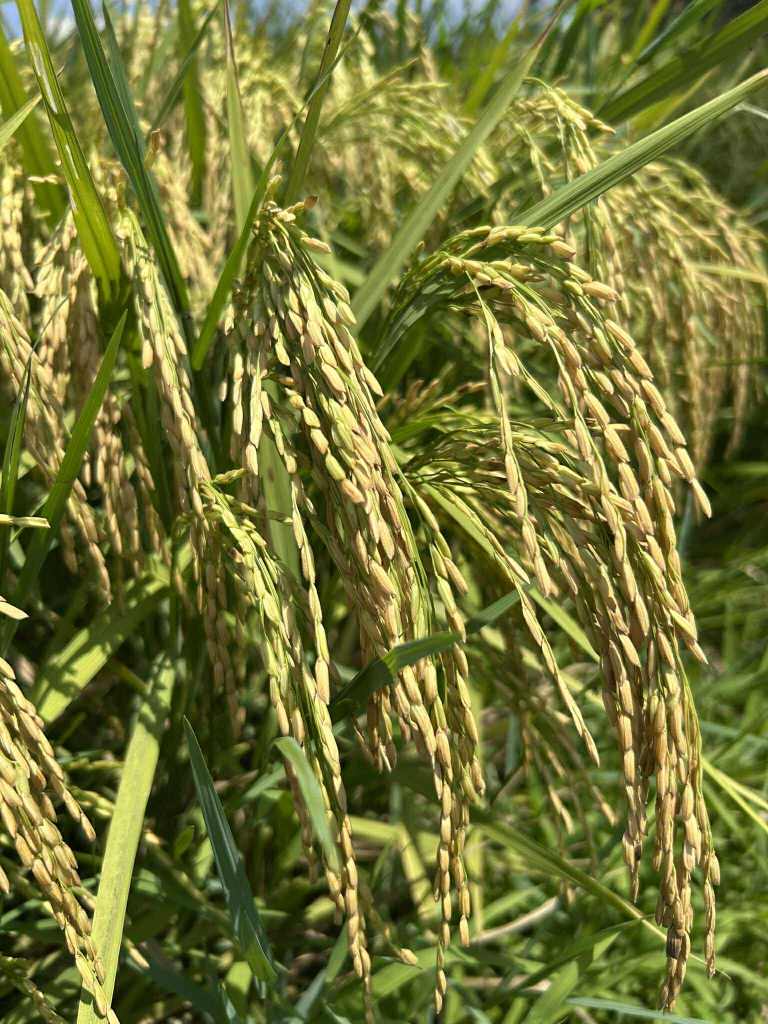
On the other hand, PPP participants reported top yields ranging from 110 (5.5 mt) to 142.5 cavans (7.125 mt) per hectare in last year’s second and third cropping seasons. With one metric ton consisting of 20 cavans (a cavan weighs 50 kilograms), this puts PPP’s top outputs in the range of 5 to 7.125 mt/ha.
PPP’s top producers easily eclipse the 5.15-mt/ha production posted in the first quarter of 2025 by Central Luzon, the biggest rice producer in the country with also the highest regional yield recorded this season.
Buoyed by the success stories among PPP participants, Valles envisions the expansion of BCV’s natural farming program into the nearby towns of Botolan and Palauig, two of the biggest farming municipalities in Zambales that together account for 18.2% of the total rice production area in the province.
“We can see a great potential here—better harvest at less expense, while sustaining the environment. This could radically change not only farming methods, but the livelihood—and even the lives—of ordinary farmers here in Zambales,” Valles says.
COVER PHOTO: Farmers plant palay during the wet season under the PPP’s chemical-free farming program in Iba, Zambales (BCV Farms photo)
Next: Natural farming provides farmers cheap, effective, accessible agri inputs




Leave a comment