
By DOE | July 9, 2025
IN anticipation of President Ferdinand R. Marcos Jr.’s signing of the country’s first service contracts for native hydrogen exploration, the Department of Energy (DOE) recently conducted a reconnaissance survey in Zambales and Pangasinan — areas covered under the predetermined contract areas offered in the 2024 Philippine Energy Bid Round.
This survey marks a critical first step in supporting the service contractors by providing baseline geological and environmental data to guide their exploration activities. By identifying surface indicators such as hot springs and ophiolitic rock formations associated with natural hydrogen generation, the DOE aims to reduce exploration risks, streamline technical studies, and ensure alignment with safety and environmental standards.
This proactive strategy facilitates a more informed, efficient, and science-based approach to native hydrogen exploration once the service contracts are signed.
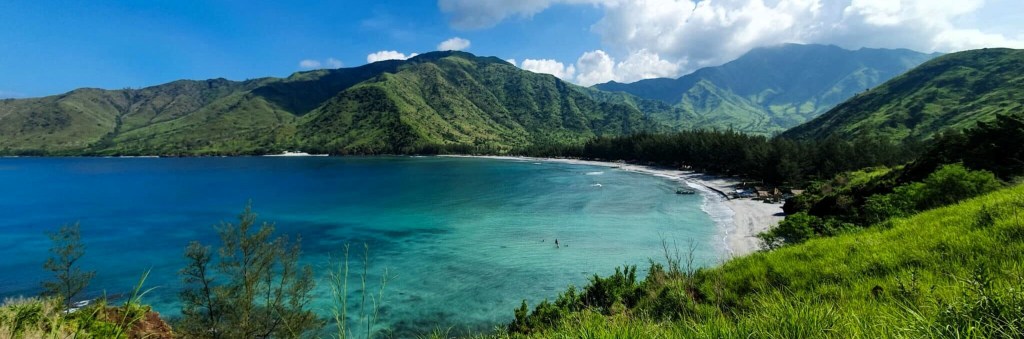
Focusing on sites with strong geological potential, the DOE’s technical team conducted field assessments at the Mangatarem Hot Spring in Pangasinan, and the Botolan Hot Spring and Nagsasa Seeps in Zambales.
These efforts were undertaken in close coordination with the Mines and Geosciences Bureau (MGB) Regional Office No. 3, the respective Municipal Environment and Natural Resources Offices (MENROs), and concerned Local Government Units (LGUs).
“By screening these areas, the survey will help guide service contractors in prioritizing locations for more comprehensive exploration. In essence, it lays the groundwork for where to focus efforts and what approaches to take in the pursuit of developing clean and sustainable energy sources,” said Energy Undersecretary Alessandro O. Sales.
The reconnaissance survey also forms part of the DOE’s preparatory activities for the country’s first-ever training on native hydrogen exploration, a specialized course for local and international technical participants, scheduled to take place later this year.
“We also want to build the country’s technical capacity to explore and develop its own clean energy resources,” Undersecretary Sales added. “This means equipping our scientists, engineers, and technical personnel with the skills, tools, and training needed to conduct advanced research and fieldwork in emerging energy frontiers such as native hydrogen.”
In addition, the survey supports ongoing research by the Philippine Nuclear Research Institute (PNRI), which identified the town of San Antonio in Zambales as having the highest natural hydrogen gas seep ever recorded.
The PNRI study found that the Nagsasa seep in San Antonio, Zambales emits over 800 tonnes of natural hydrogen annually, with the potential for even greater subsurface reserves.



Leave a comment