
By E.H. Edejer | July 7, 2025
MASINLOC, Zambales — Local fishermen see good news amid Chinese bullying on West Philippine Sea (WPS), as the Zambales provincial government announced the planned acquisition of a modern harvester boat and three ancillary vessels for payao fishing.
Governor Hermogenes Ebdane Jr. said on Monday, July 7, that the provincial government will procure this year a 96-feet long, steel-hulled harvester boat paired with two reinforced fiberglass lightboats and one service boat for use by the Zambales Provincial Fishery Association (ZPFA), a federation of fisherfolk groups across the province.
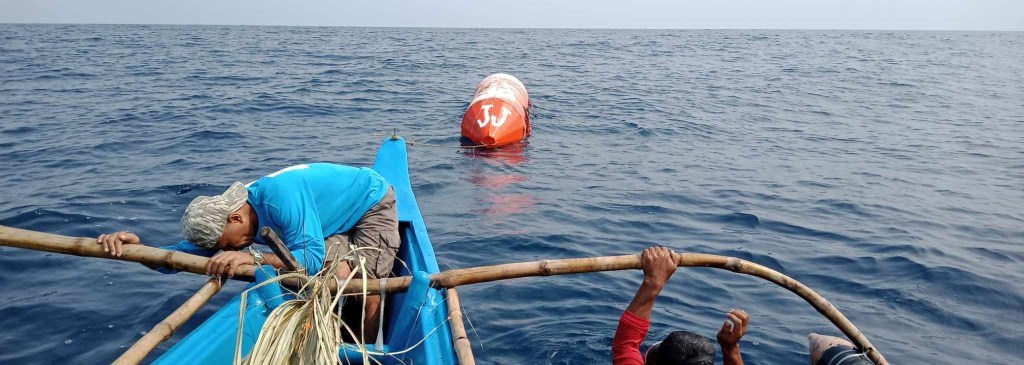
The harvester boat is necessary in collecting and storing fish harvests under the payao method, which uses multiple anchored fish aggregating devices deployed in the open sea.
Leonardo Cuaresma, president of the New Masinloc Fishermen’s Association, said fisherfolk groups in the province are happy over the prospects of operating modern vessels that would introduce new fishing technology to small fishermen and give them a competitive edge.
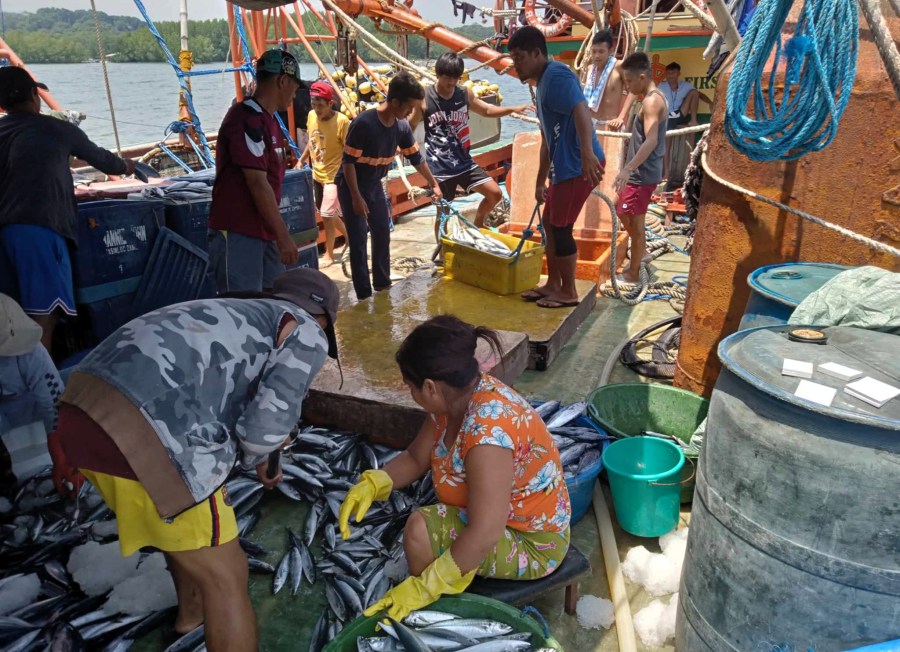
“Patuloy pa ring nahihirapan ang mga maliliit na mangingisda dahil sa pangigipit ng Tsina sa West Philippine Sea, pero malaking pagbabago itong planong modernong bangka para sa amin (Small fishermen continue to suffer from Chinese bullying in the West Philippine Sea, but this plan for modern fishing vessels will open new opportunities for us),” Cuaresma said.
He pointed out that since June 15 last year, when China imposed a “no trespassing” policy at Bajo de Masinloc or Scarborough Shoal, local fishers no longer had access to this traditional fishing ground as Chinese militia boats enforced a 40-nautical mile perimeter around it.
As a result, payao fishers sometimes had to go beyond Bajo de Masinloc, which is 124 nautical miles from Zambales, in the hope of better catch, Cuaresma said.
“Kaya talagang masaya kami sa balitang ito (That’s why we are really happy over this news),” said Cuaresma. He said that with the new harvester vessel, they won’t have to pay commercial fishing operators during payao harvests, thus cutting costs while increasing productivity.
Ebdane said the new vessels to be built by Stoneworks Specialist International Corp. in General Trias, Cavite, would kickstart the modernization of the local fishing industry and boost the competitiveness of local fishermen amid adverse geopolitical conditions in the WPS.
While awaiting the delivery of the new vessels this year, local fishermen will undergo training on automated vessel operations under the Philippine Merchant Marine Academy (PMMA) in San Narciso town—a component that Ebdane said is as important as procuring the new vessels.
The governor said at least two fishermen’s clusters have already completed training under the PMMA and more groups are expected to train in the next few months.
Ebdane has long advocated boosting the competitiveness of local fishermen as a strategic solution to the problem in the WPS, pointing out that while the WPS situation has socio-economic, political, and security implications, the welfare of local fishermen should be a primary concern.
“Learning new technology and developing new skills is necessary for our fishermen to be competitive. They need to adapt in order to survive and thrive,” he pointed out.
Last year, Ebdane shepherded the formation of the Zambales Maritime Development Council (ZMDC) to oversee, supervise, and manage fisherfolk cooperatives, as well as the distribution of P5-million worth of fish aggregating devices or payaos to 26 fisherfolk groups affiliated with the ZPFA
Another P5.6 million worth of payaos will be distributed this year under the provincial government’s payao livelihood program under ZMDC, the governor said.



Leave a comment