
By Rocky E. Bautista | May 30, 2025
BEFORE the first medal is won, one powerful pose has already made its mark.
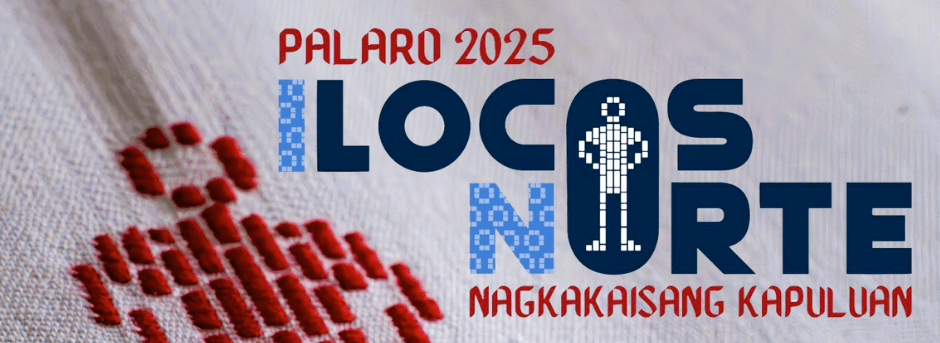
At the heart of the 2025 Palarong Pambansa logo is the striking image of a swimmer standing with hands on his waist—pixelated and stylized, yet instantly familiar to those who know Philippine sports history.
That pose, as it turns out, belongs to a legend: Teofilo Yldefonso, the first Filipino Olympic medalist, a war hero, and a son of Ilocos Norte.
This year, the Palarong Pambansa—the country’s premier sports event for student-athletes—returns home to Ilocos Norte, with over 15,000 athletes, coaches, and delegates converging in a celebration of youth, unity, and heritage.
A hero from Piddig
Nearly a century ago, in 1928, Teofilo Yldefonso brought the Philippines its first Olympic medal, winning bronze in the 200-meter breaststroke in Amsterdam.
He followed it with another bronze at the 1932 Los Angeles Games.
Known as the “Ilocano Shark,” Yldefonso was more than a swimmer—he was an innovator.
His breakthrough technique, which pushed the breaststroke closer to the surface, was so effective it was later adopted internationally and earned him the title “Father of the Modern Breaststroke.”
Long before modern sports science reached Southeast Asia, Yldefonso had already reshaped his discipline.
Beyond the pool, he served as a soldier during World War II and died in captivity during the Japanese occupation, cementing his legacy as both a national athlete and war hero.
Immortalized in pixel and thread
This year’s Palarong Pambansa theme, “Nagkakaisang Kapuluan” (Unifying Archipelago), finds its most profound expression in the official logo.
Central to the design is Yldefonso’s silhouette—rendered in pixel form, as if woven from the threads of abel, the traditional Ilokano textile.
The design doesn’t just honor a swimmer; it weaves together threads of history, culture, and local pride.
The initials “I” and “N” (for Ilocos Norte) are patterned with motifs inspired by Manlilikha ng Bayan Magdalena Gamayo, the master inabel weaver and cultural icon from the province.
Even the mascot—a friendly shark named “Filo”—nods to Yldefonso’s nickname and aquatic prowess.
These symbols collectively tell a story not only of athleticism but also of identity and shared heritage.
A nation watching, remembering
At the opening ceremony on May 24 at the newly built Ferdinand E. Marcos Stadium in Laoag City, President Ferdinand R. Marcos Jr. addressed the athletes with a call to ambition.
“Today, you are participants in the Palarong Pambansa. Tomorrow, you may represent the Philippines in the Asian Games—or even the Olympics. Do your best.”
He also promised continued government support for Filipino athletes, saying, “Your win is also our win.”
The program featured performances by singer Angeline Quinto, a vivid interpretation of the Ilocano epic “Biag ni Lam-ang,” and a symbolic cauldron lighting—a nod to Ilocos Norte’s reputation as the renewable energy capital of Southeast Asia.
Olympic gold medalist Hidilyn Diaz was also present, drawing loud cheers and serving as a living reminder of Filipino excellence on the world stage.
But for the people of Piddig and the Ilocano community, another name lingered in the background—spoken not aloud, but etched into design, memory, and pride.
In 2006, Yldefonso’s hometown unveiled a monument in his honor—recognizing not only his Olympic feats but also his sacrifice as a soldier.
The 2025 logo, seen everywhere from uniforms to flags, extends that tribute into the national consciousness.
Legacy in motion
As the games run until June 2, thousands of young athletes compete with dreams of glory.
For many, this year’s logo is more than a design.
It’s a reminder of where greatness begins: with courage, commitment, and a sense of purpose.
“Seeing that pose on the logo makes me feel like I can do something great, too. I want to be like him—fast, brave, and remembered,” said Crishnea Estrada, a swimmer from Dagupan City.
In honoring Teofilo Yldefonso, the Palarong Pambansa does more than look back.
It looks forward—inviting every young Filipino to claim that pose, that legacy, as their own. (AMB/REB, PIA Ilocos Region)



Leave a comment