
By Henry Empeño | February 21, 2024
IBA, Zambales — With the continuing geopolitical tension at the West Philippine Sea (WPS) effectively curtailing fishing at the contested Scarborough Shoal or Bajo de Masinloc, the provincial government of Zambales has put up concrete solutions to sustain the livelihood of local fishermen.
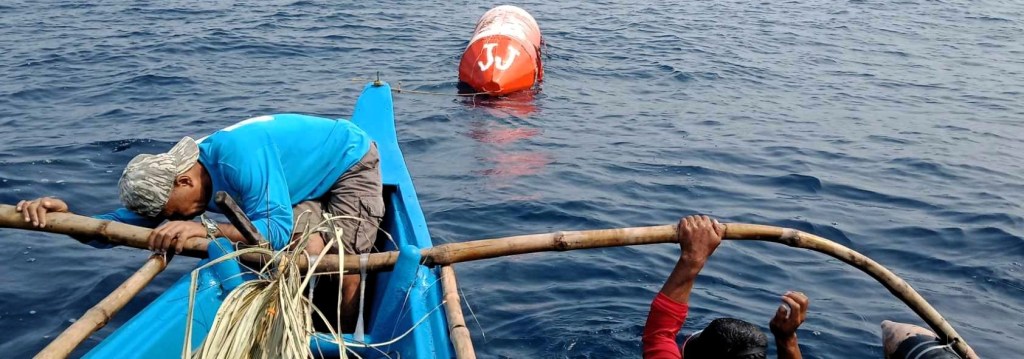
The latest local government initiative, said Governor Hermogenes Ebdane Jr., is the distribution of payao, or fish aggregating devices, to affected fisherfolk to guarantee fish catch, increase local income in capture fisheries, and ensure quality and sufficient fish supply in the locality.
Initially, 20 payao units worth P1.8 million will be deployed within the 15-km boundary of municipal waters, but no less than 10-km from the shoreline. This is part of a larger P4.5 million fund allocated by the provincial government for local fishers, Ebdane added.
“We need tangible steps to help our people, even as we seek diplomatic remedies to solve the situation at the West Philippine Sea. For us, the welfare of local fishermen is a priority, as food security should likewise be a priority,” said Ebdane.
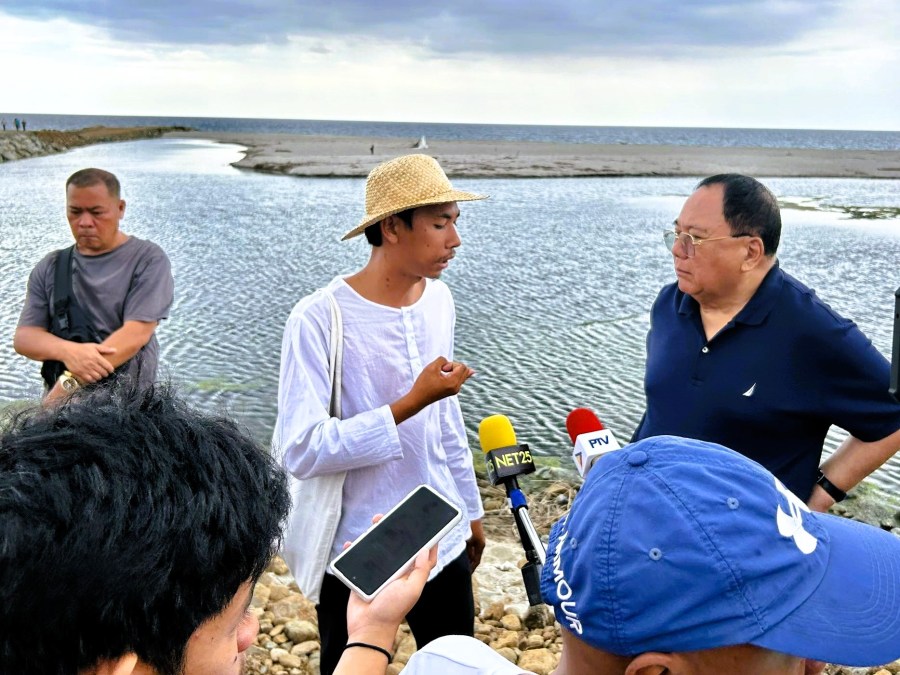
The governor, who served as Secretary of National Defense in 2007, said the payao project also serves as a strategic measure to keep Zambales fishermen safely fishing at sea, while asserting ownership and control of waters within the country’s exclusive economic zone (EEZ).
Bajo de Masinloc, which lies just 241 nautical kilometers west of Zambales, is a traditional fishing ground for local fishermen, but has been under de facto Chinese control since 2012.
Ebdane said that under the program, the provincial government of Zambales will provide payaos to qualified fisherfolk organizations, with the Fisheries Development Unit of the Provincial Agriculture Office (PAgO-FDU) supervising the project.
“If the P4.5-million fund would be used completely for payaos, then we can come up with about 45 units of these fish aggregating devices,” Ebdane said. He explained that the anchor line consisting of ropes securing the payao floaters, could run up to a kilometer long and is the most expensive component.
According to PAgO Fisheries Section chief Edwin Domingo, each set of payao, including labor expenses for fabrication, hauling and installation, would cost close to P90,000.
He said the payaos will be constructed and installed by the fisherfolk beneficiaries with direct supervision by his office. The PAgO-FDU will also conduct monthly monitoring of the project.
So far, 20 fisherfolk groups have been identified for the payao program, said Domingo. These include one group in Subic town; two organizations each in the towns of San Antonio, San Narciso, Cabangan, Botolan, Palauig, and Candelaria; three in Iba; and four in San Felipe.
The payao project came about following the formation in July last year of the Zambales Maritime Development Council (ZMDC), another initiative by Gov. Ebdane to address fisherfolk concerns amid the continuing WPS problem. The council includes representatives of fisherfolk groups in the province.
Ebdane has also encouraged small fishermen in Zambales to organize themselves into cooperatives, so that they could avail of financial and equipment assistance from the government.
The ZMDC had so far been instrumental in coordinating local projects for fisherfolk, including seminar-trainings conducted by the PAgO with the Philippine Merchant Marine Academy (PMMA) on safety and survival at sea, as well as combatting marine pollution.
Both training activities were designed to enhance the knowledge of fisherfolk and help ensure sustainability of the local fishing industry, Ebdane noted. (30)
TOP PHOTO: Members of the New Masinloc Fishermen’s Association install a payao device in municipal waters off Zambales in this file photo (NMFA photo)




Leave a comment