
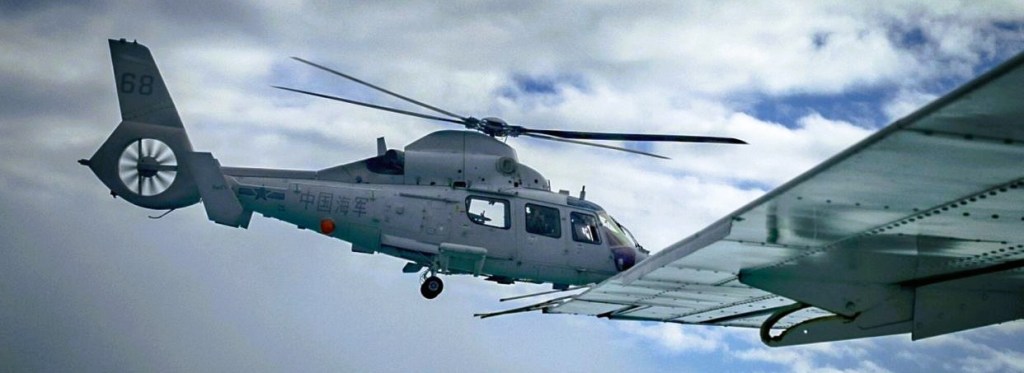
THE United States has condemned “unsafe and irresponsible” actions by the Chinese military in the West Philippine Sea, following a buzzing incident involving a Chinese People’s Liberation Army-Navy helicopter and an airplane of the Philippine Bureau of Fisheries and Aquatic Resources (BFAR) on Feb. 11.
A statement attributed to the U.S. State Department and U.S. Ambassador MaryKay Carlson and issued by the U.S. Embassy in Manila on Thursday, Feb. 20, described the buzzing as “a threat to navigation and overflight in the South China Sea.”
It also expressed support to the Philippines and called on China to avoid “coercive actions” and settle its disputes according to international law.
It added that the defense treaty between the Philippines and the United States covers armed attacks on Philippine armed forces, as well as public vessels or aircraft anywhere in the South China Sea.
The U.S. statement of support reads fully as follows:
“The United States stands with its ally the Philippines to condemn the unsafe and irresponsible actions by the Chinese People’s Liberation Army-Navy (PLAN) to interfere with a Philippine maritime air operation in the vicinity of Scarborough Reef. A Chinese helicopter came within three meters of a Philippine Bureau of Fisheries and Resources plane conducting routine overflight, endangering the safety of the aircraft and its crew. This incident follows China’s separate unsafe and unprofessional maneuver on February 11 that endangered an Australian aircraft that was conducting a routine maritime patrol in the South China Sea.
“Reckless Chinese actions such as these are a threat to navigation and overflight in the South China Sea, and we will continue to support our allies and partners to ensure a free and open Indo-Pacific. We call on China to refrain from coercive actions and settle its disputes peacefully in accordance with international law.
“The 1951 United States-Philippines Mutual Defense Treaty extends to armed attacks on Philippine armed forces, public vessels, or aircraft—including those of its Coast Guard—anywhere in the South China Sea.”
Prior to the air incident, Chinese coast guard vessels have also made aggressive maneuvers in the area by sailing in close proximity to Philippine naval assets, blocking their paths, training water cannons or laser lights on them, or outright ramming.
A Philippine official said on Wednesday that the government will file a formal diplomatic protest against the “dangerous” maneuvers by the Chinese Navy helicopter.




Leave a comment