
By Henry Empeño | November 7, 2024
IBA, Zambales — Governor Hermogenes Ebdane Jr. has urged farmers in the province to embrace mechanized farming, saying it’s the only way to increase agricultural production and sustain the local farming industry.
“Mechanization is apparently the only way now to increase farming efficiency and address the gap in agricultural production and farmers’ income,” Ebdane said after the turnover here of farm machinery to various farmers’ organizations and some local government units.
Describing mechanization as a “game-changer” that attracts even the younger generations to farming, the governor said local farmers “should make full use of farm machinery if we wanted to increase productivity and continue to make farming profitable for everybody.”
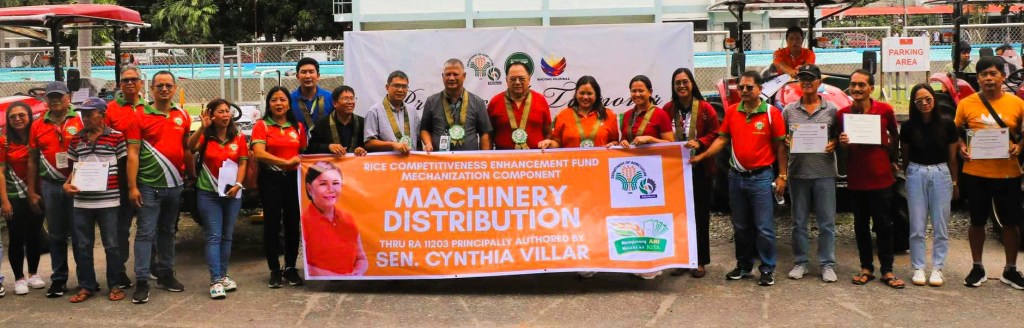
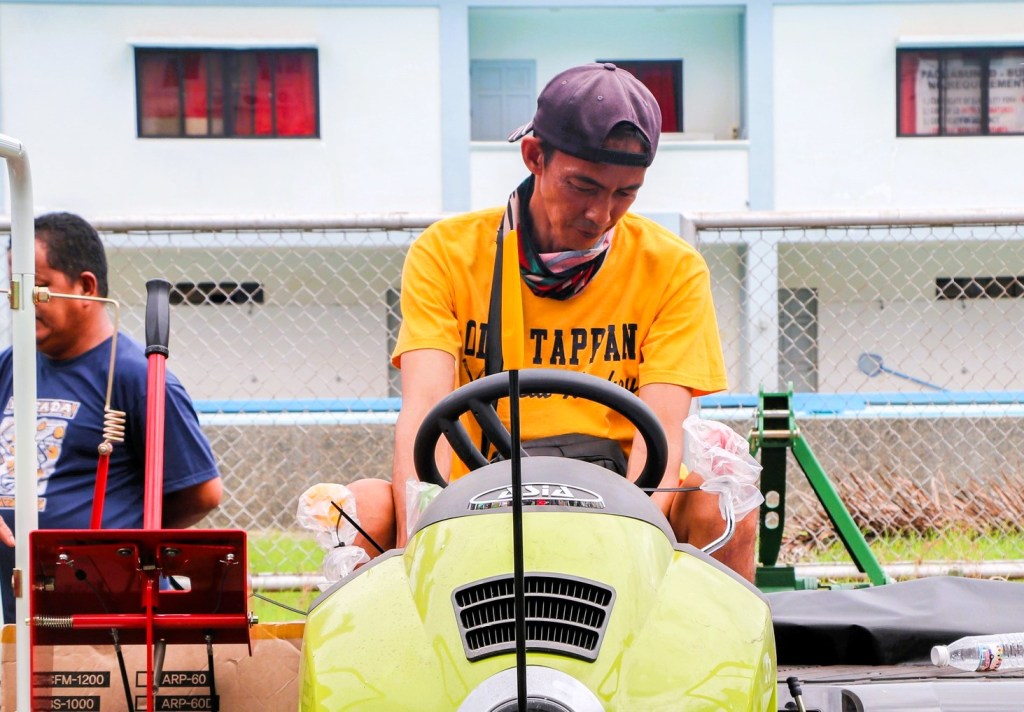
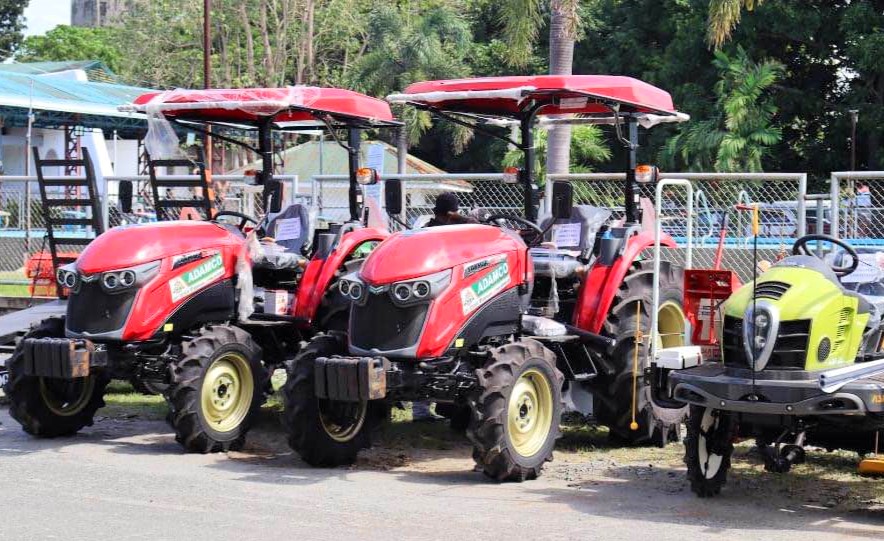
Ebdane led the distribution here on Tuesday, Nov. 5, of some P32-million worth of rice production machines and postharvest equipment from the Department of Agriculture (DA). These include hand tractors, levee makers, PTO-driven disc plows, rice combine harvesters, precision rice seeders, cassava granulators, shallow tube wells, and composting facilities for biodegradable wastes.
Ebdane said these were secured through Sen. Cynthia Villar, chair of the Senate Committee on Agriculture and Food, and distributed under the DA’s Rice Competitiveness Enhancement Fund (RCEF) Mechanization Program.
Among the beneficiaries are five farmers’ groups in Botolan town: Biangue Agro-Farm Association, which received a hand tractor; Botolan Muna Farmers Multipurpose Cooperative, levee maker; Maligha Irrigators Assn., four-wheel tractor, PTO-driven disc plow, and hand tractor; Batonlapoc Farmers Assn., composting facility; and Mamalyan nin San Miguel, composting facility.
In Candelaria, the Bunglo Zambales Irrigators Assn. got a four-wheel tractor, PTO-driven disc plow, and a hand tractor, while the Candelaria Corn Growers Assn. received a shallow tube well.
Palauig’s 1st Damayan Bagsit Irrigators Assn. was given a precision rice seeder, while Batungbacal Farms, Bulawen Integrated Farmers Assn., and Zennor Hydroponics Farm each got a composting facility.
In San Antonio, the Condicion Payong Farmers’ Assn. received a four-wheel tractor, and a PTO-driven disc plow; the Kapuriktan Nagtugawan Inabangan Farmers Assn., hand tractor; Namanaan Farmers Assn., levee maker; and the San Antonio LGU, a rice combine harvester.
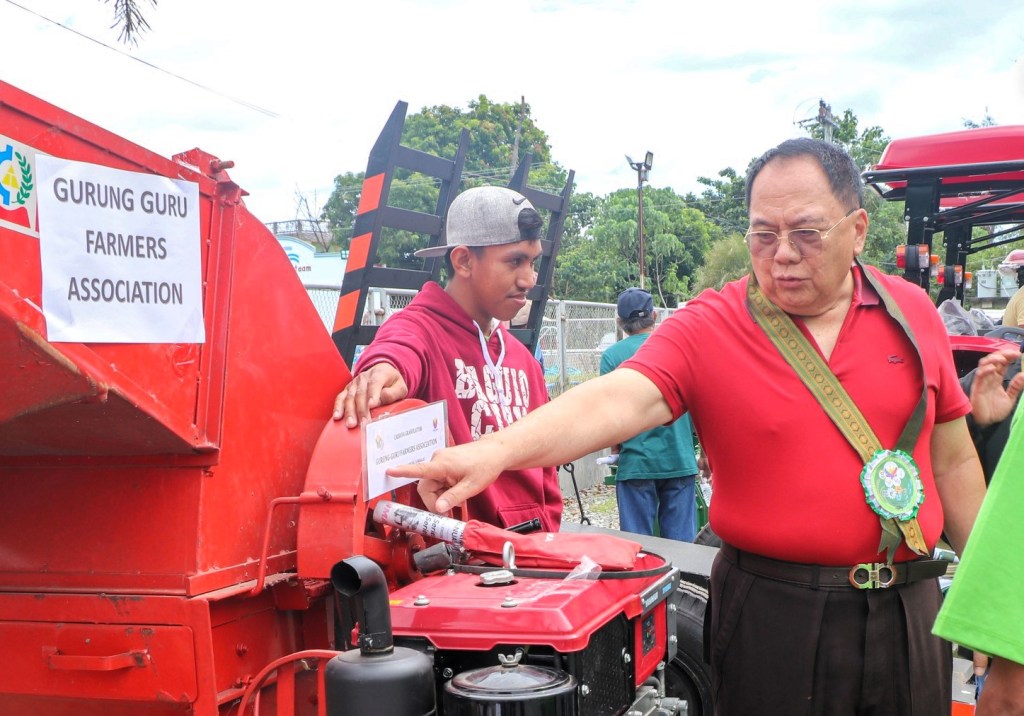
Meanwhile, San Felipe’s Gurung Guru Farmers Assn. received a hauling truck, a cassava granulator, and a composting facility; the North East West South Farmers Assn. got two units of shallow tube well, while the town’s LGU got a four-wheel tractor and a PTO-driven disc plow.
In San Narciso, the Capaniquian Farmers Assn. got a levee maker; Negatil Rice and High Value Crops Farmers Assn., hand tractor and two units of shallow tube well; San Pascual Irrigators Assn., four-wheel tractor, PTO-driven disc plow, and hand tractor; and Simminublan Livestock Farmers Assn., hand tractor.
The Guinabon Multipurpose Farmers’ Cooperative in Santa Cruz town, meanwhile, received one levee maker, while the Tubo-tubo South Farmers Assn. got a composting facility.
Zambales, which is the second largest province in Central Luzon, largely remains an agricultural area, with rice, mango, vegetables, root crops, corn, and sugar cane as the main seasonal crops.
Its palay production has been growing from more than 90,000 metric tons in 2003 to almost 160,000 metric tons in 2020. Santa Cruz, the northernmost town in the province, is the top rice producer with 23,559 metric tons (MT) in 2023, followed by San Narciso WITH 19,515 MT, and Palauig, 13,290 MT.





Leave a comment