
By HENRY EMPEÑO |
SUBIC BAY FREEPORT — The Subic Bay Metropolitan Authority (SBMA) yesterday confirmed the existence of a proposal by a Chinese-controlled company to operate the Grande and Chiquita Islands here on Subic Bay, but hastened to add that the project has been put on hold since May due to unresolved issues.
SBMA Chairman and Administrator Wilma T. Eisma said the proposal to develop the two islands strategically located at the mouth of Subic Bay had virtually ground to a standstill after the SBMA Board of Directors withdrew its consent to the change in control and ownership of GFTG Property Holdings Corp., the current holder of lease over the islands.
“It’s true that a group of Chinese investors wanted to take effective control of the islands to further develop them as tourism destinations, but we saw some problems about the proposed activities,” Eisma said.
She said that Sanya CEDF Sino-Philippine Investment Corp., which recently gained majority shares in GFTG, had proposed to put up 80 ultra-high end housing units perched on water along the coastline of Grande Island up to Chiquita Island.
“This cannot be allowed because the Constitution limits the use and enjoyment of archipelagic waters exclusively to Filipino citizens,” Eisma pointed out.
“Moreover, Executive Order No. 65, or the 11th Regular Foreign Investment Negative List, prohibited the presence of any foreign equity in the utilization of marine resources in archipelagic waters,” she added.
The SBMA official also said that there had been previous changes in the corporate control or ownership of GFTG that were made without the consent of the SBMA.
“These violated the Lease and Development Agreements that GFTG had signed with SBMA,” she said.
Eisma said that because of these issues, the SBMA Board passed a resolution on May 19, 2019 that withdrew consent to the change in control and ownership of GFTG.
The Board also noted the need for “further coordination between the SBMA and the Department of Finance with respect to this change in the control/ownership of GFTG, including the payment of appropriate taxes for the transfer of shares of GFTG.”
“The net effect is that the company’s proposal for Grande and Chiquita did not progress, and the project is currently non-operational,” Eisma said.
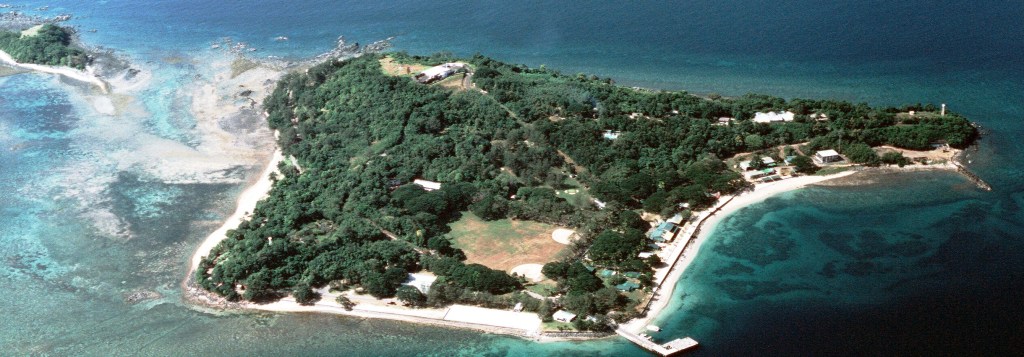
Grande used to be an exclusive rest and recreation haven for officers of the US Navy when Subic was still an American military base until 1992. Prior to that, it was known as Fort Wint and housed a battery of cannons that helped guard the entrance to Manila Bay during World War II.
According to the SBMA Business and Investment Group, Grande and its smaller neighbor had been leased to various investor groups since 2002. The development plan for the islands included the establishment of hotel accommodations, restaurant, and recreational facilities, as well as the operation of boat service to and from Grande Island.
GFTG had initially committed an investment of P180 million to construct a 3-storey five-star hotel, build a marina parking area, and upgrade recreational facilities on Grande.
In April this year, GFTG brought in Sanya after supposedly signing a deal for partnership at the sidelines of President Duterte’s visit to Beijing for the Belt and Road Initiative Forum.
However, the agreement gave effective control of the project to Sanya, which gained 80% of the shares. Hua Huang Yang, a Chinese investor who joined GFTG as partner in 2012, retained 20% from his previous share of 30%.
The thrust of the new majority shareholders “apparently changed the complexity of the Grande development project,” Eisma noted.
As of now, the SBMA is looking for some suitable company that could take over the development of the two islands to help bolster Subic’s tourism program, Eisma added.
TOP PHOTO: Grande Island, with the Chiquita Islet on upper left, circa 1983 (Photo released by US Navy and posted on Wikipedia)


Leave a comment